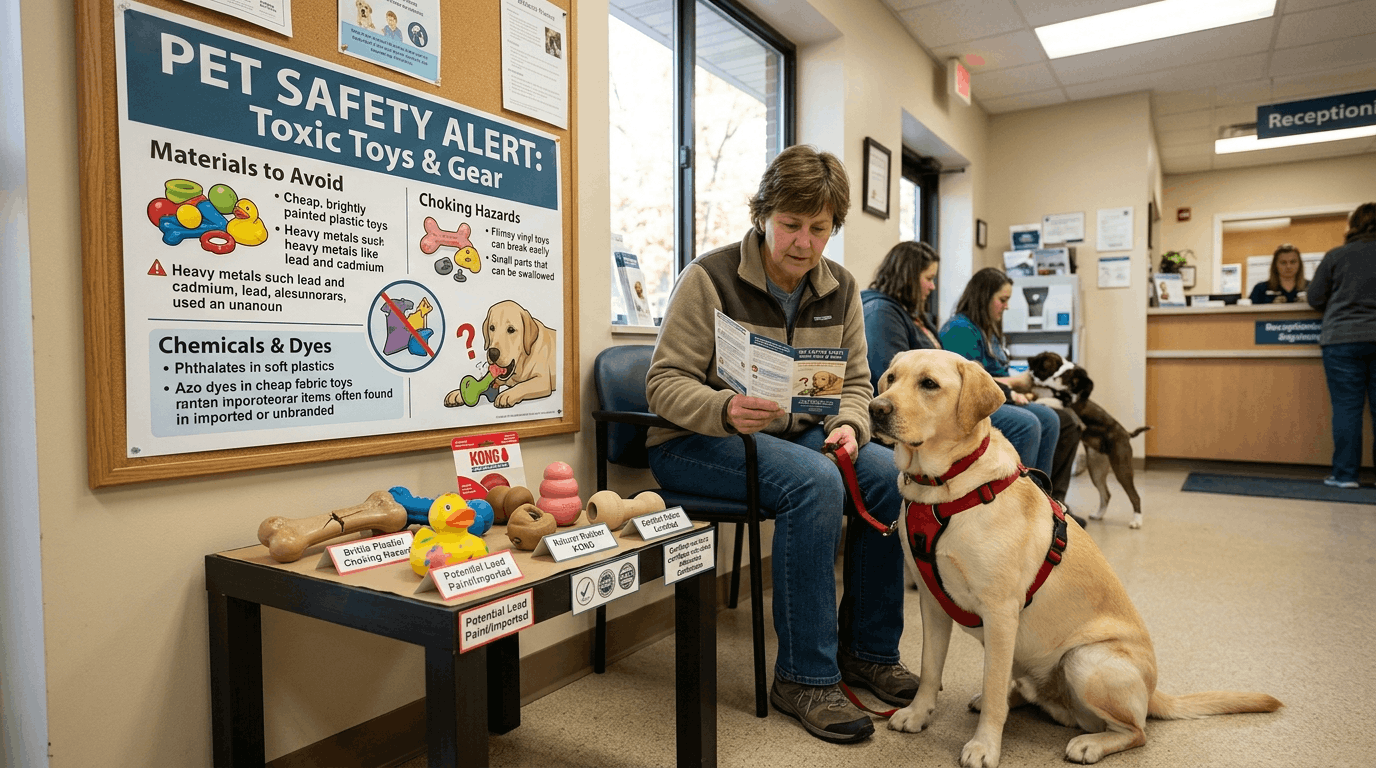
Many pet owners are surprised to learn that toxic labrador toys and gear can pose serious health risks to their dogs. While most products look safe on the surface, some contain harmful materials that can affect your Labrador over time. Because Labradors are known for chewing, carrying, and interacting closely with their toys and gear, they are especially vulnerable to these risks. Therefore, understanding what veterinarians say about toxic labrador toys and gear is essential for keeping your dog healthy and protected.
In recent years, veterinarians have raised concerns about the quality and safety of certain pet products. Although regulations exist, not all items undergo strict testing. As a result, some toys and accessories still contain chemicals, weak materials, or unsafe designs. When dogs chew or ingest these materials, the consequences can range from mild irritation to serious health complications. That is why more vets are encouraging dog owners to pay closer attention to the products they bring into their homes.
Why Labradors Are More At Risk
Labradors are naturally curious and energetic, which makes them more likely to interact heavily with their environment. They chew more aggressively than many other breeds, and they often carry toys for extended periods. Because of this, toxic labrador toys and gear can have a greater impact on them compared to less active dogs.
Additionally, Labradors tend to explore with their mouths. This behavior increases the likelihood of ingesting small pieces of toys or absorbing harmful substances through saliva. Over time, repeated exposure can lead to digestive issues, allergies, or even toxicity. Therefore, veterinarians emphasize the importance of choosing safe materials and durable designs when selecting toys and gear.
Moreover, Labradors often have strong jaws, which means they can break poorly made products easily. When a toy breaks, it creates sharp edges or loose parts that can be swallowed. This adds another layer of risk, especially when dealing with toxic labrador toys and gear that were not designed for heavy use.
Common Harmful Materials Found In Dog Products
Veterinarians often highlight specific materials that should raise concern. Many toxic labrador toys and gear contain substances such as BPA, phthalates, and certain dyes. These chemicals are commonly used in plastics and rubber products, yet they can disrupt hormones or cause irritation in dogs.
Low-quality rubber is another concern. While it may appear durable, it can break down quickly and release harmful compounds. Additionally, some cheaply made toys use glues or coatings that are not safe for animals. When dogs chew on these items, they may ingest small amounts of toxic substances without the owner realizing it.
Synthetic fabrics used in collars, harnesses, or beds can also pose risks. Some contain chemical treatments designed to resist stains or odors. However, these treatments may cause skin reactions or respiratory issues in sensitive dogs. Because of this, veterinarians advise checking product labels carefully and choosing items made from safer, non-toxic materials.
Warning Signs Of Toxic Exposure
Recognizing early symptoms can help prevent serious health problems. Dogs exposed to toxic labrador toys and gear may show subtle changes at first. These can include excessive licking, mild skin irritation, or digestive discomfort. While these signs may seem minor, they should not be ignored.
As exposure continues, symptoms can become more noticeable. Vomiting, diarrhea, lethargy, or unusual behavior may indicate a deeper issue. In some cases, dogs may develop allergic reactions, including redness, swelling, or itching.
Veterinarians recommend monitoring your dog closely, especially when introducing new products. If symptoms appear, removing the suspected item immediately is crucial. Early action can prevent more serious complications and help your dog recover quickly.
How To Choose Safer Alternatives
Avoiding toxic labrador toys and gear starts with making informed choices. Veterinarians often recommend selecting products labeled as non-toxic, BPA-free, and free from harmful chemicals. While labels are not always perfect, they provide a useful starting point.
Natural materials are generally a safer option. Toys made from natural rubber, untreated cotton, or food-grade materials reduce the risk of chemical exposure. Additionally, choosing well-known brands with a reputation for safety can offer extra reassurance.
Durability is equally important. A strong, well-made toy is less likely to break and pose a choking hazard. Therefore, investing in higher-quality products can actually save money and reduce risk over time.
The Role Of Vet Recommendations
Veterinarians play a key role in identifying safe products. Because they see the effects of toxic labrador toys and gear firsthand, their recommendations are based on real-world experience. Many vets suggest specific brands or materials that have proven to be safe and reliable.
It is also helpful to ask your vet for guidance during routine checkups. They can provide personalized advice based on your dog’s health, age, and behavior. This ensures that the products you choose align with your dog’s specific needs.
In addition, vets often stay updated on product recalls or safety alerts. By following their guidance, you can avoid products that may pose hidden risks.
Why Cheap Products Can Be Risky
While it may be tempting to choose cheaper options, they often come with hidden dangers. Many low-cost products fall into the category of toxic labrador toys and gear because they are made with lower-quality materials. These items may not meet safety standards, increasing the risk of harm.
Cheap toys are more likely to break, exposing your dog to sharp edges or small pieces. Additionally, they may contain dyes or chemicals that are not safe for prolonged use. Over time, these risks can add up and affect your dog’s health.
Investing in safer, higher-quality products may seem more expensive initially. However, it reduces the likelihood of veterinary bills and health issues in the future. Therefore, prioritizing quality over cost is a smart and responsible choice.
Simple Habits To Keep Your Dog Safe
Beyond choosing the right products, daily habits also play an important role. Regularly inspecting your dog’s toys and gear helps identify signs of wear or damage. If a toy begins to break apart, it should be replaced immediately.
Cleaning toys and accessories is equally important. Dirt and bacteria can accumulate over time, which may lead to additional health problems. By maintaining clean and safe items, you reduce overall risk.
Supervision is another key factor. Watching your dog during playtime allows you to intervene if something goes wrong. This is especially important when introducing new items that may fall into the category of toxic labrador toys and gear.
Conclusion
Understanding the risks associated with toxic labrador toys and gear is essential for responsible pet ownership. While many products appear safe, hidden dangers can affect your dog’s health over time. By paying attention to materials, quality, and veterinary recommendations, you can make better choices for your Labrador.
Although it may require extra effort, selecting safer products provides long-term benefits. Your dog will be healthier, more comfortable, and less likely to experience preventable issues. Ultimately, being informed and proactive ensures that your Labrador enjoys a safe and happy life with the toys and gear you provide.
FAQ
- What materials should I avoid in dog toys?
Avoid plastics with BPA, low-quality rubber, and products with unknown chemical coatings or dyes. - Are natural toys always safer for dogs?
Natural materials are generally safer, but they should still be durable and appropriate for your dog’s chewing habits. - How often should I replace my dog’s toys?
Replace toys as soon as they show signs of damage, especially if pieces can be swallowed. - Can toxic materials cause long-term health problems?
Yes, prolonged exposure can lead to digestive issues, allergies, and other serious health concerns. - Should I consult a vet before buying new dog gear?
It is helpful to ask your vet for recommendations, especially if your dog has sensitivities or health issues.