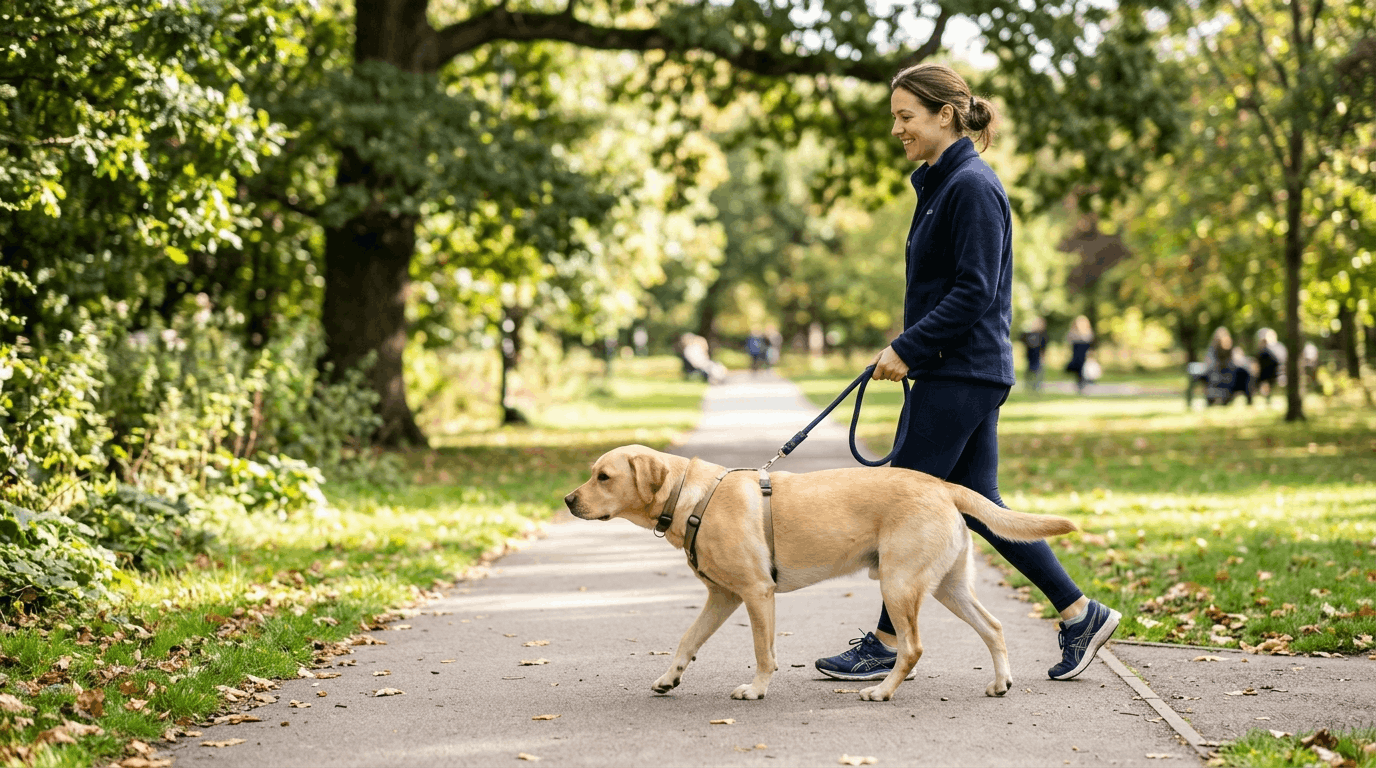
Walking a Labrador should feel enjoyable, relaxing, and rewarding for both the dog and the owner. Unfortunately, many Labrador owners struggle with constant pulling, lunging, and overexcitement during walks. Because Labradors are energetic, social, and naturally enthusiastic dogs, leash training often becomes challenging without consistency and patience. However, teaching calm Labrador leash manners is completely possible with the right approach and steady practice.
Many dogs pull simply because they never learn how to walk calmly beside a person. Pulling often becomes unintentionally rewarded when owners continue moving forward while the leash stays tight. Over time, Labradors learn that pulling gets them where they want to go faster.
Fortunately, leash manners can improve dramatically when owners focus on calm behavior, communication, and positive reinforcement. Instead of relying on punishment or force, successful training teaches Labradors how to stay focused and relaxed while walking beside their owners.
Why Labradors Tend to Pull on the Leash
Labradors are naturally energetic and curious dogs. They love exploring scents, greeting people, and moving quickly through new environments.
Young Labradors especially become excited during walks because the outside world offers constant stimulation.
Without proper training, many dogs develop habits that include dragging owners toward interesting smells, animals, or distractions.
Calm Labrador leash manners require teaching dogs that staying close creates rewards and freedom while pulling stops progress.
Understanding why pulling happens helps owners respond more effectively during training sessions.
Start Training Inside the Home First
Many owners attempt leash training outdoors immediately, although busy environments can overwhelm young Labradors quickly.
Indoor practice creates a calmer learning environment with fewer distractions.
Attach the leash inside your home and reward the dog for staying beside you calmly.
Short training sessions allow Labradors to learn expectations gradually.
Calm Labrador leash manners develop more easily when dogs first understand the basics in quiet spaces.
Indoor practice also helps build focus before introducing outside distractions.
Reward Calm Walking Immediately
Timing matters greatly during leash training.
Whenever the Labrador walks beside you calmly with a loose leash, reward the behavior immediately with praise, treats, or gentle encouragement.
Dogs repeat behaviors that produce positive outcomes consistently.
Calm Labrador leash manners improve faster when owners reward desired behaviors instead of focusing only on mistakes.
Frequent rewards during early training sessions help Labradors understand exactly what behavior earns positive attention.
Avoid Constant Leash Tension
Many owners unknowingly keep constant pressure on the leash.
Unfortunately, continuous tension teaches dogs to lean into the pressure instead of relaxing.
Loose leash walking works best when the leash remains soft whenever possible.
Calm Labrador leash manners develop through guidance and communication rather than force.
If the leash tightens, stop walking calmly instead of pulling backward aggressively.
Once the dog relaxes and returns attention to you, continue moving forward.
Consistency Matters More Than Speed
Some Labradors learn leash manners quickly, while others require more repetition and patience.
Owners sometimes become frustrated and allow pulling occasionally, which creates confusion for the dog.
Calm Labrador leash manners improve when rules remain consistent every day.
If pulling succeeds sometimes, dogs continue testing the behavior regularly.
Consistency helps Labradors understand that calm walking always leads to progress while pulling never works.
Use Short Training Walks at First
Long walks may overwhelm young or excitable Labradors during early training.
Short sessions often produce better results because dogs stay mentally focused longer.
Calm Labrador leash manners improve more effectively through frequent short practices than exhausting hour-long struggles.
Even ten-minute sessions may provide meaningful progress when owners remain patient and consistent.
Teach Attention Before Adding Distractions
Focus training helps Labradors stay mentally connected during walks.
Practice getting your dog’s attention by saying their name calmly and rewarding eye contact immediately.
Calm Labrador leash manners rely heavily on engagement and communication between dog and owner.
Dogs that frequently check in with their owners usually pull less because they remain mentally connected during walks.
Choose the Right Equipment
Training tools can influence leash behavior significantly.
Standard flat collars work well for some Labradors, although front-clip harnesses may provide additional control during training.
Calm Labrador leash manners improve best when equipment encourages guidance rather than discomfort.
Avoid relying on harsh correction tools that create fear or anxiety.
Comfortable equipment supports safer and more productive training sessions.
Practice Direction Changes Frequently
Labradors often assume walks move only in straight lines toward exciting destinations.
Changing direction regularly teaches dogs to pay attention instead of charging ahead automatically.
When the dog begins pulling, calmly turn and walk another direction.
Calm Labrador leash manners improve when dogs learn that staying attentive matters more than leading the walk themselves.
Direction changes also encourage mental focus and engagement.
Avoid Overstimulating Walk Environments Initially
Busy parks, crowded sidewalks, and highly stimulating areas may overwhelm inexperienced Labradors.
Dogs learn better in calmer spaces during early training stages.
Calm Labrador leash manners become easier to teach in quiet neighborhoods or open areas with fewer distractions.
Once the dog improves, owners can gradually introduce more challenging environments.
Exercise Before Training Walks Can Help
Highly energetic Labradors sometimes struggle to focus because they feel overstimulated physically.
Short play sessions before walks may help release excess energy.
Calm Labrador leash manners often improve when dogs begin training sessions slightly calmer and less hyperactive.
A brief game of fetch or backyard exercise may reduce pulling behaviors significantly.
Avoid Punishing Excitement Harshly
Labradors are naturally social and enthusiastic dogs.
Harsh punishment during walks may damage trust and increase anxiety.
Calm Labrador leash manners develop more effectively through patience, redirection, and positive reinforcement.
Owners should focus on teaching calm alternatives instead of reacting emotionally to mistakes.
Reward Check-Ins Frequently
Dogs that voluntarily look at their owners during walks deserve immediate praise and rewards.
These moments build communication and focus naturally.
Calm Labrador leash manners improve when dogs learn that checking in creates positive outcomes consistently.
Over time, many Labradors begin paying attention automatically during walks.
Use High-Value Rewards During Training
Outdoor distractions compete heavily for a Labrador’s attention.
Ordinary kibble may not feel rewarding enough in stimulating environments.
Small pieces of chicken, cheese, freeze-dried treats, or favorite snacks often improve motivation significantly.
Calm Labrador leash manners progress faster when rewards feel valuable and exciting.
Teach a Reliable Heel Position Gradually
Heel training teaches dogs where to walk beside the owner comfortably.
However, expecting perfect heel behavior constantly during every walk may frustrate both dog and owner.
Calm Labrador leash manners involve relaxed cooperation rather than military-style precision.
Owners can practice short heel exercises before allowing more casual walking afterward.
Stay Calm During Setbacks
Every Labrador experiences setbacks occasionally.
Exciting smells, dogs, squirrels, or crowds may trigger pulling temporarily.
Owners who remain calm usually help dogs recover faster.
Calm Labrador leash manners improve through steady repetition over time rather than expecting perfection immediately.
Patience remains one of the most important parts of successful training.
Socialization Helps Reduce Reactivity
Some Labradors pull because they become overstimulated around people or dogs.
Controlled socialization teaches calmer emotional responses gradually.
Calm Labrador leash manners become easier when dogs feel confident and emotionally balanced during walks.
Positive exposure to different environments, sounds, and situations supports better behavior overall.
Mental Stimulation Supports Better Walking Behavior
Labradors need mental exercise just as much as physical activity.
Bored dogs often become more impulsive during walks.
Puzzle feeders, obedience training, scent games, and enrichment activities may help reduce excessive leash pulling.
Calm Labrador leash manners often improve when dogs receive balanced mental stimulation daily.
Avoid Rushing Progress
Some owners expect immediate results after only a few training sessions.
However, leash manners develop gradually through repeated practice.
Calm Labrador leash manners strengthen over weeks and months of consistent guidance.
Small improvements deserve recognition because steady progress creates long-term success.
Body Language Influences Walk Quality
Dogs read human body language constantly.
Tense shoulders, frustration, or rushed movement may increase leash tension unintentionally.
Walking calmly with relaxed movements helps Labradors mirror calmer behavior.
Calm Labrador leash manners improve when owners project patience and confidence consistently.
Walking Should Feel Cooperative
Successful leash training is not about dominance or control.
Instead, good walking behavior develops through teamwork and communication.
Calm Labrador leash manners allow dogs to enjoy freedom while respecting boundaries naturally.
When owners focus on building trust instead of overpowering the dog, walks often become more peaceful and enjoyable.
Routine Strengthens Good Habits
Labradors respond well to predictable routines.
Consistent walking schedules, training expectations, and reward systems help dogs learn faster.
Calm Labrador leash manners become more reliable when owners maintain steady habits every day.
Dogs thrive when expectations remain clear and consistent.
Long-Term Success Comes From Patience
Leash training is not a one-time lesson.
Even well-trained Labradors benefit from continued reinforcement throughout life.
Calm Labrador leash manners require ongoing practice, especially during adolescence when excitement levels remain high.
Fortunately, patient owners usually see remarkable improvement over time. Labradors are intelligent and eager to please when training remains fair, consistent, and rewarding. By focusing on calm communication, positive reinforcement, and realistic expectations, owners can transform stressful walks into enjoyable daily experiences. Loose leash walking not only improves safety and control but also strengthens the bond between owner and dog. With patience and repetition, even energetic Labradors can learn to walk calmly and confidently without pulling constantly.
FAQ
1. Why do Labradors pull so much on walks?
Labradors are energetic and curious dogs that often become excited by smells, people, and movement outdoors.
2. What is the best tool for leash training a Labrador?
Many owners use front-clip harnesses or standard collars combined with positive reinforcement training.
3. How long does loose leash training usually take?
Progress varies, although consistent practice often produces noticeable improvement within several weeks.
4. Should I stop walking when my Labrador pulls?
Yes. Stopping movement helps teach dogs that pulling does not move the walk forward.
5. Can older Labradors still learn polite leash behavior?
Absolutely. Older dogs can improve leash manners successfully with patience and consistent training.