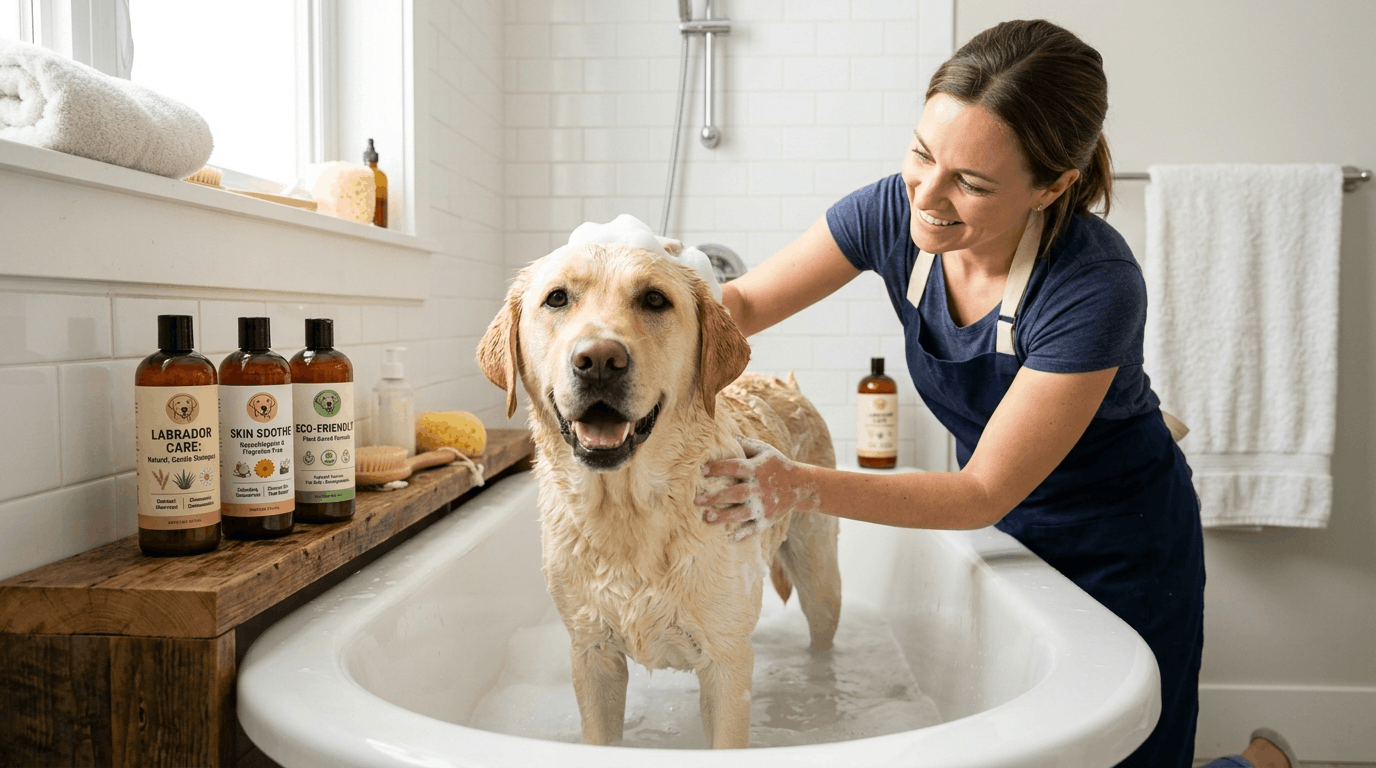
Labradors are active dogs that love outdoor adventures, swimming, muddy trails, and long days of play. Because of their energetic lifestyle, regular bathing becomes part of their grooming routine. However, not every product marketed for dogs is actually gentle or healthy for a Labrador’s skin. Many owners assume any pet shampoo will work, yet harsh ingredients can cause dryness, itching, irritation, and coat problems over time. That is why choosing a safe Labrador shampoo matters more than many people realize.
A Labrador’s skin is sensitive despite the breed’s rugged appearance. Their dense double coat protects them from weather and water, but the skin underneath still requires balanced care. If a shampoo strips away natural oils or contains irritating chemicals, it may weaken the skin barrier and create ongoing discomfort.
Many skin issues develop slowly. A dog may begin scratching more often, licking paws excessively, or developing flaky skin after repeated exposure to unsuitable products. In some cases, owners mistake these symptoms for allergies when the real problem comes from grooming products.
Understanding what makes a shampoo safe can help prevent irritation before it begins. In addition, learning how to read labels and recognize harmful ingredients allows owners to make smarter grooming decisions that support long-term skin and coat health.
Why Labrador Skin Needs Gentle Care
Labradors have a unique coat structure that affects how grooming products interact with their skin. Their double coat includes a dense undercoat and a protective outer layer that repels water and dirt. Although this coat provides excellent protection outdoors, it also traps oils close to the skin.
Natural oils are extremely important because they keep the coat shiny and help maintain skin hydration. When shampoos remove too much oil, the skin may become dry and irritated. Consequently, the dog may begin scratching excessively or develop flaky patches.
Frequent bathing can increase this risk if harsh products are used repeatedly. Many human shampoos and low-quality pet shampoos contain detergents that disrupt the skin’s natural balance. Since Labradors often require regular cleaning due to outdoor activity, gentle ingredients become even more important.
Some Labradors also develop seasonal skin sensitivities. Pollen, grass, dust, and environmental irritants may already challenge the skin barrier. Therefore, using mild grooming products helps reduce additional stress on the skin.
Puppies require extra caution because their skin is even more delicate than adult dogs. Strong fragrances or chemical-heavy formulas can irritate young Labradors quickly. As a result, owners should choose products specifically designed for sensitive canine skin whenever possible.
Older Labradors may also become more prone to dryness and irritation. Aging skin often loses moisture more easily, which makes safe grooming practices especially important during senior years.
Ingredients That Make a Shampoo Safer
Reading ingredient labels is one of the best ways to identify a safe Labrador shampoo. While marketing claims may sound impressive, ingredient quality matters far more than packaging or branding.
Natural cleansers are usually gentler on the skin than harsh detergents. Ingredients such as oatmeal, aloe vera, coconut-based cleansers, and chamomile often support hydration while cleaning effectively. Additionally, these ingredients may help soothe mild irritation.
Oatmeal is particularly popular because it helps calm itchy or sensitive skin. Many veterinarians recommend oatmeal-based formulas for dogs experiencing dryness or mild allergies. Aloe vera also provides soothing hydration when used in balanced amounts.
Coconut-derived cleansers can clean the coat without stripping essential oils aggressively. As a result, the skin remains more balanced after bathing.
Hypoallergenic formulas are another good option for sensitive Labradors. These shampoos generally avoid common irritants and use fewer unnecessary additives. Simpler ingredient lists often reduce the likelihood of reactions.
pH balance matters as well. Dogs have different skin pH levels than humans, so shampoos formulated specifically for dogs are much safer. Human products may disrupt the natural balance and create irritation.
Natural oils such as coconut oil or jojoba oil can also support coat softness and hydration. However, formulas should remain lightweight because heavy oils may leave residue in dense Labrador coats.
Ingredients Owners Should Avoid
Many shampoos contain ingredients that may irritate a Labrador’s skin over time. While not every dog reacts immediately, repeated exposure can gradually weaken skin health.
Artificial fragrances are one of the most common concerns. Strong perfumes may smell pleasant to humans, but dogs have far more sensitive noses and skin. Consequently, synthetic fragrance chemicals sometimes trigger itching or irritation.
Artificial dyes also provide no benefit to dogs. Brightly colored shampoos may contain unnecessary chemicals that sensitive Labradors do not tolerate well.
Sulfates are another ingredient worth avoiding whenever possible. These detergents create heavy foam, yet they can strip away too many natural oils from the skin and coat. Dryness often follows repeated use.
Parabens and harsh preservatives may also contribute to skin sensitivity. Although preservatives help products last longer, gentler alternatives are generally safer for long-term use.
Alcohol-based ingredients can dry out the skin quickly. Some formulas use alcohol to create lighter textures or faster drying, but excessive dryness may develop afterward.
Tea tree oil deserves caution as well. While diluted versions appear in some pet products, concentrated tea tree oil can become toxic to dogs. Therefore, owners should only use veterinarian-approved formulas containing carefully controlled amounts.
Essential oils may sound natural, yet some can irritate canine skin. Strong oils such as peppermint, citrus, or eucalyptus sometimes create discomfort for sensitive Labradors.
Signs a Shampoo May Be Irritating Your Labrador
Skin irritation does not always appear immediately after a bath. Sometimes symptoms develop gradually over several days. Therefore, owners should pay close attention to behavioral and physical changes after grooming sessions.
Excessive scratching is one of the earliest warning signs. If a Labrador scratches more than usual after bathing, the shampoo may be too harsh for the skin.
Redness around the belly, ears, paws, or neck can also indicate irritation. These areas tend to react first because the skin is thinner and more sensitive.
Dry flakes or dandruff may appear if natural oils are removed too aggressively. In some cases, the coat may lose its healthy shine and begin looking dull.
Licking or chewing paws excessively may also signal discomfort. Dogs often respond to itchy skin by licking affected areas repeatedly.
Strong odor returning quickly after bathing can sometimes suggest the shampoo disrupted the skin’s balance instead of supporting it. Healthy skin typically maintains freshness longer.
Hair thinning or patchy coat texture should never be ignored. Although allergies and medical conditions may contribute, unsuitable grooming products sometimes worsen these problems significantly.
Some Labradors even become anxious during bathing if previous shampoos caused irritation. Therefore, observing emotional reactions can provide useful clues about grooming comfort.
How Often Labradors Should Be Bathed
Bathing frequency plays an important role in maintaining healthy skin. Even a safe Labrador shampoo can create problems if overused.
Most Labradors only need bathing every four to eight weeks under normal conditions. However, highly active dogs that swim frequently or play outdoors may require more regular cleaning.
Overbathing removes protective oils that keep the skin healthy. Consequently, the skin may become dry and itchy even when gentle products are used.
Spot cleaning often works better than full bathing for minor dirt or mud. Wiping paws, brushing the coat, or rinsing specific areas may reduce the need for frequent shampoo use.
Brushing also supports healthier skin between baths. Regular brushing removes loose fur, distributes oils naturally, and prevents buildup within the undercoat.
Seasonal factors matter too. Winter air tends to dry the skin more easily, so frequent bathing during colder months may increase irritation. Meanwhile, summer swimming sometimes requires additional rinsing to remove chlorine or debris.
Puppies generally need fewer baths unless they become extremely dirty. Their skin remains sensitive during development, so gentle grooming routines work best.
Owners should focus on coat condition rather than strict schedules alone. If the coat feels healthy, soft, and odor-free, excessive bathing may not be necessary.
Choosing the Best Formula for Your Labrador
Different Labradors have different skin needs, so no single product works perfectly for every dog. Understanding your dog’s specific coat condition helps narrow down safer options.
Sensitive skin formulas are often ideal for Labradors with frequent itching or allergies. These shampoos typically avoid fragrances and harsh detergents while using calming ingredients instead.
Dogs with dry skin may benefit from moisturizing formulas containing oatmeal or aloe vera. These ingredients help maintain hydration without making the coat greasy.
For active outdoor Labradors, deodorizing shampoos can help remove dirt and odor gently. However, products should still avoid overpowering fragrances and strong detergents.
Puppy formulas deserve special attention because young dogs require extra mild ingredients. Gentle cleansers help protect developing skin while maintaining coat softness.
Medicated shampoos should only be used when recommended by a veterinarian. Although these products help specific conditions, unnecessary use may create imbalance in healthy skin.
Reading customer reviews can help identify consistent concerns about irritation or dryness. Nevertheless, ingredient lists remain more reliable than marketing claims alone.
Patch testing a new shampoo is also helpful. Applying a small amount to one area before full bathing may reveal sensitivity early.
The Importance of Proper Bathing Technique
Even the best product can cause issues if used incorrectly. Proper bathing technique helps protect a Labrador’s skin while improving grooming results.
Water temperature should remain lukewarm rather than hot. Hot water can dry out the skin quickly and create irritation.
Shampoo should always be diluted according to instructions if recommended. Concentrated formulas may become too strong when applied directly.
Rinsing thoroughly is extremely important. Leftover shampoo residue can remain trapped within a Labrador’s thick coat and continue irritating the skin after bathing.
Owners should avoid getting shampoo into the ears and eyes whenever possible. Sensitive areas react more easily to irritation.
Drying the coat completely also matters. Damp undercoats may trap moisture and encourage skin issues if left wet for long periods.
Brushing after bathing helps distribute oils evenly and prevents tangles or undercoat buildup. Additionally, brushing improves overall coat appearance naturally.
Bath time should feel calm and positive. Labradors usually enjoy water, yet stressful grooming experiences can create anxiety over time.
Keeping Your Labrador’s Skin Healthy Long-Term
Healthy skin depends on more than shampoo alone. Diet, hydration, environment, and grooming habits all influence coat condition and comfort. Still, choosing a safe Labrador shampoo remains one of the simplest ways to protect your dog’s skin over the long term.
Gentle ingredients support the natural balance Labradors need for healthy coats and comfortable skin. In contrast, harsh chemicals may gradually weaken the protective barrier and contribute to ongoing irritation.
Owners should remember that skin health changes over time. Puppies, adults, and senior Labradors may respond differently to products as their needs evolve. Therefore, staying attentive to coat condition and behavior helps identify problems early.
Consistency also matters. Using mild grooming products regularly while avoiding unnecessary bathing creates a healthier routine overall. Furthermore, combining proper grooming with balanced nutrition and regular brushing supports stronger skin from the inside out.
Ultimately, a healthy Labrador should feel comfortable after every bath rather than itchy or irritated. By learning how to identify gentle ingredients, avoid harmful additives, and follow proper grooming practices, owners can make safer choices that protect both the skin and coat for years to come.
FAQ
1. How can I tell if my dog shampoo is too harsh?
Frequent scratching, redness, dry skin, or excessive licking after bathing may indicate irritation from the shampoo.
2. Are human shampoos safe for Labradors?
No. Human shampoos have different pH levels and may irritate a dog’s sensitive skin and coat.
3. What ingredients are best for sensitive Labrador skin?
Oatmeal, aloe vera, coconut-based cleansers, and hypoallergenic formulas are often gentler for sensitive dogs.
4. How often should a Labrador be bathed?
Most Labradors only need bathing every four to eight weeks unless they become especially dirty or active outdoors.
5. Can scented shampoos irritate dogs?
Yes. Strong artificial fragrances may trigger skin irritation or discomfort in sensitive Labradors.