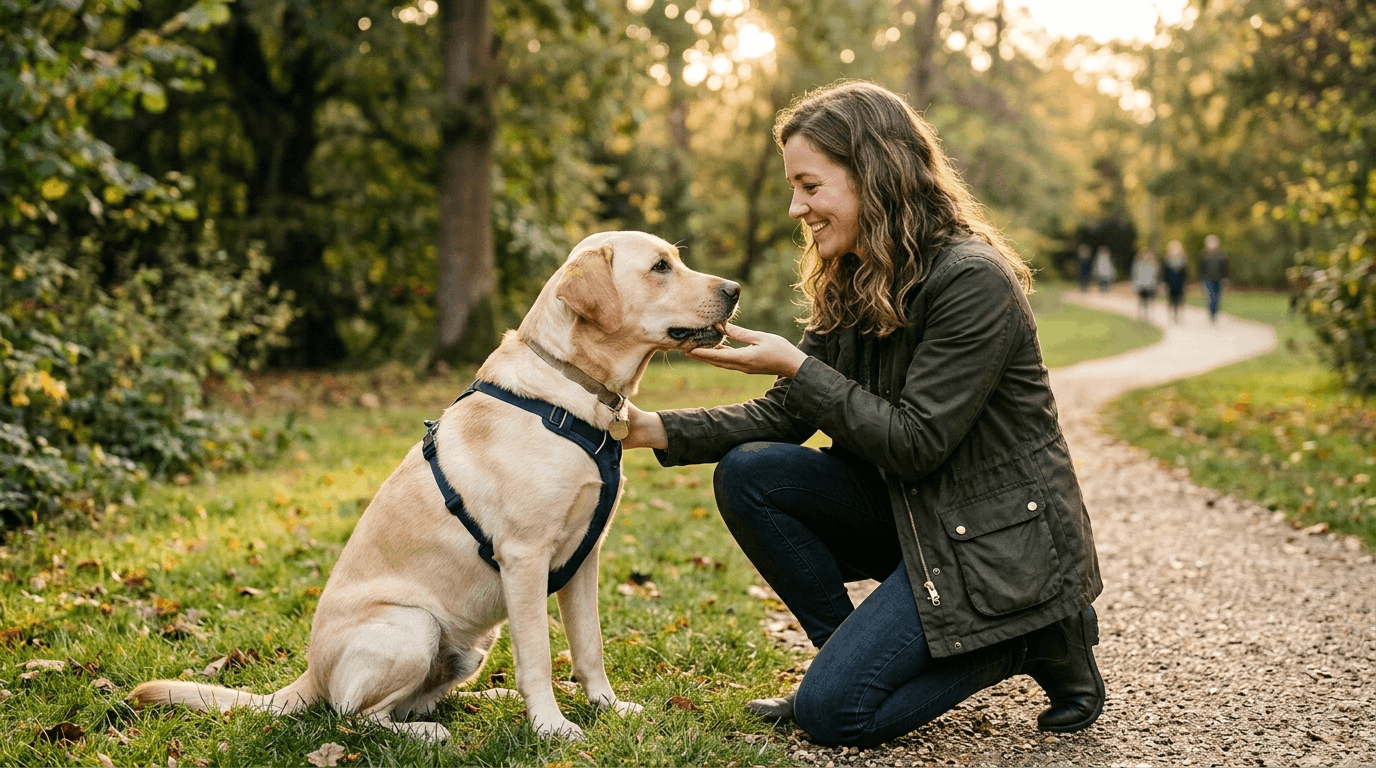
Labradors are naturally affectionate, intelligent, and eager to connect with people. Because of these qualities, they respond exceptionally well to training methods built on trust instead of fear. Many owners once believed obedience required dominance or harsh correction, yet modern dog training continues to show that calm communication creates stronger and more reliable results. That is why trust-based Labrador training has become one of the most respected and effective approaches for raising well-behaved dogs.
Labradors thrive when they feel emotionally secure. They learn faster when training feels safe, rewarding, and consistent rather than stressful or intimidating. Instead of obeying because they fear punishment, dogs trained through trust learn because they understand expectations and enjoy working with their owners.
This gentle approach does not mean allowing bad behavior or avoiding structure. In reality, trust-based methods still require consistency, patience, and clear boundaries. However, the focus remains on guidance, communication, and positive reinforcement rather than control through fear.
Because Labradors are highly social dogs, emotional connection strongly influences their behavior. A trusting relationship improves attention, confidence, and willingness to cooperate. Consequently, obedience often becomes more reliable in daily life.
Training should strengthen the bond between dog and owner instead of damaging it. When Labradors feel understood and respected, they usually respond with greater focus, calmer behavior, and long-term loyalty.
Why Labradors Respond Well to Trust and Connection
Labradors were originally bred to work closely alongside humans, which explains why they naturally seek interaction and approval. Their cooperative personality makes trust-based Labrador training especially effective compared to harsher methods that rely on intimidation.
These dogs pay close attention to emotional tone and body language. If training feels calm and encouraging, Labradors often become more confident and eager to learn. On the other hand, harsh corrections may create confusion, anxiety, or fear-based behavior.
Trust also improves communication. Dogs trained through positive interaction begin understanding that their owners provide guidance, safety, and consistency. Consequently, they become more willing to follow instructions even in distracting situations.
Young Labradors benefit greatly from emotionally supportive training because puppyhood involves constant learning and social development. Calm guidance helps puppies explore the world confidently without becoming overwhelmed.
Older Labradors also respond well to relationship-focused training. Even dogs with previous behavioral issues often improve when owners rebuild trust through patience and consistency.
Another major advantage involves emotional stability. Dogs trained through fear may obey temporarily while remaining anxious internally. In contrast, trust-centered training encourages relaxation and healthy confidence.
Because Labradors are naturally affectionate and social, strengthening emotional connection often improves obedience naturally. The dog begins viewing training as cooperation instead of conflict.
The Difference Between Fear and Respect
Many outdated training philosophies confuse fear with respect. However, dogs that obey because they fear punishment often experience emotional stress that damages trust over time.
Trust-based Labrador training focuses on mutual understanding rather than intimidation. Respect develops when dogs feel safe, understood, and guided consistently. As a result, obedience becomes more dependable because the dog willingly participates instead of reacting out of fear.
Fear-based methods may suppress behavior temporarily, yet they often fail to address the underlying emotional cause. For example, punishing barking may stop noise momentarily while increasing anxiety internally. In contrast, calm training identifies why the behavior occurs while teaching healthier responses.
Labradors especially tend to shut down emotionally when exposed to excessive yelling or physical correction. Some become anxious and avoidant, while others become overly excited or confused. Positive guidance usually creates clearer communication and better emotional balance.
Respect also involves consistency. Dogs trust owners who respond calmly and predictably. Sudden anger or inconsistent rules may weaken confidence and create uncertainty.
Gentle training does not mean ignoring boundaries. Labradors still require structure and clear expectations to feel secure. However, boundaries should teach rather than intimidate.
The strongest obedience often develops from trust, not force. Dogs that feel emotionally safe usually focus better and respond more reliably in everyday situations.
Building Trust Through Daily Interaction
Trust develops gradually through repeated daily experiences. Every interaction either strengthens or weakens the relationship between owner and dog. Therefore, small moments matter greatly when practicing trust-based Labrador training.
Calm communication is one of the most important habits owners can develop. Labradors respond better to steady guidance than emotional reactions. Even during frustrating moments, maintaining patience helps preserve trust.
Consistency also builds emotional security. Dogs feel safer when routines and expectations remain predictable. Feeding schedules, walks, playtime, and training sessions all contribute to stability.
Positive reinforcement strengthens trust because it rewards good choices instead of focusing constantly on mistakes. Treats, praise, toys, and affection all help Labradors associate obedience with positive outcomes.
Listening to body language matters as well. Dogs communicate discomfort, excitement, stress, and uncertainty through posture and movement. Owners who recognize these signals respond more effectively and compassionately.
Playtime also supports relationship building. Labradors thrive on interaction, so games and shared activities strengthen emotional connection naturally.
Physical affection should remain respectful and appropriate for the dog’s comfort level. While most Labradors enjoy attention, some situations may require calmer interaction rather than overwhelming excitement.
Trust grows strongest when owners become consistent sources of safety, guidance, and encouragement throughout daily life.
How Positive Reinforcement Strengthens Obedience
Positive reinforcement remains one of the most effective tools in trust-based Labrador training because it encourages desired behavior without damaging emotional connection.
Dogs naturally repeat behaviors that produce rewarding outcomes. Therefore, rewarding calm sitting, loose-leash walking, or reliable recall increases the likelihood those behaviors happen again.
Timing matters greatly during reinforcement. Rewards should happen immediately after correct behavior so the Labrador clearly understands what action earned the reward.
Treats work especially well during early learning stages because Labradors are highly food motivated. However, praise and affection should gradually become meaningful rewards too.
Verbal encouragement helps create emotional confidence. Labradors often respond enthusiastically to cheerful tones and positive attention during training sessions.
Rewards do not always need to involve food. Fetch games, tug toys, and outdoor exploration can also motivate many Labradors effectively.
Consistency remains extremely important. Mixed signals or inconsistent rewards may confuse dogs and slow progress. Clear communication creates faster understanding and stronger trust.
Positive reinforcement also reduces stress during training. Instead of worrying about mistakes, dogs focus on earning success. Consequently, learning often becomes faster and more enjoyable for both owner and dog.
Teaching Calm Behavior Without Harsh Correction
Excitement is one of the most common challenges with Labradors. These dogs often jump, pull, bark, or become overly energetic when stimulated. Fortunately, trust-based Labrador training can teach calm behavior without relying on punishment.
Calmness should be rewarded actively. Many owners accidentally give attention only during unwanted behavior while ignoring quiet moments. Praising relaxed behavior teaches Labradors that calm choices produce positive outcomes.
Ignoring attention-seeking jumping often works better than scolding. As soon as the dog sits calmly or keeps four paws on the floor, praise and affection should follow immediately.
Impulse control exercises also support emotional balance. Commands such as sit, stay, wait, and leave it teach Labradors to pause and think before reacting impulsively.
Leash pulling improves gradually through patience and consistency. Instead of jerking the leash, owners should reward loose-leash walking while stopping movement when pulling occurs.
Mental stimulation reduces excessive energy as well. Puzzle toys, scent games, and structured training sessions help Labradors channel their intelligence productively.
Exercise remains important, yet overstimulation may sometimes increase hyperactivity rather than calmness. Balanced physical and mental activity usually creates better emotional regulation overall.
Calm leadership teaches Labradors how to settle emotionally instead of reacting impulsively to every situation.
Trust Matters Most During Difficult Moments
The true strength of trust-based Labrador training often appears during stressful or challenging situations. Dogs that trust their owners usually recover faster from fear, excitement, or uncertainty.
Veterinary visits, thunderstorms, travel, and crowded environments may all create stress for Labradors. Calm owner behavior provides reassurance that helps dogs feel safer during these experiences.
Punishment during fearful moments may damage trust significantly because the dog associates discomfort with the owner’s reaction. In contrast, gentle guidance helps Labradors navigate difficult situations more confidently.
Recall training especially depends on trust. Dogs return more reliably when they believe coming back leads to safety and positive outcomes instead of punishment.
Mistakes should become learning opportunities rather than emotional conflicts. Labradors occasionally forget commands, become distracted, or act impulsively. Calm correction and redirection usually create better long-term results than anger.
Trust also improves resilience. Dogs raised with supportive training often adapt more easily to new situations because they feel secure in their relationship with their owner.
Because Labradors are emotionally sensitive and highly social, preserving trust during difficult moments becomes extremely important for long-term behavioral stability.
Creating a Stronger Bond Through Training
Training is about much more than obedience alone. At its core, trust-based Labrador training strengthens communication and deepens the emotional relationship between dog and owner.
Shared activities build teamwork naturally. Walks, games, obedience sessions, and interactive play all help Labradors feel connected and engaged.
Dogs that trust their owners often become more attentive because they genuinely want to cooperate. This willingness creates smoother communication during both training and everyday life.
Confidence also improves when Labradors feel emotionally supported. Secure dogs usually explore new environments more calmly while recovering from stress more easily.
Owners often notice behavioral improvements beyond formal obedience as well. Reduced anxiety, calmer greetings, better focus, and healthier social interactions frequently develop alongside trust-centered training.
Consistency remains essential throughout the relationship. Labradors thrive when owners provide reliable structure combined with patience and emotional stability.
The bond created through positive training often lasts a lifetime. Dogs remember how interactions make them feel, which means calm guidance creates long-term emotional trust.
Because Labradors naturally seek close relationships with people, emotionally supportive training aligns perfectly with the breed’s personality and instincts.
Avoiding Common Training Mistakes
Even well-meaning owners sometimes make mistakes that weaken trust unintentionally. Recognizing these habits helps improve both training progress and emotional connection.
Repeating commands constantly is one common issue. Labradors may learn to ignore instructions if commands lose consistency or meaning. Clear communication works much better than repeated frustration.
Inconsistent household rules also create confusion. If jumping is allowed sometimes but punished later, the dog struggles to understand expectations.
Overcorrecting mistakes may damage confidence, especially for sensitive puppies. Gentle redirection usually teaches more effectively than emotional reactions.
Training sessions that last too long may overwhelm young Labradors mentally. Short, positive lessons often produce better results and maintain enthusiasm.
Ignoring mental stimulation can also create behavioral problems. Labradors require both physical exercise and cognitive engagement to remain emotionally balanced.
Another mistake involves expecting instant perfection. Trust-based Labrador training focuses on gradual progress through consistency and patience rather than immediate results.
Comparing dogs to one another often creates unnecessary frustration as well. Every Labrador learns at a slightly different pace depending on personality, age, and environment.
The Long-Term Benefits of Gentle Training
Trust-based Labrador training creates benefits that extend far beyond basic obedience. Dogs raised through calm guidance often develop stronger emotional stability, healthier confidence, and more reliable communication throughout life.
Because Labradors naturally want to connect with people, relationship-focused training allows them to thrive emotionally while learning appropriate behavior. Instead of fearing mistakes, these dogs learn to trust guidance and respond willingly.
Long-term obedience becomes more dependable when built on trust rather than intimidation. Dogs that feel emotionally secure usually maintain better focus and cooperation even in distracting situations.
Owners also benefit greatly from this approach. Training becomes more enjoyable, less stressful, and more rewarding when the relationship stays positive and cooperative.
Challenges still occur occasionally because every dog experiences moments of excitement, distraction, or confusion. However, strong emotional trust helps Labradors recover and continue learning without damaging the relationship.
Consistency remains the foundation of long-term success. Clear expectations, patient communication, and positive reinforcement gradually shape behavior while strengthening emotional connection.
Ultimately, obedience should never come at the expense of trust. Labradors flourish when owners guide them with calm leadership, emotional understanding, and respectful communication. By choosing a gentle and relationship-centered approach, owners can raise dogs that feel confident, secure, obedient, and deeply connected for years to come.
FAQ
1. What is trust-based dog training?
It is a gentle training approach that focuses on communication, consistency, and positive reinforcement instead of fear or punishment.
2. Do Labradors respond well to positive training?
Yes. Labradors are highly social and eager to please, which makes them excellent candidates for reward-based methods.
3. Can gentle training still create good obedience?
Absolutely. Calm and consistent guidance often creates more reliable long-term obedience than harsh correction.
4. How do I build trust with my Labrador?
Consistent routines, positive reinforcement, patience, and calm communication all help strengthen trust gradually.
5. Should I punish my Labrador for mistakes?
Most mistakes respond better to redirection and calm guidance because punishment may increase fear or confusion.