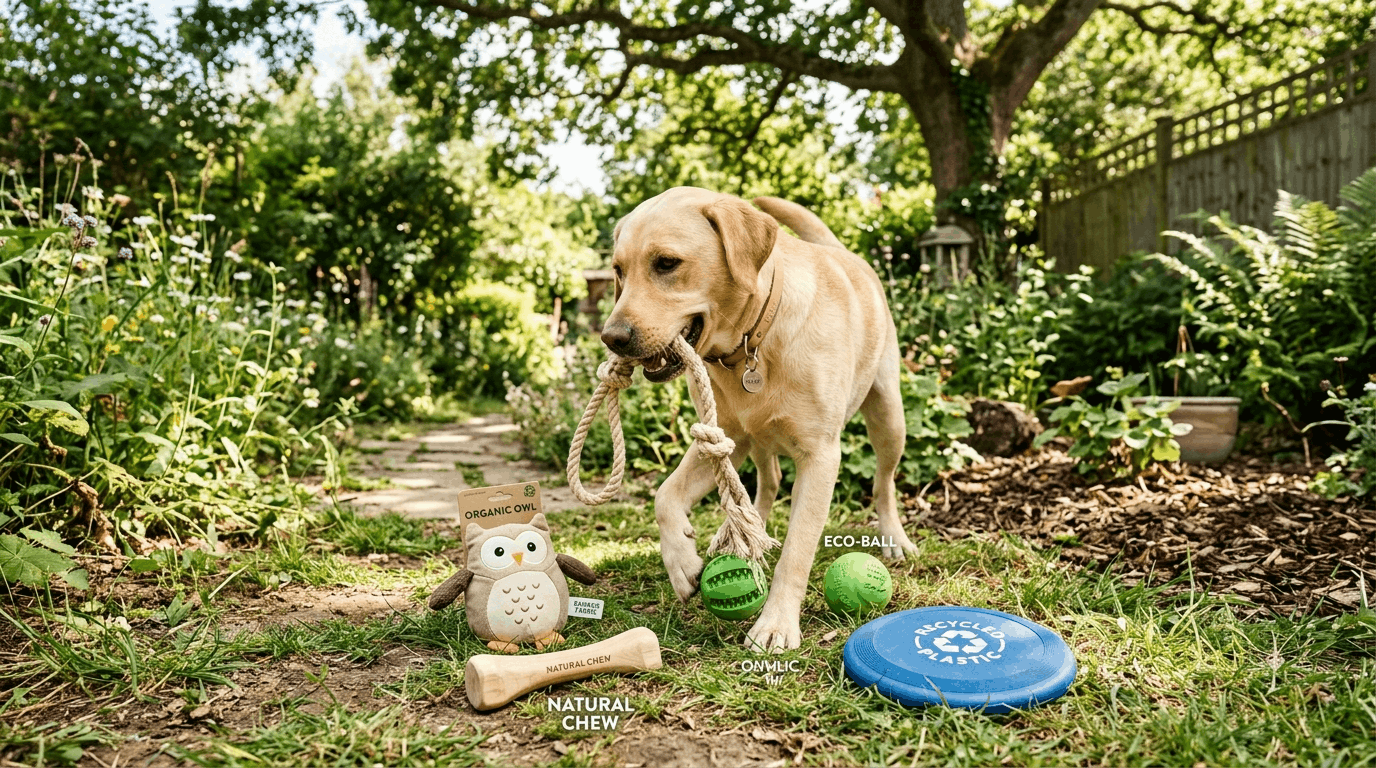
Eco friendly Labrador toys give active dogs a better way to chew, fetch, tug, and stay mentally engaged while helping owners make safer choices for the home and the planet. Labradors need sturdy toys because they have strong jaws, high energy, and a natural love of carrying things in their mouths. However, durability should not come at the cost of safety. A good toy should match your dog’s size, chewing style, play habits, and daily routine. It should also use materials that feel practical, responsible, and easy to clean. Therefore, choosing better toys is not just about buying something labeled “green.” It is about finding play items that can handle Labrador enthusiasm without exposing your dog to poor-quality materials or creating unnecessary waste.
Why Labradors Need Better Toy Choices
Labradors are playful, social, and often highly motivated by movement. They enjoy games that involve carrying, retrieving, chewing, and solving small challenges. Because of that, toys play a major role in their daily enrichment. A bored Labrador may chew furniture, steal shoes, dig, bark, or seek attention in frustrating ways. However, the right toy can redirect that energy into safer, healthier behavior.
Many owners buy toys quickly, especially when a product looks cute or claims to be tough. Yet Labradors can destroy weak toys within minutes. When that happens, small pieces may break off, stuffing may scatter across the floor, and the toy often ends up in the trash. Over time, this creates more waste and more risk. Eco friendly Labrador toys can help solve both problems when they use stronger materials, thoughtful design, and fewer disposable parts.
Safety should come first. A toy should not splinter, shed dangerous fibers, or break into pieces your dog can swallow. It should also fit your Labrador’s mouth. Toys that are too small can become choking hazards, while oversized toys may frustrate your dog and reduce interest. In addition, owners should inspect toys often. Even the best toy can wear down after repeated chewing, tugging, and outdoor play.
What Makes a Toy Eco-Friendly and Safe?
A toy becomes eco-friendly when it reduces waste, uses responsible materials, lasts longer, or supports cleaner production choices. Some brands use natural rubber, recycled fibers, hemp, organic cotton, wool, bamboo, or repurposed plastic. Others focus on durability, repairable designs, minimal packaging, or recyclable materials. However, the label alone does not guarantee quality. Owners still need to look at construction, stitching, texture, smell, and size.
Eco friendly Labrador toys should feel sturdy without being too hard. Very hard toys can damage teeth, especially if they do not flex under pressure. As a simple rule, avoid toys that feel harder than your dog’s teeth or cannot slightly give when pressed. Rubber toys should feel firm but not rock-solid. Rope toys should use tight, strong fibers and should not unravel easily. Plush toys should have reinforced seams, especially if your Labrador likes to shake or carry them.
Material transparency also matters. Look for brands that clearly explain what the toy contains. Vague claims such as “natural,” “safe,” or “non-toxic” may sound reassuring, but they do not always tell you enough. Better product pages usually mention the main material, country of manufacture, care instructions, and intended chewing level. This information helps you match the toy to your dog instead of guessing.
A sustainable toy should also suit your lifestyle. If a toy is hard to wash, smells bad after one week, or falls apart outdoors, you may replace it too often. Therefore, the most eco-conscious choice is often the toy your Labrador can use safely for a long time.
Best Materials for Labrador Play
Natural rubber often works well for Labradors because it can handle chewing, bouncing, and treat stuffing. It gives active dogs a satisfying texture without creating the same waste pattern as flimsy plastic toys. Many rubber toys also work for enrichment because you can fill them with soft food, kibble, or dog-safe treats. As a result, they can slow fast eaters and keep your dog busy during quiet times.
Recycled rubber can also make strong eco friendly Labrador toys when the manufacturer uses safe, pet-appropriate processes. These toys may suit fetch, chewing, and outdoor games. However, you should still check odor and texture. A strong chemical smell may suggest poor quality or irritating materials. If the toy smells unpleasant to you, it may not belong in your dog’s mouth.
Hemp and organic cotton can work well for tug toys, soft chew toys, and gentle indoor play. Hemp fibers tend to be strong, and they often suit dogs that enjoy gripping and pulling. However, fabric toys need supervision because some Labradors love to shred. Once threads loosen, remove the toy until you can trim or replace it. This simple habit helps reduce swallowing risks.
Recycled polyester plush toys may appeal to dogs that love carrying soft items. While they may not suit power chewers, they can work for gentler Labradors. Choose designs with reinforced seams and minimal loose parts. Avoid toys with plastic eyes, glued decorations, bells, or tiny accessories. A Labrador does not care about cute details, but those details can create hazards.
Choosing Toys by Play Style
Every Labrador has a different play style. Some dogs chew intensely. Others prefer fetch, tug, puzzle games, or carrying soft toys from room to room. Because of this, eco friendly Labrador toys should match the behavior you want to support. A power chewer needs a dense rubber chew toy, not a thin plush toy. A fetch-loving dog needs a ball or bumper that can survive repeated outdoor use. A food-motivated dog may enjoy a puzzle feeder or treat-dispensing toy.
For chewers, choose toys with smooth surfaces, strong edges, and enough size to prevent swallowing. Avoid brittle materials and toys with parts that break off easily. You should also rotate chew toys rather than leaving every toy out all day. Rotation keeps toys interesting and gives you a chance to inspect each one.
For fetch, look for durable balls, bumpers, and discs made from safer rubber or recycled materials. Labradors often love water, so floating toys can add variety during supervised swim sessions. However, outdoor toys should dry quickly and resist mildew. After muddy play, rinse them and let them air-dry before storing them.
For tug, choose wide, sturdy toys that protect your hands and give your dog a comfortable grip. Hemp ropes, recycled fabric braids, and rubber tug toys can work well. Still, tug games need rules. Teach your Labrador to drop the toy on cue, pause when asked, and restart calmly. This keeps tug fun without turning it into rough, uncontrolled play.
Durability Matters More Than Cute Design
A cute toy may look great online, but Labradors need more than cute. They need construction that matches their strength. Durable toys reduce waste because you replace them less often. They also reduce the chance of loose stuffing, broken squeakers, and swallowed fragments. Therefore, durability supports both safety and sustainability.
Eco friendly Labrador toys should have practical shapes. Round toys should not be small enough to lodge in the throat. Long toys should not split into sharp pieces. Stuffed toys should not rely on weak seams. If a toy has a squeaker, make sure the outer layer can withstand your dog’s chewing style. Many Labradors enjoy squeakers, but some dogs become obsessed with removing them.
Weight also matters. A heavy toy may feel durable, but it can hurt if your dog drops it on paws, floors, or people. It may also damage teeth during excited play. On the other hand, a toy that feels too light may not survive a strong Labrador mouth. The best choice sits between those extremes. It feels solid, flexible, and easy for your dog to carry.
You should also think about the toy’s end of life. Some brands offer recycling programs or use materials that create less landfill waste. Others sell replacement parts or simple designs that last longer. While no toy lasts forever, a longer-lasting toy almost always creates less waste than a cheap toy that fails quickly.
Safer Enrichment for Busy Labradors
Mental enrichment matters as much as physical play. Labradors are intelligent dogs, and many need more than a walk to feel settled. Puzzle toys, treat dispensers, snuffle mats, and slow-feeding toys can help your dog use their nose and brain. These tools may also reduce boredom chewing because they give your Labrador a job.
Eco friendly Labrador toys designed for enrichment should be easy to clean. Food residue can build up quickly, especially in grooves and corners. Choose toys that open easily, rinse well, or fit in the dishwasher if the manufacturer allows it. Clean toys after messy fillings, and avoid leaving soft food inside for long periods.
Snuffle mats made from recycled fabric can work well for dry treats or kibble. They encourage sniffing, which many dogs find calming. However, fabric mats need supervision. If your Labrador starts chewing the mat instead of searching for food, put it away and try a sturdier puzzle toy.
Treat-stuffable rubber toys can help during crate time, quiet work hours, or rainy days. Use part of your dog’s regular meal to avoid extra calories. You can also add a small amount of plain yogurt, pumpkin, or wet food if your dog tolerates it. However, keep portions modest because Labradors gain weight easily.
Cleaning, Rotation, and Toy Care
Good toy care helps eco friendly Labrador toys last longer. It also keeps your home cleaner and reduces odor. Wash rubber toys often, especially after treat stuffing or outdoor play. Rinse rope toys after muddy games, then dry them fully. Wash fabric toys according to the label, and discard them when seams fail or stuffing appears.
Toy rotation can make a big difference. Instead of leaving ten toys on the floor, offer two or three at a time. After a few days, swap them with clean toys from storage. This keeps your Labrador interested and helps you spot damage before it becomes a problem. It also makes each toy feel new again without buying more.
Storage matters too. Keep outdoor toys separate from indoor toys, especially if they collect dirt, sand, or pond water. Use a basket that allows airflow, not a sealed bin filled with damp toys. Mold and odors can develop when wet toys sit in closed spaces. A simple drying routine can extend toy life and improve hygiene.
Inspect toys weekly. Look for cracks, loose threads, missing pieces, sharp edges, and deep chew marks. If a toy changes shape or starts shedding pieces, retire it. Replacing one unsafe toy costs less than dealing with a swallowed object or dental injury.
Mistakes to Avoid When Buying Dog Toys
One common mistake is choosing toys based only on eco claims. A toy can use recycled materials and still fail quickly if it lacks strong construction. Another mistake is buying toys that suit small dogs, then giving them to a Labrador. Size mismatch can create choking risks and frustration. Therefore, always choose toys made for medium to large dogs, with your Labrador’s chewing strength in mind.
Some owners also assume “natural” always means safe. Natural fibers, wood, or bones can still splinter, unravel, or create digestive risks. Natural does not mean risk-free. Check every material and watch how your dog uses it. If your Labrador destroys a toy quickly, that toy does not suit your dog, even if the brand markets it as sustainable.
Avoid toys with loose decorations, small buttons, glued-on parts, thin plastic pieces, or weak squeaker pockets. Labradors often enjoy removing parts, and those pieces can end up in the stomach. Also, avoid tennis balls for heavy chewing. While many dogs love them, strong chewers can wear down the outer surface and damage the ball quickly. Safer fetch balls designed for dogs usually last longer.
Eco friendly Labrador toys work best when owners choose with purpose. Ask what job the toy should do. Should it satisfy chewing, encourage fetch, slow eating, support tug, or provide comfort? Once you know the job, you can choose a safer and more durable option.
Conclusion: Better Toys Create Better Play
Eco friendly Labrador toys can support safer play, reduce waste, and give your dog healthier ways to use energy. The best choices combine durable design, appropriate size, responsible materials, and easy cleaning. They also match your Labrador’s real behavior rather than an ideal version of play. A gentle carrier may enjoy a recycled plush toy, while a strong chewer needs tough rubber. A fetch lover may need a floating bumper, while a food-focused dog may thrive with treat-dispensing enrichment.
Choosing sustainable dog toys does not require perfection. Instead, it requires better habits. Buy fewer toys, but choose stronger ones. Rotate them often, clean them well, and retire damaged items before they become unsafe. Over time, these small decisions can create a safer home, a happier Labrador, and less unnecessary waste. When your dog can chew, tug, fetch, and explore with toys that last, playtime becomes better for both your Labrador and the world they live in.
FAQ
1. Are Sustainable Toys Strong Enough for Labradors?
Yes, many sustainable toys can work well for Labradors when they use strong materials and smart construction. Natural rubber, recycled rubber, hemp, and reinforced fabric can handle regular play. However, power chewers still need close supervision and tougher designs.
2. What Materials Should I Avoid in Labrador Toys?
Avoid brittle plastic, weak seams, loose decorations, glued-on parts, and toys that break into sharp pieces. Also, avoid toys that smell strongly chemical or shed fibers quickly. These signs may point to poor quality or safety concerns.
3. How Often Should I Replace My Dog’s Toys?
Replace toys when you see cracks, missing pieces, loose stuffing, frayed rope, sharp edges, or deep chew damage. Some toys last months, while others may wear out faster. Weekly inspection helps you catch problems early.
4. Are Plush Toys Safe for Large Dogs?
Plush toys can suit gentle Labradors that like carrying soft items. However, they may not suit dogs that shred, swallow stuffing, or hunt for squeakers. Choose reinforced plush toys and supervise play closely.
5. What Is the Best Toy Type for a Bored Labrador?
A treat-dispensing rubber toy, puzzle feeder, or snuffle mat can help a bored Labrador use their brain. For best results, rotate enrichment toys and use part of your dog’s regular meal to avoid extra calories.