Cruciate ligament injury in Labradors is a reason to open a surgical college page and to call your own clinic, not a reason to finish a diagnosis from a chair. The page to open is the American College of Veterinary Surgeons page on cranial cruciate ligament disease. A second page is the Animal Medical Center note from New York. Read them in their own words. This article does not restate their medical findings, their numbers, or their procedure names as advice.
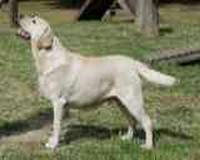
This is not veterinary advice, a diagnosis, or a treatment plan. If your Labrador is lame, in pain, or unwilling to use a leg, contact a veterinarian. If the dog is in severe distress, use the emergency service your clinic has already given you. Do not wait to compare articles. The photograph is Yellow Labrador Retriever 2 by SixtyWeb, CC BY-SA 3.0, via Wikimedia Commons. It is a licensed photograph of a dog, not a generated scene and not a laptop keyboard.
Cruciate ligament injury in Labradors is the name of the topic you may need to ask about. It is not a label you should write on the dog before an examination. If this article and the ACVS page disagree, the ACVS page controls. If the clinic and the page disagree about your dog, the clinician who has examined the dog controls. A blog sits behind both.
Cruciate ligament injury in Labradors starts with the page, not a procedure
Copy the ACVS address and the date you opened it. If you want the clinician to look at a heading, copy the heading and say it is theirs. Do not shorten a paragraph into a claim about how often the injury happens, which breeds are listed, or what fraction of dogs later have a problem in the other leg. Those are the kinds of sentences that made an earlier draft fail review. They stay on the page that wrote them.
Copy the Animal Medical Center address the same way, as a second note. If the two pages use different words, keep both words. Do not blend them into a sentence neither hospital wrote. A blended sentence feels sourced because two links sit nearby. It is not sourced. It is a new claim.
If a menu on the site hides the article, use the address printed here and write down whether it opened. Do not swap in a different hospital because the first click failed. A different hospital is a different source, and it does not inherit the citation you meant to check.
What you may write about your own dog
Write which leg, what you saw, and when you saw it. Use ordinary words: the dog hesitated at a step, held a foot up, or sat in a way that looked unfamiliar. If you are not sure which leg, say you are not sure. A confident guess is worse than a blank, because the clinic may record it.
Add what the dog was doing that day only if you know it. A walk, a retrieve, or a jump into a car is context, not a cause. This article will not tell you that one of those activities tore a ligament. It will not tell you that body weight, fitness, or a genetic note explains the limp. Those are questions for the examination, and the ACVS page is where general discussion of the topic lives, unread until you open it.
Do not add a list of signs from memory. A list is a diagnosis wearing casual clothes. The clinician has their own examination. Your job is the history they cannot see: the day it started, whether it has changed, and what you have already done, including any rest or any product you gave.
Bring the products, not a dose you invented
If the dog is already on a food, a medicine, or a supplement, copy the full product name, the amount you actually give, and the measuring unit. Bring the package or a photograph of the whole label. This article will not tell you to start, stop, or change any of those items. It has no dose. It will not name a drug to give for pain, and it will not tell you to use a human medicine.
If a caregiver already gave something, write that down before the visit rather than hoping it will not matter. The clinic needs the real timeline. A missing product name should stay missing. Do not fill it with the brand you think it probably was.
Ask the clinic what to do about exercise between now and the visit, and follow that answer. Do not invent a rest period from this article, and do not invent a walk length. If carrying out their instruction is difficult in your house, say so. A plan you quietly change is not the plan they think you have.
Questions for the visit, written as questions
Ask what the examination showed and what is still unknown. Ask whether imaging or another step is for this dog, and what that step is meant to answer. Ask what the result would change. A test with no question attached is hard to use later, and this article will not prescribe a panel.
Ask the clinician to name any procedure in their own words if they recommend one, including what it is for and what the recovery instruction is for this dog. Do not arrive with a procedure chosen from a blog. Do not ask this article which operation is best. The ACVS page may discuss approaches. Read that page for their description, then let the surgeon who has seen your Labrador say whether any of it applies.
Ask when they want to see the dog again, what should prompt an earlier call, and which number to use after hours. Write the answers on the card before you leave the building. A remembered answer from the car park is shorter than the answer you were given, and the missing half is often the limit.
Keep the other leg and the other dog off the conclusion
A second leg, a second dog, or a story from another owner is not evidence about this visit. If you are worried about another limb, write a separate observation and ask. Do not conclude that what happened once will happen again. The earlier draft of this topic repeated a fraction about the other knee. That fraction is not reprinted here. If a page states a figure, read it there, on the day you open it, and ask the clinician whether it has anything to do with your dog.
Parent paperwork, hip scores, and elbow scores are different documents. Bring them if you have them, and ask whether they matter for this lameness. Do not treat a screening certificate as an explanation of a limp. A certificate names a test and an animal. It does not examine the dog in front of you today.
Weight and food questions can sit on the same card without becoming a theory. Copy the food name and the amount. Ask the clinic to assess body condition if they think it belongs in the visit. Do not start a new diet because a blog connected weight to knees. If they change the food, ask for the new name, the amount, and the review date in writing.
One household, one card
Put the card where the person who walks the dog will see it. Include the clinic number, the after-hours number, and the instruction you were actually given. If there is no instruction yet, the card says the appointment time and the observation. It does not say a diagnosis you hope to confirm.
If someone in the house finds an article that names operations, recovery months, or a percentage of dogs, do not copy those lines onto the card. Send them to the ACVS address instead. Two versions of the same topic are how a rejected draft and a scheduled draft end up saying different medical things. This piece is the one that refuses the unsourced sentences.
Do not buy a brace, a supplement, or a set of exercises to feel prepared. Ask first. A product can be wrong for the leg even when the label sounds helpful. The clinic can tell you whether any item belongs in the plan. Until they do, the item stays in the shop.
What this article refuses
It refuses a list of signs presented as a way to recognise the injury at home. It refuses a claim that Labradors as a group have a stated risk, unless you are reading that claim on the ACVS page itself rather than here. It refuses a claim about the other leg. It refuses recovery times, implant names, and success rates. None of those are needed to make the phone call.
It refuses to say that rest alone is enough, or that an operation is required. Both of those are plans. Plans come from the examination. It also refuses a home test that manipulates the knee. Do not pull, twist, or compare the legs in order to imitate an examination you saw described somewhere else. You can make a painful leg worse, and you can confuse the very test the clinician needs.
It refuses a citation that was not opened. The two addresses in the first paragraph are the ones to use. If either address fails when you try it, write that it failed and ask the clinic for the page they prefer. Do not keep a broken link as decoration under a medical sentence.
Where the card stops
The card stops at the observation, the two addresses, the products already in use, and the clinic’s instruction. It does not stop at a theory about why the leg failed. A theory can be a question at the bottom of the page, marked as a question. It should not be the title of the note.
Before the visit, open the ACVS page and the Animal Medical Center page again if your copies are old. Then put the phone number on the same line as the appointment. Cruciate ligament injury in Labradors is a topic you prepare by reading and by being examined. The practical tip is to copy the ACVS address, the product names you already use, and the clinic’s after-hours number onto one dated card, and to leave every figure and every procedure name on the source page instead of on the card.