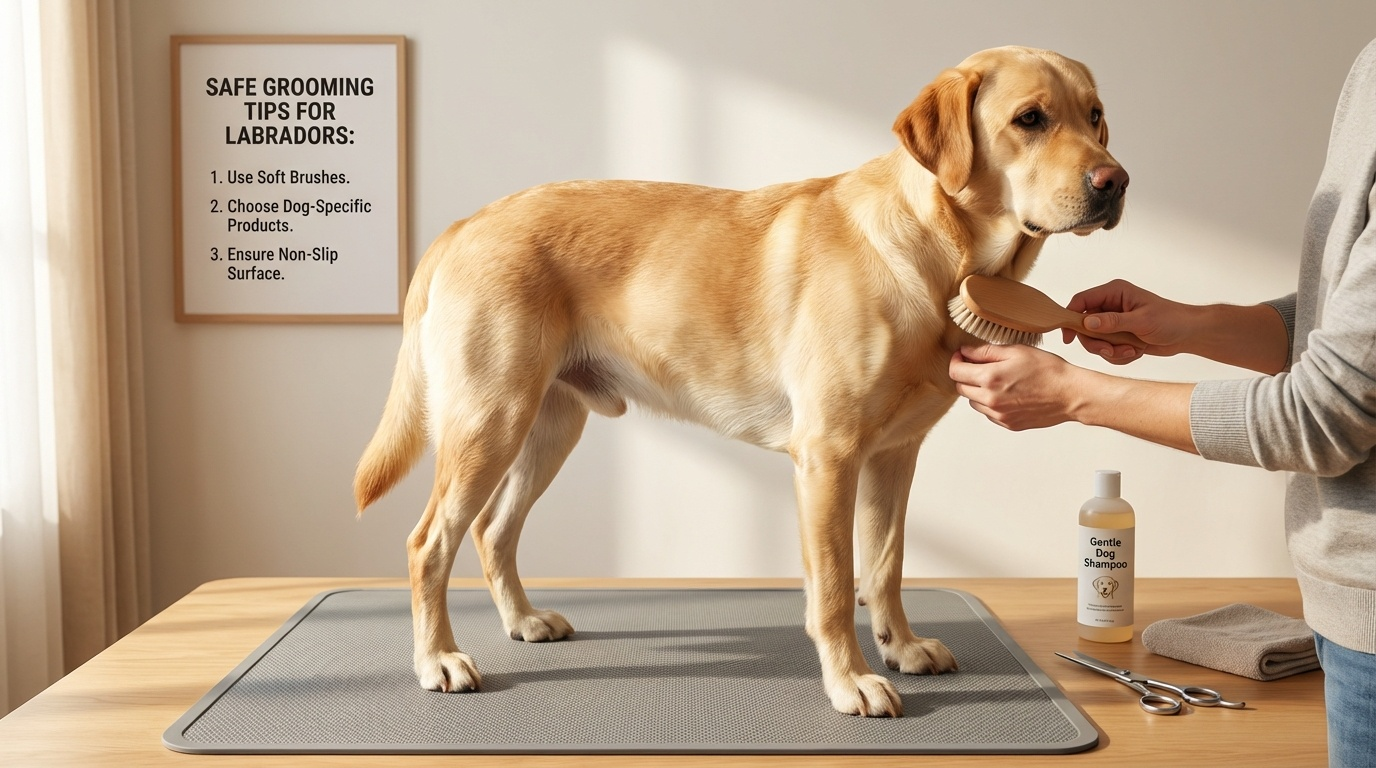
Safe Labrador grooming matters more than many owners realize. Labradors have unique grooming needs because of their dense double coat, active lifestyle, and sensitive skin. Although they shed heavily and require routine care, not all grooming methods are safe or effective for this breed. Understanding what veterinarians recommend helps you avoid irritation, injury, and coat damage. With the right approach, safe Labrador grooming tips transform grooming time into a healthy, bonding experience rather than a frustrating chore.
Many owners assume grooming is simple—brush, bathe, and trim if necessary. However, improper grooming techniques can harm your Labrador’s skin barrier, damage the coat, or cause unnecessary stress. Vets frequently see problems caused by harsh products, aggressive brushing, over-bathing, and unsafe tools. When grooming becomes uncomfortable, Labradors may resist or develop anxiety around care routines. Using safe Labrador grooming tips keeps grooming gentle while promoting long-term health.
Whether you’re a new Labrador owner or someone looking to improve your grooming routine, incorporating veterinarian-backed methods ensures your dog stays clean, comfortable, and confident. Safe grooming is not about doing more—it’s about doing the right things consistently and thoughtfully.
Why Safe Labrador Grooming Tips Matter According to Veterinarians
Veterinarians emphasize safe grooming practices because Labradors have double coats designed for protection. Their insulating undercoat regulates temperature and repels moisture, while the outer coat shields them from debris and water. Unsafe grooming techniques can disrupt this natural system. When the coat becomes damaged or stripped of essential oils, the skin dries out, leading to irritation, hot spots, or infections.
Another reason vets recommend safe Labrador grooming tips is the breed’s sensitivity. Although Labradors appear tough and hardy, their skin can react strongly to harsh chemicals or overhandling. Many dogs develop allergies, rashes, or ear infections when grooming isn’t done correctly. Grooming plays a role in early detection of medical issues too. When you handle your Labrador regularly, you can identify lumps, parasites, or injuries sooner.
Additionally, safe grooming supports mental well-being. Labradors love structure and positive experiences. Using gentle grooming methods builds trust and encourages relaxation. When grooming feels safe, your dog views it as part of a comforting routine instead of something stressful.
Safe Labrador Grooming Tips for Brushing the Double Coat
Brushing is one of the most important safe Labrador grooming tips veterinarians emphasize. Regular brushing removes loose hair, distributes natural oils, and prevents matting. It also reduces shedding around your home. Because Labradors shed year-round and even more during seasonal changes, brushing plays a major role in keeping the coat healthy.
Use the right tools to protect the coat and skin. A slicker brush helps remove loose fur, while a soft undercoat rake reaches deeper layers without damaging the skin. Brush gently in long, smooth strokes. Avoid pressing too hard, especially during shedding season. Aggressive brushing can irritate the skin and break hairs at the root.
Start with the outer coat and then move to the undercoat. Brush in the direction of hair growth to promote comfort. Many Labradors enjoy brushing because it feels like a massage. If your dog becomes restless, take breaks and keep the experience positive. Consistent brushing two to three times a week maintains coat health without overwhelming your dog.
Avoid tools that strip the undercoat too aggressively. Some de-shedding tools remove protective layers that Labradors need for insulation. Veterinarians recommend using gentle tools designed specifically for double-coated breeds.
Safe Labrador Grooming Tips for Bathing Without Irritation
Bathing helps maintain cleanliness, but over-bathing causes problems. Veterinarians frequently warn owners not to bathe Labradors too often. Because the coat contains natural oils that protect the skin, frequent baths strip these oils, leading to dryness and itching.
Bath your Labrador every four to six weeks unless they become visibly dirty. Always use shampoos designed for dogs. Human shampoos disrupt pH balance and can trigger irritation. Choose shampoos with natural ingredients such as oatmeal, aloe vera, or chamomile. These ingredients cleanse while soothing the skin.
Water temperature also matters. Warm—not hot—water prevents drying and overheating. Rinse thoroughly to remove all shampoo. Leaving behind residue can cause flaking or itching. After bathing, dry the coat completely with a towel. Labradors naturally shake off water, but thick coats trap moisture near the skin. A damp coat increases the risk of fungal infections. Drying fully is one of the most crucial safe Labrador grooming tips vets highlight.
Conditioners designed for dogs help restore moisture to the coat. Choose lightweight, natural conditioners to avoid buildup. Conditioners make brushing easier and support coat strength.
Safe Labrador Grooming Tips for Ear Cleaning
Labradors are prone to ear infections because their floppy ears reduce airflow. Moisture, wax, and debris accumulate quickly. Veterinarians strongly recommend routine ear cleaning as part of safe Labrador grooming tips. However, it must be done correctly.
Use a vet-approved ear-cleaning solution. Pour a small amount into the ear canal, massage gently, and allow your dog to shake out the excess. Wipe the outer ear with a soft cloth or cotton pad. Never use cotton swabs inside the ear canal. They can push debris deeper and risk injury.
Check ears weekly for redness, odor, or discharge. These signs indicate infection, and you should contact your veterinarian immediately. Routine cleaning prevents bacteria growth and keeps your Labrador comfortable.
Safe Labrador Grooming Tips for Nail Trimming
Long nails cause pain, poor posture, and difficulty walking. Trimming nails regularly is essential. Yet many owners fear cutting too short. Veterinarians recommend safe nail trimming techniques to prevent injury.
Use sharp, high-quality nail clippers designed for medium or large dogs. Trim only a small amount at a time. Look for the white outer layer narrowing near the pink quick. Cutting gradually prevents hitting the quick, which bleeds and causes pain.
If your Labrador hates nail trimming, introduce desensitization techniques. Touch their paws gently daily. Reward calm behavior. When trimming becomes familiar, your dog relaxes. One of the best safe Labrador grooming tips is trimming nails after exercise. Tired dogs are calmer and easier to handle.
Styptic powder should be nearby in case you accidentally cut the quick. Although this rarely happens with careful trimming, preparation ensures safety.
Safe Labrador Grooming Tips for Paw and Pad Care
Labrador paws endure rough surfaces, long walks, and outdoor adventures. Paw care prevents cracking, cuts, and infections. Veterinarians stress checking paws regularly for splinters, burrs, and debris. Rinse paws after walks to remove dirt, chemicals, and allergens.
Use natural paw balms during dry months. These balms moisturize pads and prevent cracking. Avoid human lotions because they contain chemicals unsafe for dogs.
Trim hair between paw pads to prevent matting and slipping. Use rounded grooming scissors and cut safely away from the skin. This simple step helps your Labrador gain traction on smooth floors and prevents irritation.
Safe Labrador Grooming Tips for Shedding Season
Labradors shed heavily twice a year. During shedding seasons, safe Labrador grooming tips become especially important. Increase brushing frequency to daily, but maintain gentle techniques. Use an undercoat rake to remove dead fur without harming the healthy coat.
Bathe more strategically during shedding season. A warm bath loosens dead hairs, making them easier to brush out. Use moisturizing shampoos to prevent dryness caused by increased grooming. Dry thoroughly to prevent mats.
Many owners feel overwhelmed by shedding, but maintaining a routine simplifies care. Shedding is natural; the goal is to manage it safely rather than eliminate it entirely.
Safe Labrador Grooming Tips for Coat Health Through Nutrition
Veterinarians emphasize that grooming begins inside the body. Diet plays a large role in coat shine, thickness, and skin condition. Omega-3 fatty acids from fish oil improve moisture retention and reduce inflammation. High-quality proteins promote healthy hair growth.
Vitamins A, E, and biotin support skin repair and coat density. Hydration also matters. Dehydrated skin flakes and irritates easily. Provide fresh water throughout the day. A balanced diet makes safe Labrador grooming tips even more effective because the coat responds naturally to internal nourishment.
Avoid foods with excessive fillers, artificial dyes, or preservatives. These ingredients may trigger allergies or dull the coat. Switching to high-quality food reduces skin irritation and enhances grooming results.
Safe Labrador Grooming Tips for Managing Sensitive Skin
Some Labradors have sensitive skin due to allergies or environmental triggers. Grooming these dogs requires even more care. Veterinarians recommend hypoallergenic shampoos, gentle brushing tools, and fragrance-free grooming products.
Limit exposure to chemical cleaning products and lawn treatments. These substances cling to the coat and irritate the skin. Wipe your Labrador’s coat after outdoor play during allergy seasons. Safe Labrador grooming tips ensure you avoid irritants that worsen skin issues.
When dermatitis or persistent itching occurs, contact your veterinarian. Prescription shampoos, supplements, or allergy testing may be needed. Safe grooming means knowing when medical care is necessary.
Safe Labrador Grooming Tips for Teeth and Oral Health
Although not traditionally part of grooming, oral care supports overall health. Labradors often develop tartar due to their hearty appetites. Veterinarians recommend brushing teeth several times per week using a dog-friendly toothpaste. Never use human toothpaste, as it contains harmful ingredients.
Dental chews complement brushing by reducing plaque. Safe Labrador grooming tips include choosing chews with natural ingredients to avoid stomach upset or chemical exposure. Healthy teeth improve quality of life and prevent costly dental procedures.
Safe Labrador Grooming Tips for Eyes and Facial Care
Eye hygiene is often overlooked. Labradors accumulate tear stains and debris around the eyes. Use a damp, soft cloth to wipe gently. Avoid chemical-laden wipes. Regular wiping prevents buildup and keeps your dog comfortable.
Check for redness, cloudiness, or discharge. These signs indicate infection or irritation. Safe Labrador grooming tips mean monitoring small details before they become major issues.
Safe Labrador Grooming Tips for Anxiety-Free Grooming Sessions
Your Labrador’s emotional comfort matters as much as physical cleanliness. Veterinarians emphasize using positive reinforcement to build trust. Praise, treats, and calm voices help your dog enjoy grooming sessions.
Introduce grooming gradually. Touch paws, ears, and tails gently during playtime to desensitize your dog. Keep grooming sessions short at first. End every session on a positive note.
One of the most effective safe Labrador grooming tips is establishing a routine. Dogs thrive on predictability. Groom at consistent times and locations to reduce stress. When grooming becomes familiar, anxiety fades.
Safe Labrador Grooming Tips for Professional Grooming Visits
Even though Labradors do not require haircuts, professional grooming still offers benefits. Groomers handle deep cleaning, nail trimming, and coat maintenance. Choose groomers trained in handling double-coated breeds. Ask about products they use and ensure they follow safe Labrador grooming tips.
Provide your groomer with information about allergies, sensitivities, or past grooming experiences. Good communication ensures safety and comfort. Professional grooming complements your at-home grooming routine.
Conclusion
Safe Labrador grooming tips protect the skin, coat, comfort, and overall health of one of the world’s most beloved breeds. Grooming goes beyond appearance—it supports physical well-being, prevents irritation, detects medical issues early, and strengthens your bond. When you follow veterinarian-backed grooming methods, every brushing session, bath, and nail trim becomes an opportunity to care for your Labrador in a meaningful way. With thoughtful practices, consistency, and gentle handling, you create a grooming routine that keeps your Labrador healthy, happy, and confident for years to come.
FAQ
- How often should I groom my Labrador?
Brush several times weekly, clean ears weekly, and bathe every four to six weeks. - What shampoo is safest for Labradors?
Use natural, dog-specific shampoos with ingredients like oatmeal or aloe. - Do Labradors need professional grooming?
Yes, periodic visits help with deep cleaning and specialized care. - How can I reduce shedding safely?
Brush regularly, especially during shedding season, and avoid harsh de-shedding tools. - Are Labradors prone to grooming-related skin issues?
Yes. Using gentle products and proper techniques reduces irritation and keeps skin healthy.