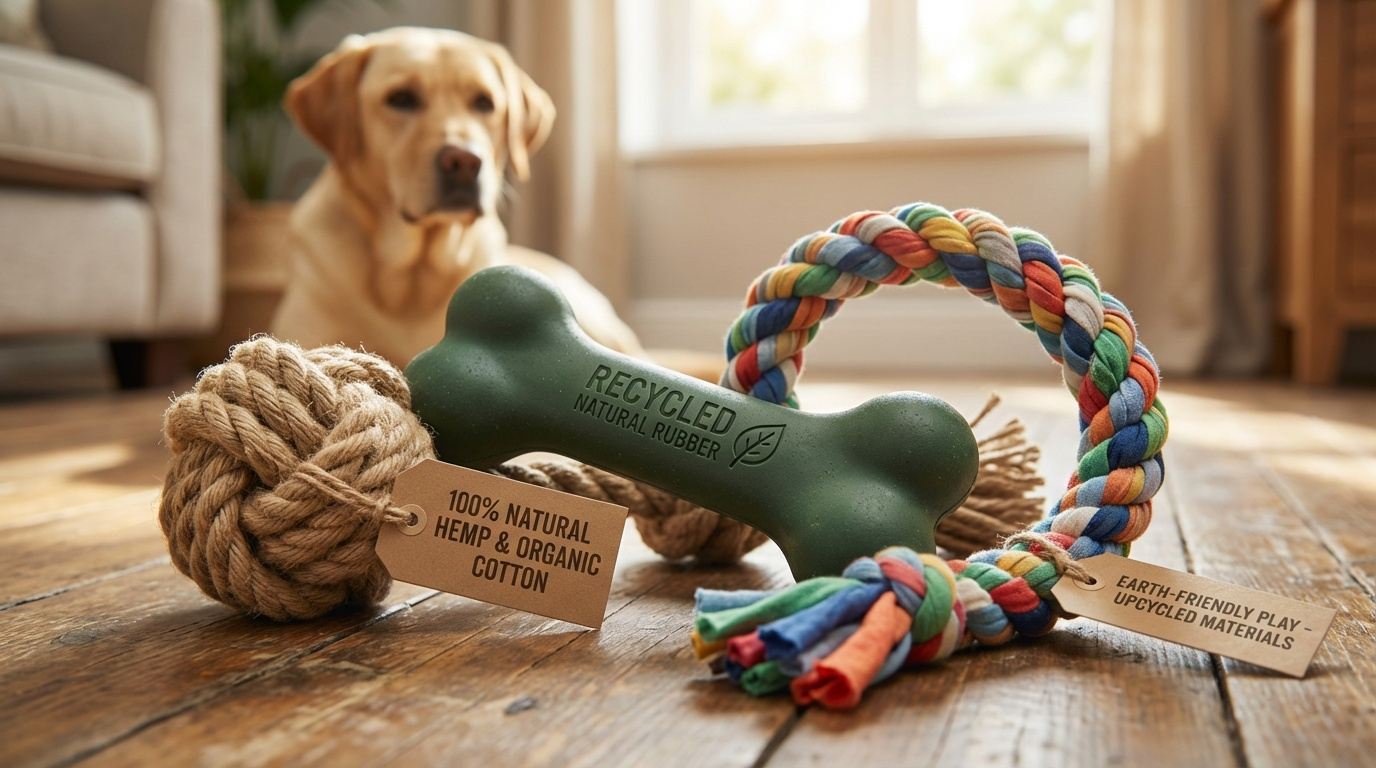
If you’ve ever lived with a Labrador, you already know how much they love toys. They chew them, chase them, retrieve them, and sometimes destroy them in minutes. Yet every broken squeaker or shredded plastic bone creates waste that adds up quickly. As concern for the environment grows, many owners are looking for ways to reduce Labrador toy waste without limiting their dog’s playtime. Fortunately, small changes in how you choose, use, and dispose of toys can dramatically decrease plastic pollution while still keeping your Labrador happy.
Labradors are active dogs with powerful jaws, making toy durability a real challenge. Many plastic toys marketed as “indestructible” still end up cracking or peeling. Although it might not seem significant at first, a year of toy use can generate a surprising amount of plastic waste. Reducing Labrador toy waste matters not just for the environment but also for your dog’s health. Plastic toys break into small pieces, which may be swallowed or scattered outdoors, where wildlife or waterways can be affected.
By making mindful decisions, you can maintain your Labrador’s quality of life while reducing environmental harm. From choosing sustainable materials to upcycling old toys, each step makes a meaningful difference. As you adjust your habits, you’ll discover that reducing Labrador toy waste is easier, more economical, and more fulfilling than expected.
Why Reducing Labrador Toy Waste Matters
Many Labrador toys are made of synthetic materials such as PVC, nylon, or hard plastic. These materials do not biodegrade and can persist in landfills and oceans for centuries. When you reduce Labrador toy waste, you help limit the spread of microplastics, protect wildlife, and promote more responsible consumer habits.
Plastic toys often splinter under pressure from Labrador jaws. These fragments contribute to pollution, especially when toys are used at parks, beaches, or backyards. Once a piece of plastic escapes into the soil or water, it rarely returns. Instead, it breaks down into microplastics that harm marine life and contaminate ecosystems.
Another reason to reduce Labrador toy waste involves safety. Some low-quality plastics contain chemicals that leach when chewed. These chemicals can irritate your dog’s mouth or digestive system. Sustainable alternatives are often healthier and more durable, making them better for your Labrador and the planet.
Choosing Durable Materials Helps Reduce Labrador Toy Waste
One of the easiest ways to reduce Labrador toy waste is choosing toys made from strong, sustainable materials. Labradors need toys that withstand intense chewing, yet many plastic toys fail within hours or days. By selecting better materials, you reduce replacements and cut long-term waste.
Look for toys made from:
- Natural rubber
- Hemp rope
- Organic cotton
- Recycled materials
- Bamboo fiber
- Durable fabric blends
Natural rubber toys resist shredding while avoiding synthetic chemicals. Hemp rope is biodegradable and strong enough for tug-of-war. Cotton toys offer safe chewing without contributing to plastic pollution. Recycled-material toys help divert existing waste from landfills.
When you choose long-lasting materials, you reduce Labrador toy waste significantly over the course of a year. High-quality toys cost more upfront but save money long-term by lasting longer.
How Buying Fewer, Better Toys Reduces Labrador Toy Waste
Labrador owners often feel pressured to purchase new toys frequently because their dog gets bored or destroys them quickly. However, buying more toys isn’t always the best approach. Instead, buying fewer high-quality toys reduces Labrador toy waste while maintaining your dog’s interest.
Toy rotation helps immensely. Keep several toys stored away and introduce one or two at a time. When you rotate toys weekly, your Labrador feels like the toy is new again. This strategy extends the lifespan of each toy and reduces wear.
Another tip involves choosing multi-purpose toys. A single durable toy that functions as a chew toy, fetch toy, and tug toy reduces the need for multiple plastic items. Puzzle toys made from sustainable materials also provide mental stimulation while cutting down clutter.
By focusing on quality rather than quantity, you significantly reduce Labrador toy waste and create a more sustainable play routine.
Repairing Toys Helps Reduce Labrador Toy Waste
Many Labrador toys break long before they’re truly unusable. Instead of immediately throwing them away, try simple repairs that extend their life. Repairing toys is a powerful way to reduce Labrador toy waste, especially with fabric or rope toys.
Some easy repairs include:
- Sewing torn seams
- Reinforcing weak areas with safe stitching
- Replacing stuffing
- Trimming frayed rope ends
- Removing damaged squeakers
Fabric toys often tear at the seams before the material fails. A quick repair can add weeks or months of use. Rope toys fray naturally, but trimming the ends prevents excessive shredding. Even replacing or removing a squeaker keeps the toy useful.
These small efforts reduce Labrador toy waste significantly over time and save money. Many Labradors prefer repaired toys because they carry familiar scents and textures.
Upcycling Old Items Into Toys Reduces Labrador Toy Waste
Upcycling turns everyday household items into enjoyable dog toys. This creative approach reduces Labrador toy waste while offering new ways to keep your dog entertained. Always supervise upcycled toys, and ensure materials are safe and free of choking hazards.
Some safe upcycling ideas include:
- Old T-shirts braided into tug ropes
- Socks tied with knots for gentle play
- Empty cardboard tubes filled with treats
- Towels twisted into chew-friendly toys
- Denim scraps turned into fetch toys
These homemade toys use materials you already have, reducing reliance on plastic dog toys. Upcycling also helps reinforce sustainability values in your home.
Upcycled toys offer another advantage: they’re customizable. You can adjust size, shape, and durability based on your Labrador’s chewing style. This personalization helps cut unnecessary purchases and reduces Labrador toy waste even further.
Choosing Brands That Prioritize Sustainability Reduces Labrador Toy Waste
More companies now design toys with sustainability at the forefront. When you support eco-friendly brands, you reduce Labrador toy waste and encourage the industry to adopt greener practices.
Look for brands that:
- Use biodegradable or recycled materials
- Offer toxin-free, natural dyes
- Avoid single-use plastic packaging
- Offer “trade-in” or recycling programs
- Use ethical manufacturing processes
Some companies even recycle old toys into new ones. Others offer discounts when you return worn-out items. These programs directly reduce Labrador toy waste by keeping materials within a circular system.
Before purchasing from a brand, read about their sustainability practices. Certifications and transparency indicate whether a company actively supports environmental responsibility.
Avoiding Single-Use Plastic Packaging Reduces Labrador Toy Waste
Packaging contributes massively to plastic waste. Many dog toys come wrapped in hard plastic, shrink wrap, or coated cardboard. Choosing products with minimal or recyclable packaging helps reduce Labrador toy waste immediately.
Some tips include:
- Buying toys sold loose without packaging
- Choosing packaging made from recycled paper
- Avoiding plastic blister packs
- Supporting brands with eco-friendly packaging policies
If you must buy packaged toys, recycle what you can. Cardboard and paper are easy to repurpose or recycle. Avoid plastic wrappers whenever possible.
Small changes in packaging choices reduce Labrador toy waste while saving energy and raw materials downstream.
Proper Disposal Practices Reduce Labrador Toy Waste
Disposal is often an overlooked part of sustainability. Even eco-friendly toys create waste eventually. Proper disposal reduces Labrador toy waste significantly by preventing items from ending up in waterways or landfills.
Here are smart disposal habits:
- Cut toys into smaller pieces to prevent wildlife hazards
- Separate components (fabric, rope, plastic) for easier recycling
- Recycle materials when possible
- Participate in toy recycling programs
- Dispose of damaged toys in secure bins
Because Labradors play outdoors, pieces of toys may scatter across yards, parks, or beaches. Collect and discard pieces before they blow away or wash into water systems. Taking responsibility for disposal greatly reduces Labrador toy waste and protects the environment.
Outdoor Play Tips to Reduce Labrador Toy Waste
Outdoor play with Labradors often leads to lost or damaged toys. To reduce Labrador toy waste, choose toy types designed for rugged environments or leash your toys during play to prevent them from drifting away.
Brightly colored toys help you keep track of them. Floating toys prevent sinking in lakes and ponds. Inspect toys before and after outdoor play to catch damage early.
Reducing Labrador toy waste outdoors also means avoiding toys that break easily when wet or exposed to sun. Sustainable materials like natural rubber and hemp withstand outdoor conditions better than thin plastics.
Reducing Labrador Toy Waste Through Enrichment Activities
Enrichment doesn’t always require toys. Labradors love mental challenges, scent work, and physical activity. Incorporating enrichment that doesn’t rely on plastic toys reduces Labrador toy waste naturally.
Some enrichment alternatives include:
- Hide-and-seek games
- Sniffing trails with treats
- DIY puzzles using household items
- Obedience training sessions
- Fetch with natural materials like sticks (safe, smooth ones)
Enrichment satisfies your Labrador’s curiosity and energy needs. When you diversify activities, you rely less on physical toys, which further reduces waste over time.
Creating a Sustainable Toy Routine to Reduce Labrador Toy Waste
Your daily routine has a big impact on sustainability. Building a conscious system for toy management helps reduce Labrador toy waste consistently.
A simple sustainable routine could include:
- Rotating toys weekly
- Inspecting for wear every few days
- Repairing immediately when possible
- Upcycling old items into temporary toys
- Choosing eco-friendly toys at purchase
- Disposing of materials responsibly
When you follow this routine, you not only reduce Labrador toy waste but also improve your dog’s overall play experience. The more intentional you become, the less waste you create.
Teaching Gentle Play Helps Reduce Labrador Toy Waste
Not all Labradors play the same way. Some are gentle; others chew intensely. Training your Labrador to play with controlled energy can extend toy life and reduce Labrador toy waste dramatically.
Teaching commands like “Easy” or “Gentle” helps reduce destructive chewing. Redirect excessive chewing to durable toys. Encourage supervised play to prevent accidental tearing.
Over time, your Labrador learns which toys require gentle handling. This training reduces waste, saves money, and improves safety.
Conclusion
Learning how to reduce Labrador toy waste creates a healthier environment, saves money, and supports your dog’s well-being. With sustainable materials, smarter purchasing habits, creative upcycling, and proper disposal, every owner can make meaningful changes. Reducing waste isn’t about denying your Labrador toys; it’s about choosing wisely and caring for the planet at the same time. When you make mindful decisions, your Labrador enjoys safe, enriching play while you contribute to a cleaner world.
FAQ
- What materials are best for reducing Labrador toy waste?
Natural rubber, hemp, organic cotton, and recycled materials reduce waste effectively. - How many toys should a Labrador have?
A small rotation of durable toys works best and reduces unnecessary purchases. - Can old toys be recycled?
Some materials can be recycled, and several companies offer toy recycling programs. - What is the best way to repair damaged toys?
Sewing, trimming rope ends, and replacing stuffing extend toy life significantly. - Do Labradors need toys every day?
Yes, but toys can be rotated or paired with enrichment activities to reduce waste.