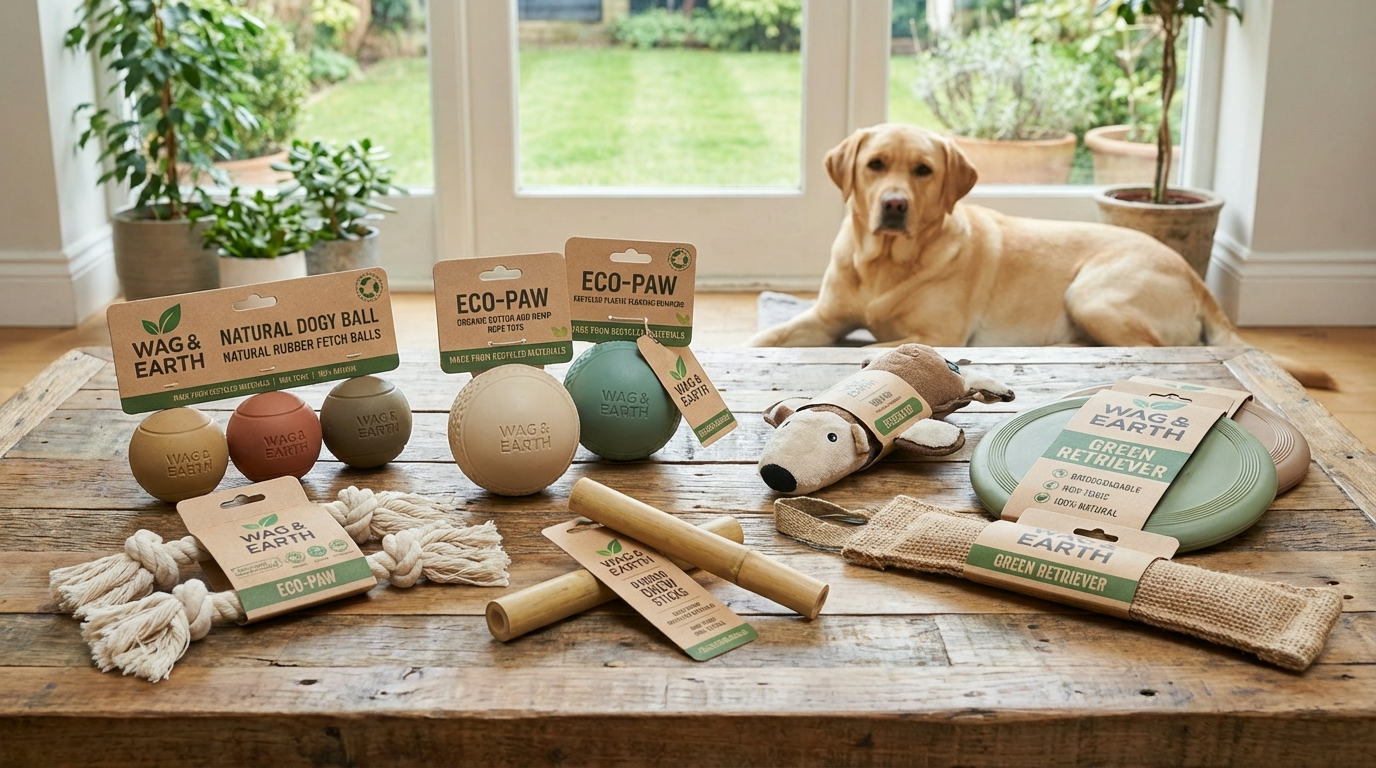
Walk into any home with a Labrador and you will likely find a toy graveyard. Torn ropes. Cracked balls. Half a squeaker. Labradors love to play hard, and most toys simply are not built to survive that enthusiasm. The result is constant replacement and an overlooked trail of plastic waste.
Sustainable toys for Labradors are changing this cycle. Instead of focusing on flashy designs, these toys prioritize durability, safety, and responsible materials. The goal is simple. Fewer broken toys. Less waste. Better play.
This shift does not require sacrifice. Labradors still get excitement and enrichment. Owners gain peace of mind. The planet benefits quietly in the background.
Why traditional dog toys fail powerful chewers
Most conventional dog toys are designed for mass appeal. Bright colors and novelty sell well. Strength often comes second.
Labradors apply serious jaw pressure. Brittle plastics crack. Thin rubber splits. Seams give way quickly.
Sustainable toys for Labradors approach design differently. Materials flex instead of snapping. Construction focuses on stress points. Failure becomes less likely.
When toys last longer, replacement slows naturally. Waste reduction follows without effort.
The problem was never Labradors. The problem was disposable design.
What makes dog toys sustainable in practice
Sustainability means more than green labels. It involves materials, longevity, and end-of-life impact.
Many eco-conscious dog toys use natural rubber, recycled fibers, hemp rope, organic cotton, or responsibly sourced wood. These materials either break down safely or reuse existing waste.
Manufacturing choices matter as well. Ethical labor, reduced emissions, and local production support broader environmental goals.
Packaging also plays a role. Minimal cardboard packaging beats plastic blister packs every time.
True sustainability considers the full lifecycle of the toy.
Why Labradors benefit most from eco-conscious toy design
Labradors test toys thoroughly. Weak products frustrate them.
Sustainable toys for Labradors are built for resilience. Natural rubber compresses and rebounds. Reinforced fibers resist tearing.
Safety improves alongside durability. Fewer sharp fragments break off. Chemical exposure drops.
Mental engagement also improves. Many sustainable dog toys focus on problem-solving rather than noise-based stimulation.
A mentally satisfied Labrador destroys fewer toys. That outcome supports sustainability automatically.
Sustainable dog toy brands reshaping the market
Several brands now design toys with longevity and responsibility in mind.
These companies reject the disposable model. Instead, they prioritize strong materials, simple construction, and real-world testing.
Although each brand takes a different approach, the shared goal remains clear. Reduce waste while meeting the needs of strong chewers.
Sustainable toys for Labradors from these brands perform under pressure, not just on packaging.
Recyclable durability through closed-loop design
Some manufacturers focus on reuse rather than disposal.
These sustainable dog toys use tough, recyclable materials designed to be returned and remade. Instead of ending in landfills, material re-enters production cycles.
For Labradors, durability remains the key benefit. Many of these toys withstand months of aggressive play.
Longevity proves to be the strongest form of waste reduction.
Natural rubber toys built for strength
Natural rubber remains one of the most effective materials for strong chewers.
Sustainable toys for Labradors made from responsibly sourced rubber flex under pressure without cracking. Texture keeps dogs engaged.
Chemical exposure decreases because artificial additives are avoided. Chewing becomes safer.
These toys often support environmental initiatives beyond product design, extending impact further.
Plant-based and fiber-reinforced toy options
Plant-based materials like bamboo fiber and hemp rope add strength without plastic reliance.
Eco-conscious dog toys using these blends balance toughness with chew appeal. Texture encourages interaction rather than destruction.
Artificial dyes and fillers are often removed. Simplicity improves safety.
Packaging remains minimal and recyclable.
Design stays intentional.
Recycled fabric toys that last longer
Plush toys usually fail Labradors quickly. Reinforced recycled fabric changes that outcome.
Some sustainable toys for Labradors transform plastic bottles into dense, stitched fabric. Waste is redirected into functional use.
Double stitching and thick seams extend lifespan. While not indestructible, these toys outperform traditional plush options.
Washable designs further extend usability.
Recycling becomes practical, not symbolic.
Natural chew alternatives that eliminate plastic
Chewing instincts do not always require toys.
Natural chews made from cheese, herbs, or plant fibers satisfy that urge without plastic.
Sustainable dog toy alternatives like these disappear once consumed. Nothing remains to discard.
Waste reduction becomes automatic.
Simplicity solves the problem entirely.
Why durability matters more than biodegradability
Biodegradable sounds appealing. Yet durability prevents waste immediately.
Sustainable toys for Labradors focus on long life first. A toy used for months avoids dozens of replacements.
Biodegradation matters eventually. Prevention matters now.
Balance defines real sustainability.
The hidden downside of squeakers and gimmicks
Squeakers shorten toy lifespan. They invite targeted destruction.
Many eco-conscious dog toys remove squeakers intentionally. Play becomes calmer. Toys last longer.
Fewer internal components simplify recycling or disposal later.
Less stimulation often improves focus.
Simple design wins.
Behavioral benefits of longer-lasting toys
Destruction often signals boredom. Durable toys offer lasting engagement.
Sustainable toys for Labradors emphasize interaction through tugging, retrieving, and problem-solving.
Engaged dogs destroy fewer household items.
Behavior improves without correction.
Enrichment replaces frustration.
Environmental impact beyond your backyard
Toy waste does not stay local. Plastic fragments persist for centuries.
Sustainable dog toys reduce that burden through safer materials and reuse models.
Manufacturing location matters too. Local production lowers transportation emissions.
Ethical supply chains support environmental responsibility further.
Impact extends far beyond playtime.
Choosing the right eco-conscious toy for your Labrador
Not all Labradors play the same way. Observation guides selection.
Heavy chewers need dense rubber. Retrievers prefer buoyant designs. Tug lovers enjoy rope blends.
Sustainable toys for Labradors often list durability levels clearly.
Rotating toys extends lifespan. Fewer toys used intentionally last longer.
Mindful choice multiplies impact.
Cost versus long-term value
Eco-conscious toys may cost more initially. Longevity offsets that cost.
Replacing cheap toys weekly adds up quickly.
Sustainable toys for Labradors deliver better value over time.
Safer materials may also reduce veterinary risks.
Quality saves money quietly.
Veterinary views on non-toxic dog toys
Veterinarians increasingly recommend non-toxic toys.
Chewing exposes dogs directly to materials. Safety matters.
Sustainable dog toys reduce chemical ingestion risks.
Dental safety improves when toys resist splintering.
Professional support continues to grow.
Packaging and plastic waste reduction
Packaging often creates as much waste as the toy itself.
Eco-conscious dog toys ship with minimal packaging.
Cardboard replaces plastic blister packs.
Less waste enters landfills immediately.
Responsibility starts at delivery.
Using images and alt text to support sustainability content
Images help tell the story visually. Alt text helps search engines understand it.
When adding images, use descriptive alt text such as “sustainable rubber dog toy for Labradors” or “eco-friendly chew toy made from natural rubber.”
Including phrases related to sustainable dog toys in image alt attributes improves accessibility and SEO alignment.
Clear descriptions benefit users and search visibility alike.
Supporting brands that reflect your values
Purchasing decisions shape markets.
Sustainable toys for Labradors become more available because owners choose them.
Supporting responsible brands encourages innovation.
Change accelerates collectively.
Every purchase counts.
Future trends in sustainable dog play
Material science continues to evolve.
Algae-based polymers, compostable rubbers, and plant composites show promise.
Sustainable dog toys will become even stronger and safer.
Innovation follows demand.
Progress moves steadily forward.
Why toy choices are an easy sustainability win
Food and grooming changes feel complex. Toy choices feel simple.
Switching to sustainable toys for Labradors creates immediate impact.
One durable toy replaces many disposable ones.
Small actions compound quickly.
Momentum builds fast.
Teaching sustainability through everyday pet care
Dogs create natural teaching moments.
Eco-conscious dog toys demonstrate responsibility to children.
Care extends beyond pets.
Values become visible.
Lessons last.
Conclusion
Sustainable toys for Labradors offer a practical solution to plastic waste without sacrificing fun or durability. By choosing stronger materials, simpler designs, and responsible packaging, owners reduce environmental harm while improving play quality. Labradors benefit from safer chewing, better engagement, and fewer broken toys.
Sustainability does not demand perfection. It requires intention. Each long-lasting toy replaces countless disposable ones over time. When play aligns with responsibility, Labradors thrive and the planet gains relief.
FAQ
1. Are sustainable dog toys strong enough for Labradors?
Yes, many are designed specifically for powerful chewers using dense rubber or reinforced fibers.
2. Do eco-conscious toys really last longer?
In most cases, durability is a core design goal, extending toy lifespan significantly.
3. Are recycled-material toys safe for dogs?
When produced responsibly, recycled toys are non-toxic and thoroughly tested for safety.
4. Why do sustainable toys cost more upfront?
Higher-quality materials and ethical production increase cost but reduce replacement frequency.
5. Can sustainable toys reduce destructive behavior?
Yes, durable and engaging toys often lower boredom-driven destruction.