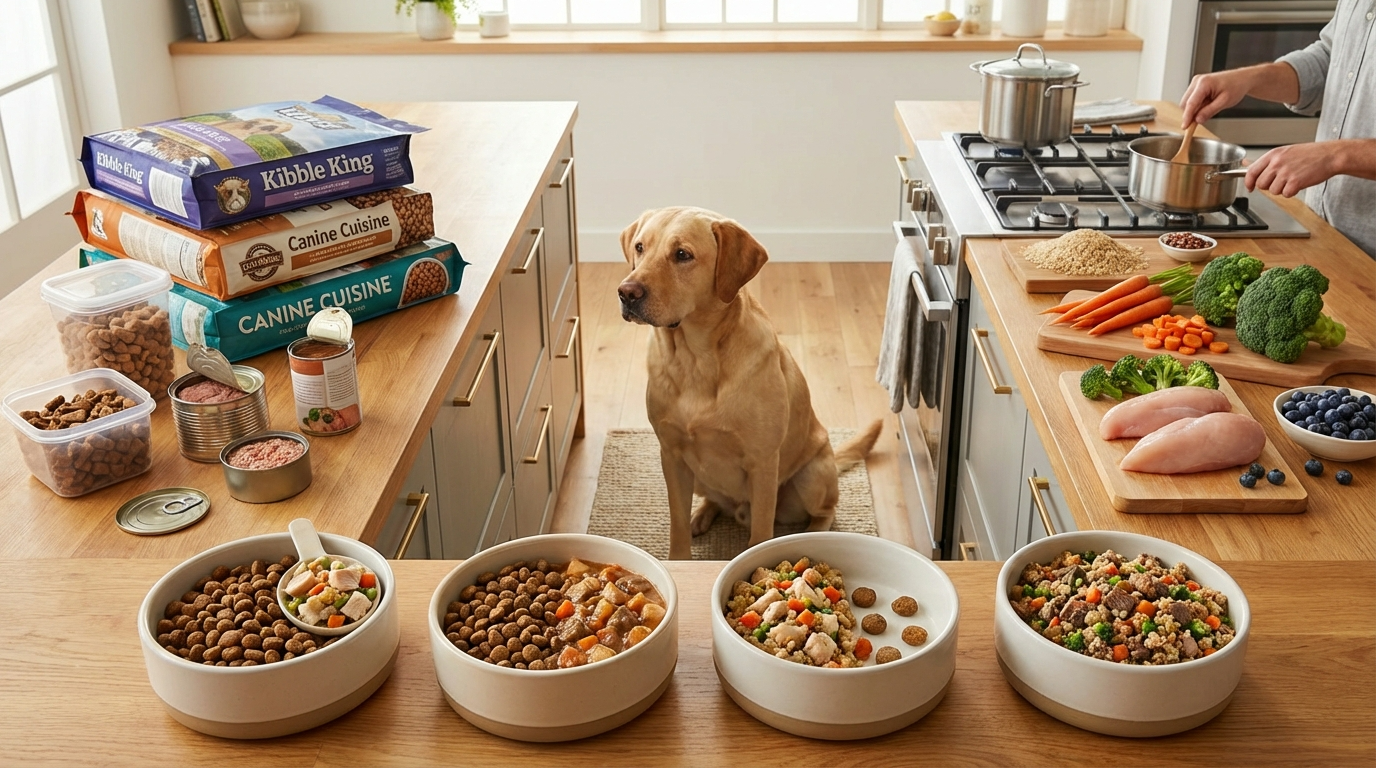
Switching your Labrador’s diet can feel exciting and intimidating at the same time. One day, the bowl is filled with dry kibble. The next, you’re chopping vegetables and cooking proteins with care. The idea of home-cooked meals sounds healthier, fresher, and more loving. Still, the transition matters more than many owners realize.
Labradors have hearty appetites and sensitive digestion. A sudden change can upset their stomach, disrupt gut bacteria, and lead to loose stools or refusal to eat. Because of that, learning how to transition your Labrador to home-cooked meals the right way is essential.
This guide walks you through the process step by step. Along the way, you’ll learn why gradual change works, how to balance nutrition, and what mistakes to avoid. Think of it like easing into a new workout routine rather than running a marathon on day one.
Why Labradors React Strongly to Diet Changes
Labradors are famous for enthusiasm around food. That excitement, however, doesn’t mean their digestive system adapts quickly. Inside your dog’s gut lives a complex community of bacteria. These microbes help break down food and absorb nutrients.
When kibble has been the main food source for years, the gut becomes specialized. A sudden switch to fresh food can overwhelm that system. As a result, gas, diarrhea, or vomiting may appear.
Additionally, Labradors are prone to food sensitivities and weight gain. Because of this, a controlled transition protects digestion while preventing overeating during the switch.
Understanding this biological reality sets the foundation for a successful transition.
Benefits of Home-Cooked Meals for Labradors
Many owners choose home-cooked meals because they want more control. Others want to avoid fillers, preservatives, or mystery ingredients. While quality kibble can still be nutritious, home-cooked food offers unique advantages.
Fresh ingredients often improve stool quality and digestion. Protein sources are visible and customizable. Vegetables add fiber and antioxidants in a natural form.
Energy levels may increase. Coats often become shinier. Some Labradors even show improved mobility when inflammation decreases.
However, benefits only appear when meals are balanced and introduced correctly. That’s why the transition period matters just as much as the food itself.
Preparing Before You Transition Your Labrador to Home-Cooked Meals
Before changing anything in the bowl, preparation is key. Jumping in without a plan can create nutritional gaps or digestive stress.
Start by learning basic canine nutrition. Dogs need protein, fats, carbohydrates, vitamins, and minerals in the right ratios. Unlike humans, they cannot thrive on variety alone.
Next, decide whether you’ll cook daily or prepare batches. Many owners cook once or twice a week and freeze portions. This approach saves time and keeps meals consistent.
Consulting a veterinarian or canine nutritionist is strongly recommended. This step ensures calcium, phosphorus, and micronutrients are properly balanced.
Once preparation is complete, the transition can begin smoothly.
How Long the Transition Should Take
A common mistake is rushing. Labradors may act eager, but their gut still needs time.
Most dogs do best with a transition lasting 7 to 14 days. Some sensitive Labradors may need up to three weeks.
The timeline depends on age, health, and previous digestive history. Puppies and seniors often benefit from slower transitions.
Listening to your dog’s body matters more than following a rigid schedule.
Day-by-Day Transition Plan
Days 1–3: Introducing Home-Cooked Food Slowly
During the first stage, kibble remains the primary food. Only a small portion of home-cooked food is added.
A typical ratio is 75% kibble and 25% home-cooked meals. Everything should be mixed thoroughly to prevent selective eating.
At this stage, digestion is observed closely. Stool consistency provides the clearest feedback.
If stools remain firm and energy stays normal, you’re on the right path.
Days 4–7: Creating Balance in the Bowl
Now the balance begins to shift. Half the bowl contains kibble. The other half contains home-cooked food.
This phase challenges the digestive system gently. Gut bacteria start adapting to new ingredients.
Slight changes in stool may appear. Mild softness is normal. Persistent diarrhea is not.
Hydration becomes more important here. Fresh food contains moisture, but water intake should still be encouraged.
Days 8–14: Completing the Transition
By the final stage, kibble is gradually reduced to 25% and then removed entirely.
Meals should now look consistent from day to day. Labradors thrive on routine.
If digestion remains stable for several days, the transition is complete. At this point, your Labrador has fully transitioned to home-cooked meals.
Choosing the Right Ingredients for Home-Cooked Meals
Not all human foods are dog-safe. Choosing the right ingredients protects health and supports long-term nutrition.
Protein should form the foundation. Common options include chicken, turkey, beef, lamb, or fish. Lean cuts are preferred to control fat intake.
Carbohydrates provide energy. Rice, quinoa, oats, and sweet potatoes are popular choices. These foods are gentle on digestion.
Vegetables add fiber and nutrients. Carrots, green beans, spinach, zucchini, and pumpkin work well when cooked.
Fats are essential but should be controlled. Fish oil or olive oil can support skin and coat health.
Seasonings, onions, garlic, and processed foods must be avoided entirely.
Portion Control for Labradors
Labradors rarely self-regulate. Even with healthy food, portions matter.
Home-cooked meals are often more calorie-dense than expected. Without measurement, weight gain can occur quickly.
Portions should be based on weight, age, activity level, and metabolism. Feeding guidelines from a professional provide the safest reference.
Monitoring body condition is helpful. Ribs should be felt easily but not seen.
Adjustments can always be made as your dog adapts.
Common Mistakes When Transitioning to Home-Cooked Meals
One frequent error is skipping supplements. Calcium deficiency is especially common when bones are removed from the diet.
Another mistake involves too much variety too fast. New proteins and vegetables should be introduced one at a time.
Overfeeding treats during the transition also creates digestive confusion. Consistency is essential.
Finally, assuming all Labradors respond the same way leads to frustration. Each dog adapts at a unique pace.
Avoiding these pitfalls makes the transition smoother and safer.
Signs the Transition Is Going Well
Positive signs often appear quickly. Stools remain firm and well-formed. Gas decreases rather than increases.
Energy stays stable throughout the day. Coat texture may improve within weeks.
Appetite remains enthusiastic but controlled. Your Labrador finishes meals calmly instead of acting ravenous.
These indicators suggest the transition to home-cooked meals is working.
Warning Signs That Require Adjustment
Some signs mean it’s time to slow down or seek guidance.
Persistent diarrhea, vomiting, or lethargy should not be ignored. Excessive itching or ear inflammation may signal food intolerance.
Weight changes outside healthy ranges also deserve attention.
When in doubt, pausing the transition or consulting a veterinarian is the safest move.
Maintaining Long-Term Success with Home-Cooked Meals
Once the transition is complete, consistency becomes the priority.
Recipes should remain nutritionally balanced. Supplements should be given daily as recommended.
Periodic veterinary checkups help monitor overall health and nutrient levels.
Over time, you may rotate proteins or vegetables. Changes should always be gradual.
Think of home-cooked feeding as a lifestyle, not a short-term experiment.
The Emotional Side of Feeding Your Labrador
Feeding is more than nutrition. It’s connection.
Preparing meals often deepens the bond between owner and dog. Labradors respond to routine and care.
Still, emotional feeding should be avoided. Food should never replace exercise, training, or enrichment.
Balance creates the healthiest relationship with food and with your dog.
Conclusion
Learning how to transition your Labrador to home-cooked meals is an act of care that pays off when done correctly. A slow, thoughtful approach protects digestion, supports nutrition, and builds long-term health. By preparing properly, choosing safe ingredients, and respecting your dog’s individual pace, you create a feeding routine that nourishes both body and bond. The journey requires patience, but the rewards are well worth it.
FAQ
1. How long does it take to transition a Labrador to home-cooked meals?
Most Labradors adjust within 7 to 14 days, though sensitive dogs may need up to three weeks.
2. Can I switch my Labrador directly from kibble to home-cooked food?
A direct switch is not recommended because it can cause digestive upset and nutrient imbalance.
3. Do Labradors need supplements on a home-cooked diet?
Yes, supplements like calcium and essential vitamins are usually necessary to maintain balance.
4. How do I know if my Labrador is eating the right amount?
Monitor body condition, energy levels, and weight changes rather than relying on appetite alone.
5. Is home-cooked food better than high-quality kibble?
Both can be healthy when properly formulated, but home-cooked meals offer more ingredient control when balanced correctly.