Labradors don’t just eat to survive. They eat with joy, anticipation, and trust. Every meal feels like a small celebration. That trust makes food choices deeply important, especially when hidden additives are involved.
Artificial preservatives in dog food are rarely discussed openly. They sound technical, almost harmless. Yet, their long-term presence in a Labrador’s daily diet can quietly influence digestion, immunity, and overall comfort.
Understanding the role of synthetic preservatives in Labrador nutrition allows you to move from guessing to choosing with confidence. This isn’t about panic. It’s about clarity.
What Artificial Preservatives Actually Do in Dog Food
Artificial preservatives are chemicals designed to slow spoilage. They prevent fats from turning rancid and stop mold growth during storage.
In Labrador diets, these additives make mass production possible. Food can sit on shelves longer. Shipping becomes easier. Waste decreases.
However, artificial preservatives labrador food formulas rely on serve the product, not the dog. They add no nutritional value. Instead, they introduce compounds the body must process repeatedly.
Image alt text suggestion: dog food ingredient label showing preservatives
Why Preservatives Are Common in Labrador Diets
Modern dog food manufacturing prioritizes stability. Large brands need products that remain unchanged for months.
Synthetic preservatives help kibble maintain color and smell. They also protect profits by extending expiration dates.
Still, what benefits logistics doesn’t always benefit biology. Labradors eat the same food daily. That repetition turns minor additives into constant exposure.
Common Synthetic Additives Found in Labrador Food
Several preservatives appear frequently in commercial dog food.
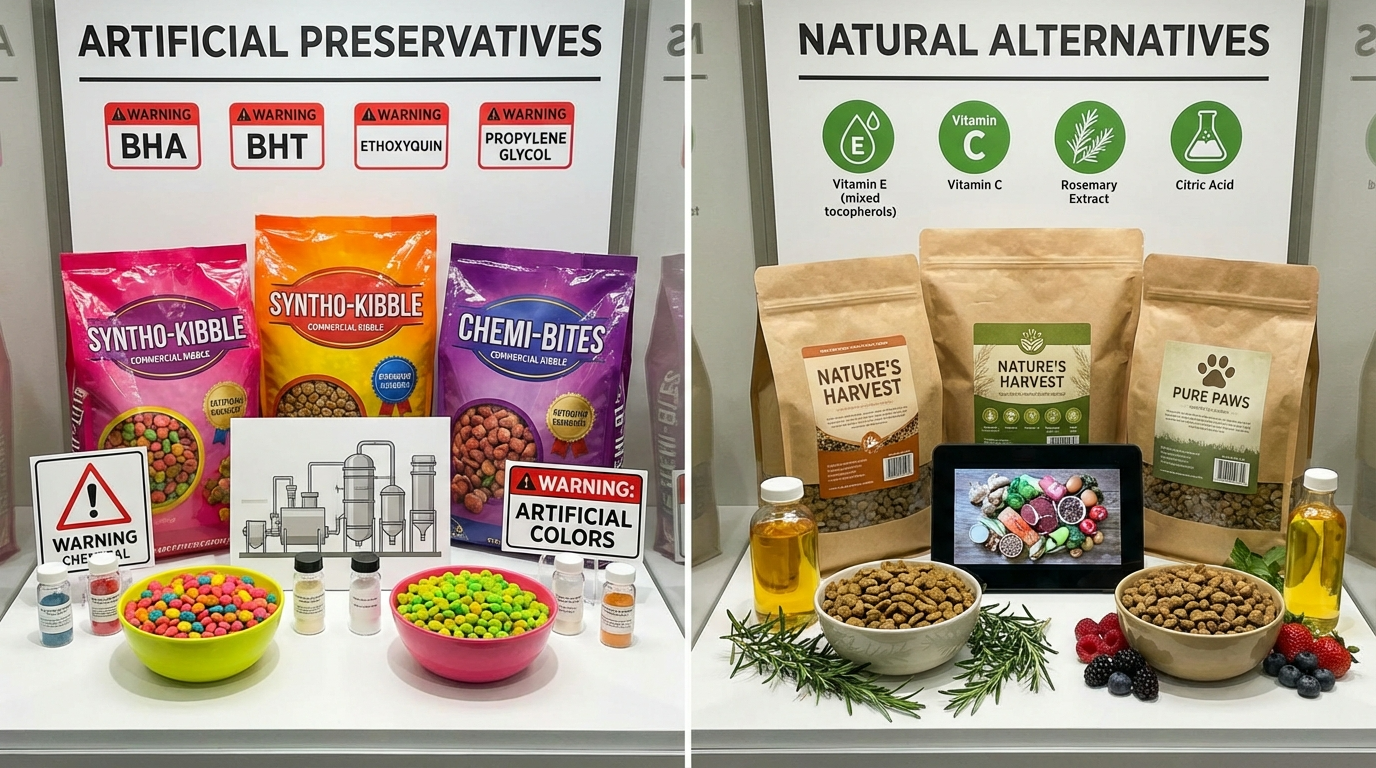
BHA and BHT are among the most widely used. Ethoxyquin appears in some budget-friendly formulas. Propyl gallate is sometimes added to stabilize fats.
These ingredients are approved in regulated amounts. Yet approval does not equal optimal health, especially when exposure occurs every day for years.
Digestive Stress Caused by Preserved Dog Food
Digestion works best when food resembles nature. Artificial compounds disrupt that balance subtly.
Some Labradors develop gas. Others experience inconsistent stools. While symptoms may seem minor, they reflect internal strain.
Artificial preservatives labrador food contains can irritate gut lining over time. As absorption weakens, nutritional efficiency drops.
Image alt text suggestion: labrador with sensitive stomach resting indoors
Inflammation and Preservative Exposure
Inflammation doesn’t always announce itself loudly. It often builds quietly.
Synthetic preservatives in dog diets have been associated with inflammatory responses in animals. Over time, inflammation contributes to joint stiffness, immune imbalance, and skin discomfort.
For Labradors, already prone to joint issues, reducing inflammatory triggers supports long-term mobility and comfort.
Skin and Coat Changes Linked to Food Additives
A Labrador’s coat acts like a health mirror. Shine fades when internal balance is lost.
Preserved dog food may contribute to itching, excessive shedding, or dull fur. Allergies often receive blame, yet additives deserve attention too.
When the liver becomes overworked processing synthetic chemicals, toxins seek other exit routes. Skin irritation often follows.
Behavioral Shifts Related to Diet Quality
Behavior and nutrition are quietly connected.
Some Labradors appear restless. Others lose focus. While training and environment matter, food quality influences neurological balance.
Artificial preservatives labrador food formulas include may affect energy regulation. Many owners notice calmer behavior after switching to cleaner diets.
Long-Term Health Considerations
Short-term reactions are easy to spot. Long-term effects hide better.
Repeated exposure to synthetic preservatives increases workload on detox organs. Over years, that burden matters.
Labradors live long lives. Daily dietary choices accumulate into measurable health outcomes later on.
Puppies and Preservative Sensitivity
Young Labradors are especially vulnerable.
Their organs develop rapidly. Chemical exposure during growth influences immune tolerance and digestive resilience.
Choosing food with natural preservation methods during puppyhood supports stronger foundations and fewer issues later.
Senior Labradors and Additive Load
As Labradors age, detox systems slow.
Synthetic preservatives become harder to process. Symptoms may include stiffness, appetite changes, or mental fog.
Reducing additive intake often improves comfort in senior years without dramatic interventions.
Natural Preservation Methods That Work
Not all preservation is harmful.
Vitamin E, vitamin C, and rosemary extract preserve food effectively. They also support health.
Many premium brands now rely on these alternatives. Freshness improves without chemical burden.
Learning the difference empowers smarter choices.
How to Read Dog Food Labels with Confidence
Labels feel overwhelming at first.
Focus on ingredient order. Preservatives listed early appear in higher amounts.
Watch for vague terms like “artificially preserved.” Transparency signals quality.
Storage, Shelf Life, and Food Quality
Preservatives compensate for long storage times.
Fresh food requires fewer additives. Proper storage at home also matters.
Heat and light degrade nutrients. Even natural foods benefit from cool, dry conditions.
Cost vs Health Trade-Offs
Lower-priced food often relies on synthetic additives.
Artificial preservatives labrador food formulas cost less upfront. However, hidden costs appear later through vet visits and supplements.
Sometimes, spending slightly more prevents larger expenses over time.
Transitioning Away from Preserved Foods
Change should be gradual.
Mix new food slowly. Observe digestion. Adjust pace as needed.
The body may detox gently during transition. Temporary changes often resolve quickly.
Signs Your Labrador May Be Reacting to Additives
Watch for recurring ear infections, itchy skin, gas, or inconsistent stools.
Not every reaction looks dramatic. Patterns matter more than isolated symptoms.
Why Some Labradors Show Fewer Symptoms
Tolerance varies.
Genetics, activity level, and overall health influence reactions. Absence of symptoms doesn’t guarantee absence of impact.
Preventive choices still matter.
Misleading Marketing Claims to Watch
“Complete and balanced” does not mean additive-free.
Veterinary endorsements vary widely. Always read ingredient lists.
Real quality survives scrutiny.
Environmental Effects of Preservatives
Additives don’t disappear after digestion.
They enter water systems and soil. Cleaner food choices support broader environmental health.
When Preservatives May Still Be Necessary
Availability differs by region.
Sometimes compromise is unavoidable. Awareness still reduces harm.
Balance beats perfection.
Supporting Detox Through Nutrition
Whole foods support natural detox pathways.
Fiber binds waste. Antioxidants protect cells.
Clean nutrition helps the body work efficiently.
Veterinary Perspectives on Preservatives
Opinions differ.
Some vets prioritize clinical outcomes. Others emphasize preventive care.
Open discussion supports better decisions.
Listening to Your Labrador’s Feedback
Dogs communicate through energy, coat, and appetite.
Cleaner diets often reveal improvements gradually.
Observation builds confidence.
Building Smarter Nutrition Habits
Knowledge compounds.
Reducing artificial preservatives labrador food exposure supports longevity and comfort.
Small choices matter.
Conclusion
Artificial preservatives labrador food often contains serve convenience rather than canine health. While they extend shelf life, they may quietly increase digestive stress, inflammation, and long-term health risks. Labradors thrive best on food that supports their biology, not burdens it. By recognizing synthetic additives and choosing cleaner alternatives when possible, owners protect vitality, comfort, and quality of life. Food should nourish trust, not test it.
FAQ
1. Are artificial preservatives harmful to every Labrador?
Not all dogs show symptoms, but long-term exposure may still create hidden strain.
2. Which preservatives should Labrador owners watch for?
BHA, BHT, ethoxyquin, and propyl gallate appear most often.
3. Can Labradors adjust after switching food?
Yes. Gradual transitions allow digestion to adapt smoothly.
4. Are natural preservatives effective?
Yes. Vitamin E and rosemary extract preserve food safely.
5. How soon will improvements appear?
Some changes appear within weeks, while deeper benefits develop over months.