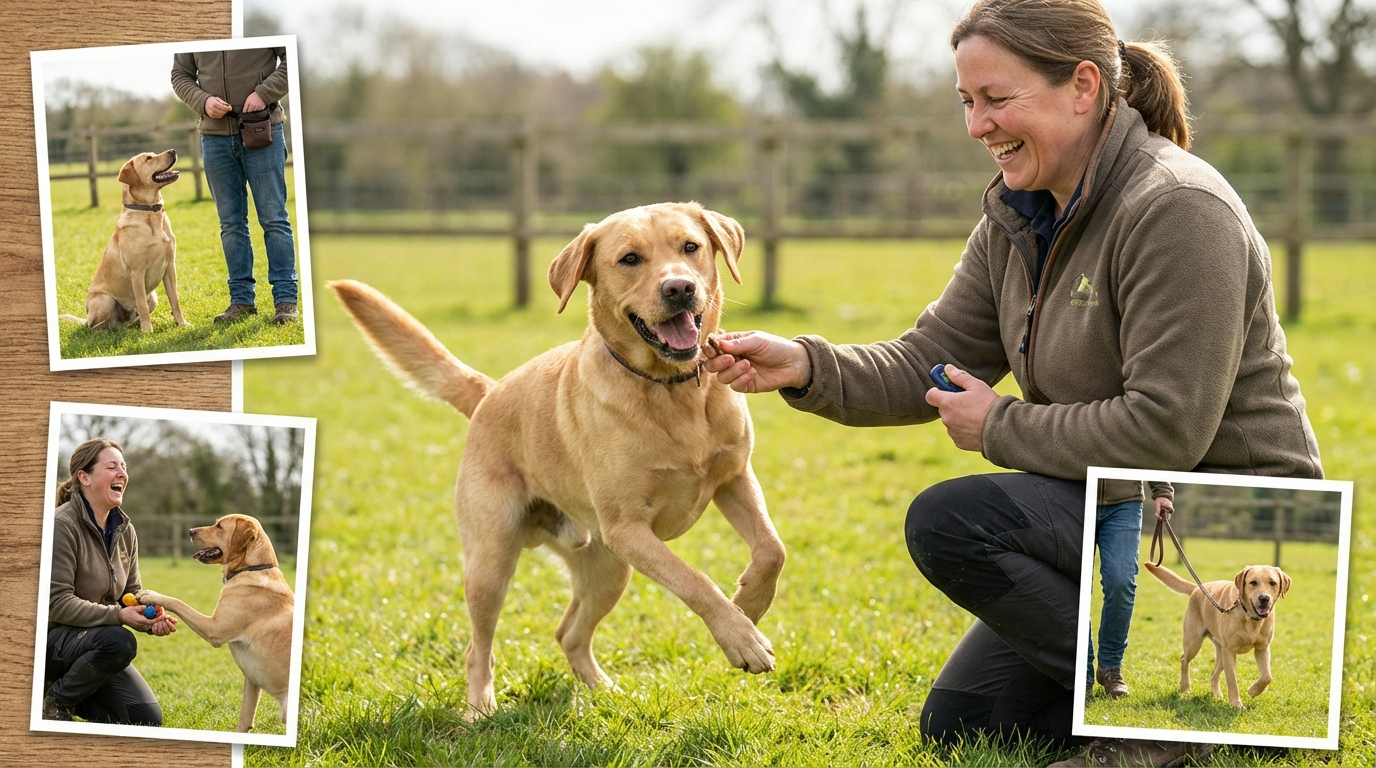
Labradors don’t experience training as a checklist. They experience it as a feeling. Before a cue becomes an action, it passes through emotion. That emotional filter decides whether learning sticks or fades.
Many training challenges aren’t caused by stubbornness or distraction. Instead, they stem from emotional overload or uncertainty. When a Labrador feels safe, learning feels natural. When stress enters the picture, understanding slips away.
Positive emotion labrador learning works because it aligns with how the canine brain processes information. Emotion comes first. Behavior follows.
Why Feelings Drive Learning in Labradors
Labradors are highly social and emotionally responsive dogs. They read energy instantly. Tone, posture, and intention are absorbed faster than words.
Emotion-based learning succeeds because feelings guide attention. A relaxed Labrador notices details. A curious Labrador experiments. Meanwhile, fear narrows focus and blocks memory.
Learning built on positive emotional states lasts longer because it feels good to repeat.
How Emotional States Shape the Canine Brain
When a Labrador feels safe and rewarded, dopamine is released. That chemical strengthens memory pathways and increases motivation.
Positive emotion labrador learning leverages this process naturally. The brain links success with pleasure, not avoidance.
Stress hormones, on the other hand, interrupt learning. Cortisol suppresses memory formation. Even repeated commands fail when emotion blocks understanding.
The brain learns what the heart allows.
Training Environments and Emotional Safety
Environment determines emotional tone immediately. Loud voices, rushed movements, or tension signal danger.
Emotion-focused Labrador training thrives in calm spaces. Familiar settings reduce pressure. Predictability builds trust.
When the environment feels safe, curiosity replaces caution. That shift opens the door to learning.
Image alt text suggestion: labrador training calmly indoors with owner
Why Labradors Remember Emotions More Than Commands
Dogs don’t store information the way humans do. They remember experiences.
Positive emotion labrador learning creates emotional memory anchors. Even if the exact cue fades, the feeling remains.
That emotional memory guides future choices. Labradors repeat behaviors associated with comfort, praise, or play.
Fear-based memories linger too, often longer. That’s why harsh methods create avoidance rather than understanding.
Trust as the Foundation of Learning
Trust removes hesitation. Without it, learning stalls.
Emotionally supportive training builds trust through consistency and kindness. Labradors thrive when expectations remain clear and reactions stay calm.
A trusting dog tries harder. Effort increases because failure doesn’t feel dangerous.
Learning becomes cooperation instead of compliance.
Play-Based Learning and Emotional Engagement
Play is not wasted time. It is emotional engagement in action.
Joyful activities stimulate problem-solving and reinforce memory. Games activate curiosity and sustain attention.
Positive emotion labrador learning often hides inside play. Fetch strengthens recall. Tug improves impulse control. Search games sharpen focus.
Learning disguised as fun works remarkably well.
Image alt text suggestion: labrador playing fetch during positive training session
Reward Timing and Emotional Connection
Rewards only work when timing feels right.
Immediate reinforcement connects emotion to action. Delayed rewards weaken the association.
Food works, yet praise, movement, or access to fun often carry stronger emotional impact.
Sincerity matters. Labradors sense genuine enthusiasm instantly.
Why Pressure Interrupts Learning
Pressure doesn’t motivate learning. It triggers defense.
Raised voices, tight leashes, or frustration create emotional noise. Focus disappears.
Positive emotion labrador learning removes pressure intentionally. Redirection replaces correction. Calm guidance replaces control.
Once pressure fades, confidence grows.
Confidence as a Learning Accelerator
Confidence expands learning capacity.
Emotionally supported Labradors explore new behaviors willingly. They recover quickly from mistakes.
Confidence develops through repeated success. Small wins accumulate.
That resilience proves invaluable beyond training sessions.
Body Language and Emotional Communication
Dogs read bodies before words.
Relaxed posture signals safety. Tension signals threat.
Emotion-centered Labrador training improves when handlers stay physically calm. Soft movements and open stance invite cooperation.
Your body teaches continuously.
The Emotional Cost of Punishment-Based Methods
Punishment interrupts behavior temporarily. Emotionally, it damages trust.
Fear contaminates memory. The dog remembers discomfort, not clarity.
Learning slows because avoidance replaces curiosity.
Emotionally safe learning outperforms control-based systems every time.
Repetition Without Emotional Fatigue
Repetition builds skill only when emotion stays positive.
Emotion-driven Labrador learning keeps sessions short and varied. Interest remains high.
Monotony drains motivation. Variety fuels curiosity.
Learning thrives when repetition feels rewarding.
Emotional Development in Young Labradors
Puppies experience emotions intensely. Regulation develops gradually.
Positive emotional guidance teaches self-control gently. Calm responses model stability.
Early emotional safety shapes lifelong learning patterns.
Image alt text suggestion: labrador puppy learning calmly with owner
Older Labradors and Emotional Learning
Learning does not end with age.
Senior Labradors benefit from emotionally supportive challenges. Gentle tasks stimulate cognition.
Encouragement preserves confidence. Frustration accelerates decline.
Learning becomes enrichment rather than expectation.
Stress Hormones and Learning Interference
Stress releases cortisol. Cortisol blocks memory.
Emotionally safe training environments keep stress low. Learning stays accessible.
Chemistry matters as much as technique.
Recall and Emotional Security
Recall succeeds when returning feels safe.
Emotion-based Labrador learning strengthens recall because trust anchors behavior.
Fearful dogs hesitate. Confident dogs respond willingly.
Emotion determines reliability.
Encouragement vs Correction
Encouragement activates effort.
Positive emotional feedback increases motivation. Criticism shuts it down.
Labradors work harder when effort feels appreciated.
Progress accelerates naturally.
Mistakes as Feedback
Mistakes are information, not defiance.
Emotionally supportive learning treats errors as guidance points.
Dogs adjust faster when mistakes feel safe.
Growth lives in that space.
Consistency Creates Emotional Clarity
Predictable responses reduce anxiety.
Clear emotional signals support understanding.
Consistency builds security. Security supports learning.
The Bond Behind Learning Success
Connection multiplies results.
Emotion-centered Labrador learning strengthens bonds through shared success.
A bonded dog wants to cooperate.
Relationship outperforms technique.
Learning Beyond Structured Sessions
Learning continues all day.
Emotion shapes everyday behavior. Greetings, walks, handling, and rest all reinforce patterns.
Training becomes lifestyle, not event.
Why Emotion Outlasts Commands
Commands fade. Feelings remain.
Emotion-driven learning builds habits that persist under stress.
Dogs return to what feels safe.
Conclusion
Positive emotion labrador learning reflects how Labradors naturally understand the world. Emotion guides attention, memory, and motivation long before obedience appears. When training prioritizes emotional safety, learning becomes faster, deeper, and more reliable. Confidence replaces hesitation. Trust replaces control. By leading with emotion, owners create stronger communication and lasting behavior change that supports both performance and connection.
FAQ
1. What does positive emotion labrador learning mean?
It means training that prioritizes emotional safety, encouragement, and trust to improve understanding.
2. Do Labradors learn faster with emotional support?
Yes. Positive emotional states improve focus, memory, and motivation.
3. Is punishment ever necessary?
Punishment may suppress behavior briefly but often damages trust and slows learning.
4. Can senior Labradors still learn this way?
Absolutely. Emotional engagement supports cognitive health at any age.
5. How can I start using emotional learning today?
Stay calm, reward effort quickly, and create safe environments for mistakes.