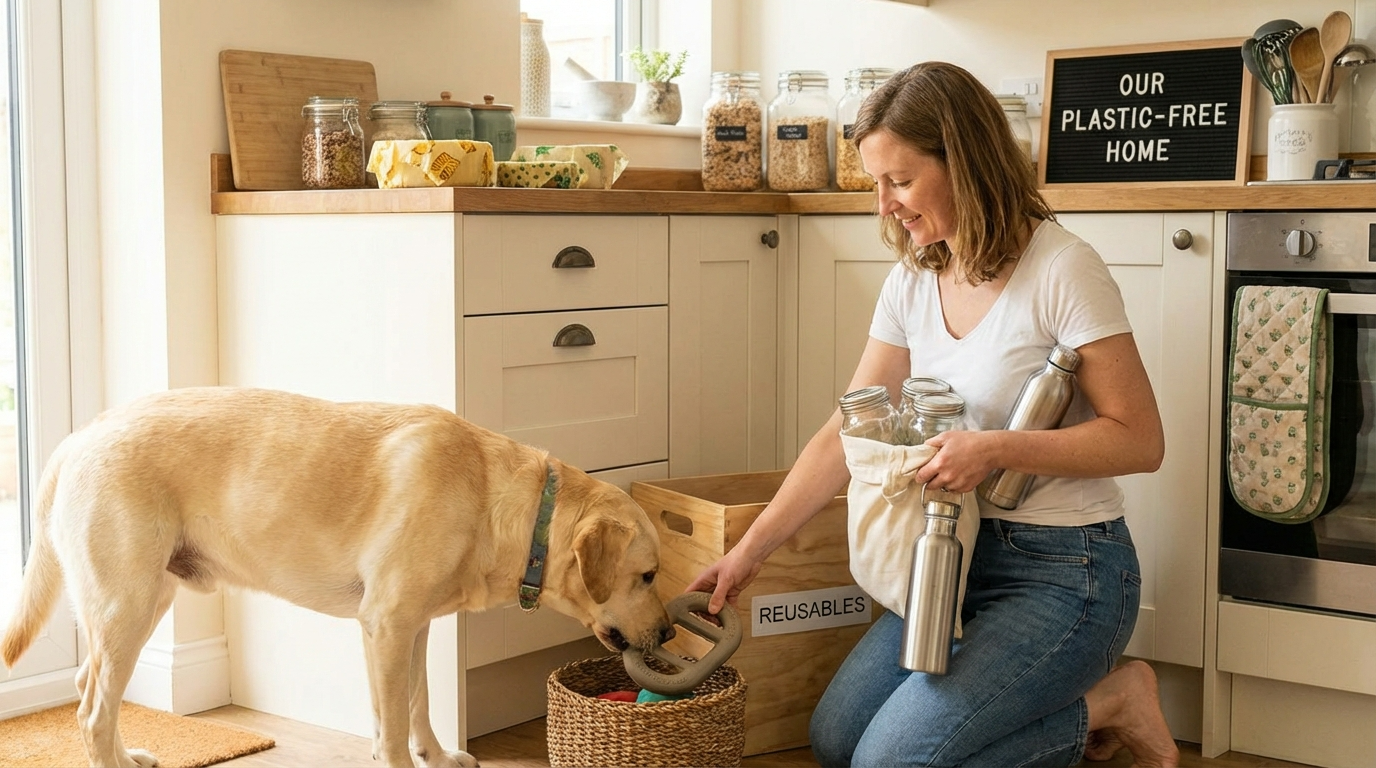
Living with a Labrador is joyful, energetic, and sometimes messy. However, if you look closely, you may notice something else piling up besides tennis balls and fur—plastic. Food bags, treat wrappers, toy packaging, poop bags, grooming bottles. It adds up quickly.
If you want to reduce plastic waste at home, especially with a Labrador in the picture, you have to think beyond the basics. Recycling is helpful, but it’s not enough. You need systems. You need smarter buying habits. And yes, you need a Labrador-friendly strategy.
Let’s explore how you can build a low-plastic lifestyle that still keeps your dog healthy, happy, and tail-wagging.
Why It’s Hard to Reduce Plastic Waste at Home with a Labrador
Labradors are big eaters. They chew enthusiastically. They outgrow toys. As a result, they naturally generate more consumption than smaller breeds.
Dry kibble usually comes in thick plastic-lined bags. Treats are wrapped in multi-layer packaging. Even durable toys often arrive sealed in molded plastic. Meanwhile, subscription deliveries create another stream of bubble wrap and air pillows.
Although many brands advertise eco-friendly claims, much of that packaging cannot be recycled easily. Consequently, even well-meaning dog owners struggle to reduce plastic waste at home.
The good news? Once you identify the biggest sources of plastic in your dog routine, you can begin replacing them with smarter alternatives.
Rethink Your Labrador’s Food Packaging
Food packaging is often the largest plastic contributor in pet households. Therefore, this is where change creates the biggest impact.
Instead of grabbing whatever kibble is convenient, look for brands that use:
- Paper-based bags with minimal lining
- Recyclable mono-material packaging
- Bulk refill stations in pet stores
Even better, consider buying larger bags less frequently. Fewer purchases mean fewer packages. Store the food in airtight stainless steel or glass containers to maintain freshness.
Some Labrador owners also explore partially homemade diets. If done correctly and with veterinary guidance, this approach can significantly reduce plastic packaging. For instance, buying whole foods in bulk and storing them in reusable containers reduces single-use plastic dramatically.
In addition, you can contact brands directly. Ask about their sustainability practices. When consumers speak up, companies respond.
Smarter Treat Systems to Reduce Plastic Waste at Home
Treats are often overlooked. However, they are constant in Labrador training. From recall drills to calm behavior rewards, you likely reach for treats daily.
Instead of buying small plastic pouches repeatedly, try this:
- Bake simple dog treats at home
- Dehydrate sweet potatoes or lean meats
- Purchase bulk treats in compostable packaging
Then store everything in reusable silicone or stainless containers.
You can also designate one large airtight jar for training treats. Refill it weekly instead of opening new plastic packs every few days. As a result, your routine becomes simpler and more sustainable.
Moreover, homemade treats allow you to control ingredients. That means fewer additives and less waste.
Upgrade Your Toy Strategy for Sustainability
Labradors are enthusiastic chewers. Cheap plastic toys rarely survive. Unfortunately, broken toys usually end up in landfills.
To truly reduce plastic waste at home, shift your mindset from quantity to durability.
Choose:
- Natural rubber toys from responsible brands
- Rope toys made of organic cotton
- Wooden or bamboo enrichment tools
- Repairable toys with replaceable parts
Although these items may cost more upfront, they last longer. In the long run, fewer replacements mean less waste.
Additionally, rotate toys instead of buying new ones. Hide half the collection and reintroduce them later. Your Labrador will think they are brand new.
You can also repurpose household items creatively. An old towel can become a sniff mat. A cardboard box can turn into a puzzle feeder. With supervision, even simple materials become engaging enrichment tools.
Rethink Poop Bags and Waste Disposal
Dog waste management is often the most obvious plastic contributor. While biodegradable bags are common, many still contain plastic blends.
To reduce plastic waste at home effectively, explore truly compostable, certified plant-based poop bags. Look for clear certification labels rather than vague eco claims.
If your municipality supports pet waste composting, take advantage of that service. Alternatively, dedicated pet waste compost systems can be used in suitable outdoor spaces.
Inside the home, use washable liners in trash bins. Replace single-use liners with compostable or reusable options where possible.
Small adjustments here create consistent long-term impact.
Eco-Friendly Grooming and Cleaning Routines
Labradors shed. They love mud. Baths are inevitable. Unfortunately, most shampoos and cleaning sprays come in plastic bottles.
Instead of standard packaging, try:
- Shampoo bars for dogs
- Concentrated refillable grooming liquids
- DIY vinegar-based floor cleaners
- Reusable microfiber cloths instead of disposable wipes
Shampoo bars, in particular, dramatically cut plastic. They often come in cardboard boxes and last longer than bottled versions.
Furthermore, buying concentrates reduces shipping weight and packaging. You dilute them at home in reusable containers.
Over time, these swaps become second nature.
Subscription Deliveries and Packaging Control
Many Labrador owners rely on online deliveries for convenience. However, frequent shipments increase plastic padding and air cushions.
If you want to reduce plastic waste at home, consolidate purchases. Order monthly rather than weekly. Select “minimal packaging” options when available.
Reuse packing materials creatively. Bubble wrap can cushion storage boxes. Cardboard boxes can become enrichment games.
Additionally, return soft plastic packaging to store drop-off points if local recycling programs allow it. While not perfect, it prevents immediate landfill disposal.
Create a Labrador-Friendly Refill Station at Home
Organization supports sustainability. Without structure, eco intentions fade quickly.
Set up a refill station in your pantry or utility room:
- Large airtight bins for kibble
- Glass jars for treats
- Stainless steel scoopers
- Reusable cloth bags for shopping
This simple system helps you track consumption and avoid impulse plastic purchases. Moreover, it encourages bulk buying, which reduces packaging per serving.
When everything has a designated place, sustainable habits feel effortless.
Train Your Labrador to Support Your Zero-Waste Goals
Yes, even your dog can support your sustainability goals.
Teach your Labrador to:
- Retrieve reusable shopping bags
- Carry lightweight refill containers
- Drop toys gently to extend lifespan
- Use designated enrichment stations instead of chewing random objects
Training reduces accidental destruction. Consequently, fewer replacements are needed.
You can also build sustainable habits into daily routines. For example, use long-lasting chew alternatives instead of disposable rawhide wraps. Choose durable tug toys instead of throwaway plushies.
A well-trained Labrador protects both your home and your eco efforts.
Community Swaps and Sharing Systems
Plastic waste often comes from duplicate purchases. However, many dog owners have spare crates, bowls, or toys.
Organize local Labrador meetups or online swap groups. Trade unused gear. Borrow specialty equipment. Share grooming tools.
When communities collaborate, fewer new items are manufactured. Therefore, the overall plastic footprint shrinks.
Additionally, donating gently used items extends their life cycle. Sustainability becomes collective rather than individual.
Mindful Buying Habits Make the Biggest Difference
Ultimately, to reduce plastic waste at home, awareness is key. Before purchasing any new Labrador product, pause and ask:
Do I truly need this?
Can I buy it secondhand?
Is there a lower-plastic alternative?
Will it last at least a year?
These small questions prevent countless unnecessary purchases.
Moreover, track your waste for one month. Notice patterns. Perhaps treat packaging dominates. Perhaps toy replacements are frequent. Once identified, you can address the real culprits.
Sustainability is less about perfection and more about intention.
Turning Your Labrador Lifestyle into a Sustainable Ecosystem
Imagine your home as an ecosystem. Every choice either feeds waste or reduces it. Your Labrador lives within that system. Therefore, your buying habits shape their environmental pawprint.
By choosing durable toys, bulk food, refillable grooming supplies, and compostable waste solutions, you steadily reduce plastic waste at home. The changes may seem small individually. However, combined, they create measurable impact.
Furthermore, your actions influence others. When friends visit and see your refill jars and natural toys, conversations begin. Change spreads.
Living sustainably with a Labrador is not restrictive. It is creative. It is thoughtful. It is empowering.
Conclusion
Reducing plastic waste does not require sacrificing your Labrador’s happiness. Instead, it requires smarter systems and intentional choices. When you shift from convenience-driven habits to durability-focused decisions, your home becomes cleaner and greener.
To reduce plastic waste at home with your Labrador, go beyond recycling. Rethink packaging. Upgrade toys. Simplify grooming. Consolidate deliveries. Train your dog to support long-term habits. Over time, these changes compound into meaningful environmental impact. Your Labrador will still chase balls and demand treats. Meanwhile, you will build a home that respects both your dog and the planet.
FAQs
- What is the biggest source of plastic waste in Labrador households?
Dog food packaging is typically the largest contributor, followed by treat wrappers and toy packaging. - Are biodegradable poop bags enough to reduce plastic waste at home?
They help, but certified compostable plant-based bags are more environmentally responsible. - Can homemade dog treats really make a difference?
Yes. Baking or dehydrating treats significantly reduces single-use plastic packaging over time. - How do durable toys help reduce waste?
High-quality toys last longer, which means fewer replacements and less discarded plastic. - Is it expensive to reduce plastic waste at home with a Labrador?
Some items cost more initially, but durable products and bulk buying often save money long term.