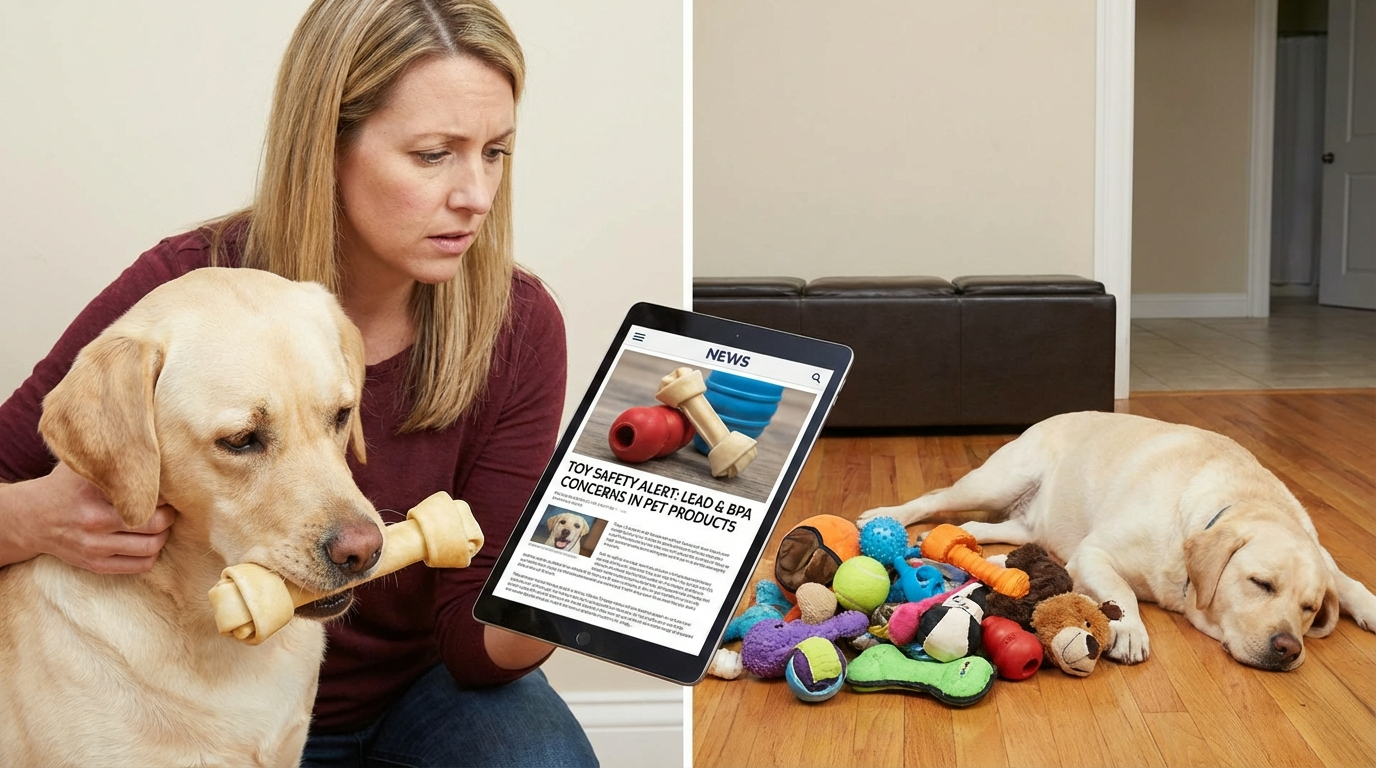
Your Labrador grabs a toy, chews with joy, and trots away proudly. It seems harmless. However, what if that colorful chew contains chemicals you never considered?
The conversation about lead and BPA in Labrador toys has grown louder in recent years. Pet owners are asking smarter questions. They want durable toys, but they also want safety. After all, Labradors chew hard and chew often. If something is toxic, it will be absorbed repeatedly.
So what is the truth? Are these chemicals common? Should you worry? More importantly, how can you protect your dog without turning toy shopping into a chemistry lesson?
Let’s look beyond the marketing labels and dig into what really matters.
Understanding Lead and BPA in Labrador Toys
First, it helps to understand what these substances actually are.
Lead is a heavy metal once widely used in paints and plastics. Although regulations now limit its use, contamination can still occur during manufacturing. This is especially true with imported products that lack strict oversight.
BPA, or bisphenol A, is a chemical used to harden certain plastics. It is commonly found in polycarbonate materials and epoxy resins. While many human products now advertise “BPA-free,” pet products are not always labeled clearly.
When we talk about lead and BPA in Labrador toys, we are discussing potential exposure through chewing, licking, and long-term contact. Labradors do not gently mouth toys. They gnaw, shred, and carry them everywhere. Consequently, exposure can be frequent and intense.
Although not every toy contains harmful levels, concerns are valid. That’s why awareness is crucial.
Why Labradors Face Higher Risks
Not all dogs chew the same way. Labradors are known for powerful jaws and endless enthusiasm. As a result, they break toys faster than most breeds.
Because they chew aggressively, small fragments can be swallowed. If a toy contains traces of lead or BPA, those chemicals may enter the digestive system.
Moreover, Labradors often use the same toy daily. Repeated exposure increases cumulative risk. While small amounts may not cause immediate harm, long-term exposure has raised questions in both human and animal health studies.
Additionally, puppies are especially vulnerable. Developing systems can be more sensitive to toxins. Therefore, owners should be extra cautious when selecting toys for young Labradors.
The issue of lead and BPA in Labrador toys is not about panic. Instead, it is about informed choices.
How Lead and BPA Affect Dogs
Research on pets is still evolving. However, what we know from broader toxicology studies gives useful insight.
Lead exposure in animals has been linked to neurological problems, digestive upset, and behavioral changes. In severe cases, lethargy and seizures may occur. Although such outcomes are rare with toys alone, low-level exposure over time is still a concern.
BPA acts as an endocrine disruptor. This means it can interfere with hormone systems. In humans, studies have linked BPA to reproductive and metabolic issues. While canine-specific data remains limited, caution is wise.
Veterinarians generally agree on one principle: unnecessary chemical exposure should be minimized. Therefore, reducing contact with questionable materials is a practical step.
You would not give your Labrador contaminated water. Similarly, you should question the materials they chew daily.
Are All Plastic Toys Dangerous?
It would be misleading to say every plastic toy is unsafe. Many reputable brands follow strict safety standards. Some use food-grade rubber or certified BPA-free materials.
However, not all plastics are equal. Cheap, brightly colored toys with strong chemical odors should raise red flags. Often, those smells indicate volatile compounds or low-quality additives.
In addition, off-brand imports sometimes bypass testing standards required in certain countries. That is where issues with lead and BPA in Labrador toys are more likely to appear.
Therefore, the key is discernment rather than fear. Choose brands that disclose material information. Look for transparency in sourcing and testing.
If a company avoids answering safety questions, consider that your answer.
How to Identify Safer Labrador Toys
Fortunately, protecting your dog does not require advanced lab equipment. You can follow practical guidelines.
First, choose toys labeled as BPA-free and phthalate-free. Although this does not guarantee perfection, it reduces obvious risks.
Second, prefer natural rubber over hard plastic when possible. Natural rubber tends to be more durable and less chemically complex.
Third, avoid heavily painted surfaces. Paint may contain trace metals, especially in low-cost products. Solid-colored rubber is often safer than multi-layered painted toys.
Fourth, inspect toys regularly. If cracks appear or pieces break off, replace the toy immediately. Even safe materials can become hazards when damaged.
Finally, consider non-plastic alternatives. Rope toys made from organic cotton or untreated wood chews may offer lower chemical risk. However, supervision is still required.
These steps significantly reduce concerns about lead and BPA in Labrador toys.
The Role of Regulations and Testing
In many countries, children’s toys are heavily regulated. Surprisingly, pet toys are often held to looser standards.
Some manufacturers voluntarily test products for heavy metals and chemical safety. Others do not. Therefore, the burden of research often falls on consumers.
Independent testing organizations occasionally publish reports on toxic substances in pet products. While results vary, certain low-cost imports have tested positive for elevated lead levels.
However, improvements have been made over time. Increased consumer awareness has pressured companies to adopt safer materials.
Although regulation gaps exist, market demand is shifting. As more owners ask about lead and BPA in Labrador toys, companies respond with clearer labeling and safer formulations.
Change happens when buyers insist on it.
Natural Alternatives That Reduce Chemical Exposure
If you want to go further, consider rotating in more natural enrichment items.
Frozen carrots provide safe chewing satisfaction. Thick rope toys made of untreated cotton offer durability without plastic. Antlers and certified natural chews are also popular, though they should be selected carefully for size and hardness.
Additionally, interactive feeding puzzles made from stainless steel or silicone alternatives can reduce plastic reliance.
When you diversify your Labrador’s toy collection, you reduce dependency on hard plastics altogether. As a result, overall exposure to potential toxins decreases.
Balance is key. You do not need to eliminate every synthetic toy. However, integrating safer materials creates a healthier environment.
How to Store and Maintain Toys Safely
Maintenance plays a role as well. Even safe toys can degrade under harsh conditions.
Avoid leaving toys in direct sunlight for long periods. Heat can accelerate chemical breakdown in plastics. Similarly, repeated dishwasher cycles may weaken material structure unless the toy is labeled dishwasher-safe.
Clean toys regularly with mild soap and warm water. This removes dirt and saliva buildup, which can trap bacteria.
Furthermore, discard toys that show discoloration or unusual odor changes. Those signs may indicate material breakdown.
By managing storage and care, you reduce risks linked to lead and BPA in Labrador toys over time.
Common Myths About Lead and BPA in Labrador Toys
Several myths circulate online.
One myth claims that only old toys contain lead. In reality, contamination can still occur during modern manufacturing if oversight is weak.
Another myth suggests that “BPA-free” automatically means non-toxic. However, some substitutes have not been studied as extensively. Therefore, material quality still matters.
A third myth states that large dogs are immune to small toxin amounts. While body size influences tolerance, repeated exposure remains a factor.
Understanding these misconceptions prevents unnecessary fear while promoting realistic caution.
Talking to Your Veterinarian About Chemical Safety
If you have concerns, speak with your veterinarian. They can guide you based on your Labrador’s age, health status, and chewing behavior.
Although routine testing for chemical exposure is not common, symptoms such as unexplained lethargy or digestive issues should be discussed promptly.
Your vet may not recommend discarding every plastic toy. However, they will likely support efforts to reduce unnecessary chemical risks.
Open dialogue ensures you make decisions based on science rather than rumor.
Making Smarter Purchasing Decisions
Before buying your next toy, pause and ask a few simple questions.
Who manufactures this product?
Is the material clearly described?
Has it been tested for heavy metals?
Does it carry safety certifications?
Even small research efforts can prevent long-term exposure issues.
Price should not be the only deciding factor. Often, safer toys cost slightly more because testing and better materials are involved. However, the investment pays off in durability and peace of mind.
In the end, preventing exposure to lead and BPA in Labrador toys is about mindful consumption.
Conclusion
Labradors live through their mouths. They explore, chew, and carry their world proudly. Therefore, the materials in their toys matter more than we might think.
The truth about lead and BPA in Labrador toys is nuanced. Not every toy is dangerous. However, not every toy is safe either. Awareness, careful selection, and regular inspection dramatically reduce risk.
By choosing transparent brands, favoring natural materials, and replacing damaged toys promptly, you create a safer environment for your dog. You cannot eliminate every risk in life. Yet you can control what enters your Labrador’s daily routine.
A few thoughtful choices today protect years of joyful play tomorrow.
FAQs
- Are lead and BPA in Labrador toys common?
They are not present in all toys, but low-quality imports may contain traces without proper testing. - How can I tell if a toy contains lead?
Look for brands that provide safety certifications or third-party testing results. - Is BPA-free labeling enough?
It reduces risk, but overall material quality and brand transparency are also important. - Should I throw away all plastic toys?
Not necessarily. Replace questionable items and choose reputable, tested products instead. - What materials are safest for Labrador toys?
Natural rubber, untreated cotton rope, and certified non-toxic silicone alternatives are generally safer choices.