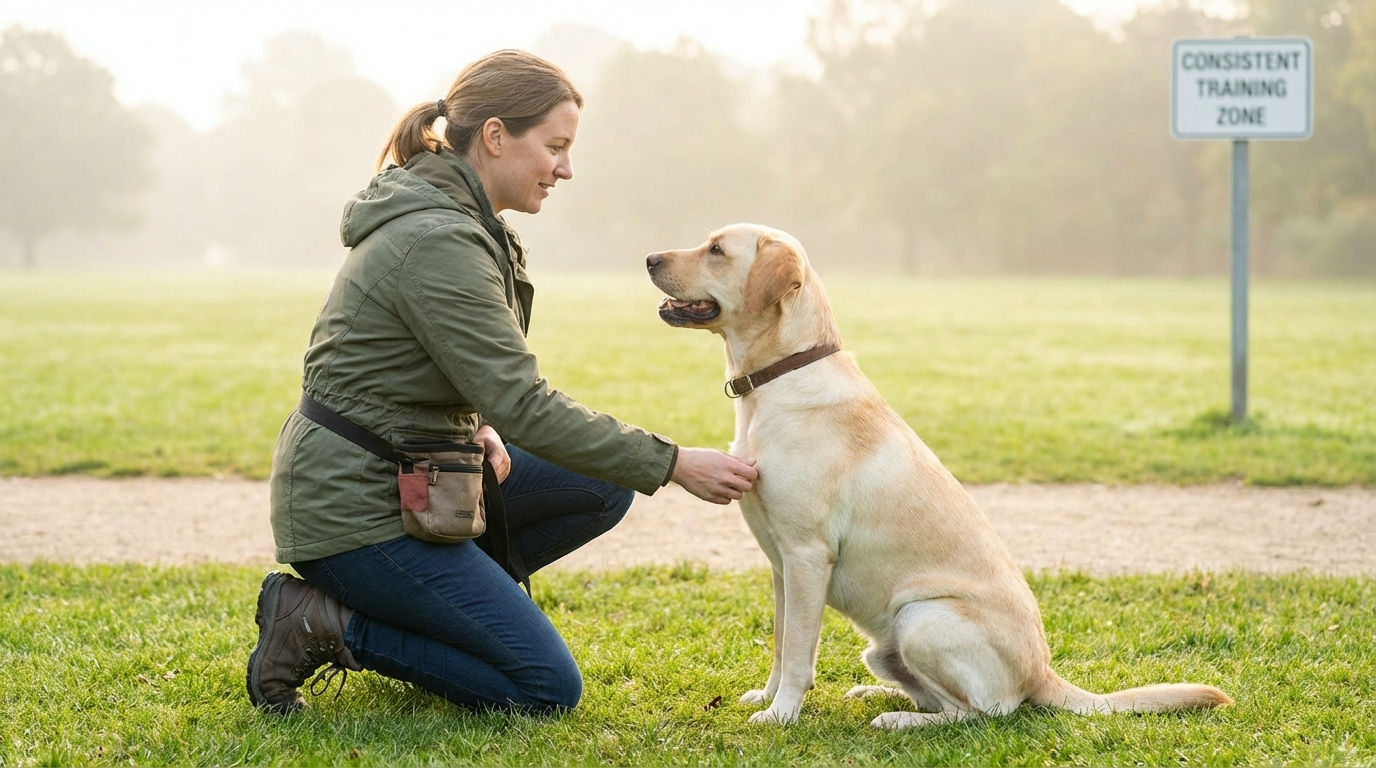
Labradors are intelligent, affectionate, and full of energy. However, they are also strong, enthusiastic, and sometimes impulsive. If training feels chaotic, you are not alone. Many owners struggle not because their dog is stubborn, but because the approach lacks structure.
Calm and consistent Labrador training changes everything. Instead of reacting emotionally, you guide your dog with steady signals. Instead of repeating commands endlessly, you create clarity. Over time, trust grows. Behavior improves. Stress fades.
If you want reliable obedience without yelling or frustration, this approach works. Let’s explore how.
Why Calm and Consistent Labrador Training Matters
Labradors thrive on predictability. They are eager to please, yet easily distracted. When signals change daily, confusion builds. As a result, behavior becomes inconsistent.
Calm and consistent Labrador training creates a stable framework. Your dog learns that commands mean the same thing every time. Tone remains steady. Rules stay firm. Expectations do not shift based on your mood.
Moreover, dogs mirror energy. If you shout, they become excited or anxious. If you stay composed, they relax. Therefore, your demeanor directly influences their response.
Consistency builds habits. Calmness builds trust. Together, they form the foundation of long-term success.
Understanding Labrador Temperament Before Training
Before implementing calm and consistent Labrador training, understand the breed’s nature.
Labradors were bred to retrieve. They are driven, social, and food-motivated. They crave engagement. Consequently, boredom leads to chewing, jumping, or excessive barking.
Additionally, they mature slowly. A one-year-old Labrador may still behave like a puppy. Therefore, patience is essential.
When you adjust expectations to match development, frustration decreases. Training becomes cooperative instead of confrontational.
Think of your Labrador as a powerful engine. Without guidance, it races wildly. With direction, it performs beautifully.
Building the Foundation of Calm and Consistent Labrador Training
Every training plan needs structure. Start with three core principles: clarity, repetition, and timing.
Clarity means using simple commands. Avoid long phrases. Instead of saying, “Can you please sit down now?” say “Sit.” Keep it clean.
Repetition builds understanding. Practice daily in short sessions. Five minutes done well beats thirty minutes done poorly.
Timing is critical. Reward immediately when the correct behavior appears. Delay confuses the lesson.
Additionally, remain emotionally neutral. If mistakes occur, reset quietly. Anger disrupts learning.
Calm and consistent Labrador training does not rely on dominance. It relies on communication.
Creating Predictable Routines That Support Training
Dogs love routine. Feeding times, walks, and play sessions should follow a pattern.
When routines stay stable, anxiety drops. Therefore, training becomes easier.
For example, practice basic commands before meals. This reinforces focus. Use the same door protocol every time you leave. Ask for a sit before opening it.
These micro-consistencies reinforce calm and consistent Labrador training naturally. Over time, obedience becomes automatic.
Routine is like a rhythm in music. Once established, everything flows smoothly.
Using Positive Reinforcement the Right Way
Labradors respond strongly to rewards. However, rewards must be structured carefully.
Use small, healthy treats during early training. Gradually shift to praise and affection. Otherwise, your dog may perform only when food is visible.
Timing matters more than quantity. A quick “Yes” followed by a reward creates clarity.
Avoid overexcited praise. Stay warm yet controlled. High-pitched squeals can trigger jumping or hyperactivity.
When calm and consistent Labrador training is paired with positive reinforcement, results accelerate.
Correcting Behavior Without Losing Calm
Correction does not mean punishment. It means redirecting.
If your Labrador jumps, turn away silently. When paws hit the ground, reward calm posture. If leash pulling occurs, stop walking. Movement resumes only when tension disappears.
Consistency is key. Every family member must follow the same rule. Otherwise, mixed signals weaken progress.
Importantly, corrections should be brief and unemotional. The goal is guidance, not intimidation.
Over time, your dog learns that calm behavior earns freedom.
Leash Training with a Calm and Consistent Approach
Leash pulling frustrates many owners. However, it can be fixed through calm and consistent Labrador training.
Start in low-distraction environments. Reward loose leash walking immediately. If pulling begins, stop instantly. Wait. Resume once slack returns.
Do not yank or shout. Instead, let the environment teach the lesson. Forward motion becomes the reward.
Gradually introduce busier areas. Progress slowly. Rushing creates setbacks.
Patience transforms chaotic walks into peaceful routines.
Impulse Control: The Secret Ingredient
Labradors struggle with impulse control. Therefore, this skill must be trained deliberately.
Practice “wait” before meals. Ask for eye contact before throwing a ball. Pause at doorways.
These small pauses build self-control. Over time, your dog learns to think before acting.
Calm and consistent Labrador training focuses heavily on this concept. When impulse control improves, overall behavior stabilizes.
Impulse control is like a muscle. The more you exercise it, the stronger it becomes.
Training Sessions That Stay Productive
Long sessions exhaust both dog and owner. Instead, keep sessions short and focused.
Five to ten minutes is ideal. End on success whenever possible. This leaves your Labrador eager for the next session.
Rotate skills to prevent boredom. Mix obedience with fun games.
If frustration appears, pause. Resume later with a calmer mindset.
Remember, consistency over months matters more than intensity in one day.
Handling Distractions Without Losing Structure
Distractions challenge even well-trained Labradors. However, calm and consistent Labrador training prepares them.
Increase difficulty gradually. Practice commands in quiet spaces first. Then move outdoors. Later, introduce mild distractions.
If your dog fails, reduce difficulty. Build back up slowly.
Avoid repeating commands endlessly. Say it once. If ignored, guide gently and reset.
Distraction training requires patience. However, the reward is reliability in real-life situations.
The Role of Body Language in Calm and Consistent Labrador Training
Dogs read body language faster than words.
Stand tall. Move deliberately. Avoid frantic gestures. When you project confidence, your Labrador feels secure.
Eye contact should be steady but not intimidating. Tone should remain firm yet relaxed.
Consistency in posture reinforces verbal commands.
Communication is not only spoken. It is displayed through presence.
When Progress Feels Slow
Training rarely follows a straight line. Some days shine. Others frustrate.
During setbacks, review fundamentals. Are commands clear? Are rewards timely? Is consistency maintained across the household?
Often, improvement resumes once structure is reinforced.
Stay patient. Labradors respond beautifully to steady leadership.
Calm and consistent Labrador training is a marathon, not a sprint.
Strengthening the Bond Through Training
Training is not merely about obedience. It deepens connection.
When your Labrador trusts your signals, anxiety decreases. When expectations stay clear, confidence grows.
Shared routines create harmony. Walks feel smoother. Guests feel welcomed. Daily life becomes enjoyable.
Moreover, a trained Labrador gains more freedom. Reliable recall allows off-leash play in safe areas. Good manners invite social experiences.
Calm and consistent Labrador training strengthens trust on both sides.
Avoiding Common Mistakes
Inconsistency ruins progress. Allowing jumping sometimes but not always creates confusion.
Overusing commands weakens their meaning. Repeating “sit” ten times teaches ignoring.
Emotional reactions delay learning. Frustration clouds communication.
Avoid comparing your dog to others. Each Labrador develops at a unique pace.
Focus on progress, not perfection.
Maintaining Results Long Term
Once training solidifies, continue reinforcing occasionally.
Practice recall weekly. Refresh leash manners monthly. Review impulse control exercises regularly.
Skills fade when unused. Therefore, maintenance keeps behaviors sharp.
Additionally, adapt training as your Labrador ages. Energy levels shift. Attention span evolves.
Calm and consistent Labrador training grows with your dog’s life stages.
Conclusion
A well-behaved Labrador is not created through force or volume. It is shaped through clarity, repetition, and emotional stability. Calm and consistent Labrador training transforms chaos into cooperation. It builds habits slowly, yet those habits last.
When you commit to steady signals and predictable routines, your dog feels secure. Behavior improves naturally. Frustration fades. Trust deepens.
Training is not about control. It is about communication. Stay patient. Stay consistent. Stay calm. Over time, the results will speak louder than any raised voice ever could.
FAQs
- How long does calm and consistent Labrador training take to show results?
Most owners notice improvement within a few weeks, though lasting habits require ongoing reinforcement. - Can older Labradors benefit from calm and consistent training?
Yes, dogs of any age respond well to structured and patient guidance. - What if my Labrador ignores commands?
Reduce distractions, improve timing of rewards, and ensure commands are clear and consistent. - Is shouting effective in Labrador training?
No, raised voices often increase anxiety or excitement, which weakens learning. - How often should I train my Labrador?
Short daily sessions combined with consistent rules throughout the day produce the best results.