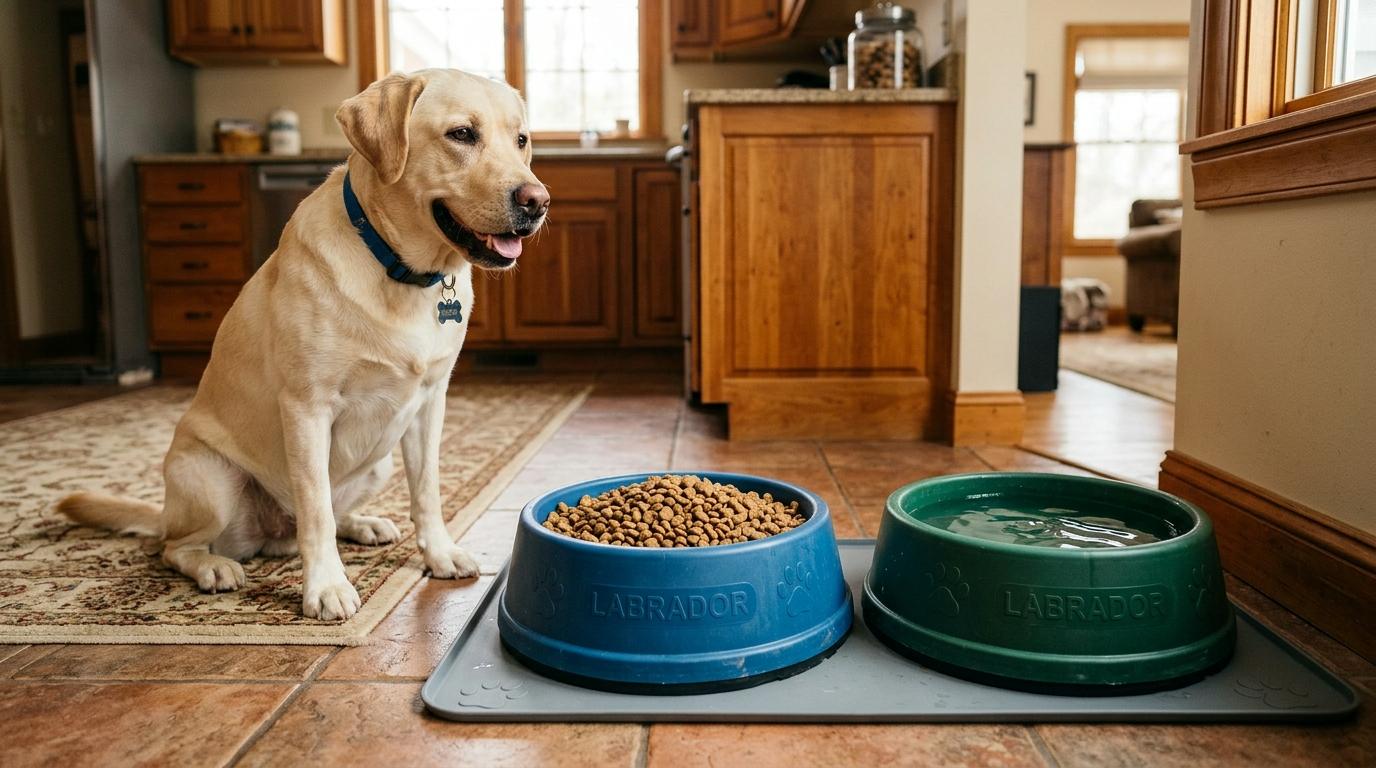
Labradors are enthusiastic eaters who rarely leave a crumb behind. However, plastic dog bowls for Labradors may expose them to hidden health risks many owners overlook. While plastic appears affordable and lightweight, its long-term impact on hygiene and safety deserves careful attention.
Because Labs eat quickly and press their faces firmly into bowls, they create scratches along the surface. These tiny grooves trap bacteria and moisture. Over time, contamination builds and may affect your dog’s health. Understanding the dangers of plastic dog bowls for Labradors helps you make informed choices that protect your companion.
By switching to safer materials, you can reduce risks while improving feeding hygiene.
Why Labradors Are Especially Vulnerable
Labradors have strong jaws and powerful eating habits. As a result, they often drag bowls across the floor or chew the edges. This behavior accelerates wear and tear on feeding equipment.
Plastic dog bowls for Labradors develop micro-scratches quickly. Although these marks may seem minor, they provide ideal breeding grounds for bacteria. Furthermore, Labs tend to drool heavily, increasing moisture buildup.
Because Labradors are prone to skin allergies and chin acne, contaminated bowls may worsen irritation. In addition, food residue trapped in scratched plastic becomes difficult to remove fully.
Their enthusiastic nature magnifies the weaknesses of plastic materials. Therefore, durable and non-porous alternatives offer better protection.
Chemical Concerns Linked to Plastic Bowls
Beyond hygiene, chemical exposure raises further concerns. Some plastic dog bowls for Labradors contain additives such as BPA or phthalates. These substances can leach into food and water over time.
Heat accelerates chemical migration. For example, warm water or direct sunlight increases the likelihood of leaching. While not every plastic bowl contains harmful chemicals, labeling remains inconsistent.
Repeated low-level exposure may contribute to hormonal disruption or digestive issues. Although research continues, many veterinarians recommend precautionary measures.
Safer materials eliminate this uncertainty. Choosing alternatives reduces the potential for chemical ingestion during daily feeding.
Bacterial Growth and Hidden Contamination
Plastic surfaces degrade gradually. Consequently, cleaning becomes less effective as scratches deepen. Even thorough washing may not eliminate bacteria hiding in grooves.
Plastic dog bowls for Labradors often develop biofilm layers. These thin bacterial coatings resist standard dish soap. As contamination increases, gastrointestinal upset may occur.
Because Labs eat rapidly, they may ingest bacteria along with food. Symptoms can include vomiting, diarrhea, or mild infections.
Moreover, chin acne frequently appears when bowls harbor microbes. Switching to non-porous materials often improves skin clarity.
Routine replacement helps, yet prevention proves more reliable than constant disposal.
The Problem with Odor Retention
Plastic absorbs odors easily. Over time, lingering smells indicate trapped residue. Although the bowl may appear clean, microscopic particles remain embedded.
Plastic dog bowls for Labradors can develop persistent food odors that attract pests. Additionally, absorbed smells encourage bacterial growth.
Stainless steel or ceramic options resist odor retention. These materials maintain freshness even after repeated use.
When bowls smell clean, feeding areas remain more sanitary. Eliminating odor buildup supports better overall hygiene.
Environmental Impact of Plastic Feeding Products
Beyond health concerns, plastic waste contributes to environmental pollution. Many feeding bowls end up in landfills once damaged.
Plastic dog bowls for Labradors often require replacement every few months due to scratching. Consequently, waste accumulates quickly.
Durable alternatives reduce replacement frequency. Stainless steel bowls may last for years with minimal wear.
Although sustainability may not seem urgent, responsible choices benefit future generations. Small adjustments in pet care routines reduce environmental impact significantly.
Safer Alternatives for Labrador Feeding
Switching materials improves both hygiene and safety. Stainless steel remains one of the most recommended options.
Unlike plastic dog bowls for Labradors, stainless steel resists scratching and bacterial buildup. Moreover, it contains no chemical additives.
Ceramic bowls also provide safety when properly glazed. Ensure products are labeled lead-free and food-safe.
Glass bowls offer another safe alternative. However, durability concerns may limit their practicality for energetic Labs.
When selecting alternatives, prioritize non-porous surfaces and sturdy construction.
Comparing Stainless Steel and Ceramic
Stainless steel excels in durability. It withstands heavy use and remains lightweight. Additionally, it cleans easily in dishwashers.
Ceramic bowls offer aesthetic appeal and weight stability. However, chipped glaze can create hidden cracks.
Plastic dog bowls for Labradors may appear cheaper initially. Still, frequent replacement offsets savings.
In contrast, stainless steel typically lasts for years. Long-term cost efficiency favors durable materials.
Evaluate your Labrador’s habits before choosing. Active chewers benefit most from steel options.
Maintaining Clean Feeding Practices
Regardless of material, hygiene requires consistency. Wash bowls daily with hot water and mild detergent.
Dry thoroughly before refilling. Moisture encourages bacterial growth on any surface.
Plastic dog bowls for Labradors demand even more vigilance. However, switching materials reduces the cleaning burden.
Additionally, inspect bowls regularly for cracks or discoloration. Replace damaged items promptly.
Place bowls on washable mats to prevent food debris from spreading. Clean surrounding areas frequently.
Structured routines prevent contamination and support digestive health.
Recognizing Signs of Bowl-Related Issues
Monitor your Labrador for subtle symptoms. Recurrent chin acne may indicate bacterial exposure. Likewise, frequent stomach upset warrants investigation.
If irritation improves after replacing plastic dog bowls for Labradors, the bowl likely contributed to the issue.
Although symptoms may appear mild, chronic exposure can create ongoing discomfort.
Consult your veterinarian if digestive or skin problems persist. Early intervention prevents complications.
Small adjustments in feeding equipment often resolve recurring issues.
Cost Considerations and Long-Term Value
Initial costs may influence purchasing decisions. Plastic products often appear budget-friendly.
However, plastic dog bowls for Labradors require frequent replacement. Over time, cumulative expenses increase.
Stainless steel bowls involve higher upfront investment. Yet durability ensures long-term savings.
Calculate replacement frequency before choosing. Durable materials often prove more economical.
Prioritizing quality reduces hidden costs associated with health risks and waste.
Transitioning Your Labrador to New Bowls
Dogs adapt quickly to new feeding equipment. Introduce the new bowl during regular meal times.
Most Labradors show no hesitation. However, if resistance appears, place familiar food inside the new bowl to encourage acceptance.
Plastic dog bowls for Labradors may have developed scent associations. Therefore, thorough cleaning of feeding areas supports transition.
Consistency builds familiarity. Within days, your dog will accept the change without concern.
Positive reinforcement encourages smooth adjustment.
Creating a Healthier Feeding Environment
Feeding routines influence overall wellness. Choose a quiet, clean space for meals.
Elevated stands may reduce neck strain in older Labs. However, consult your veterinarian before making changes.
Plastic dog bowls for Labradors often slide during meals. Non-slip bases prevent movement and reduce stress.
Additionally, fresh water should remain available at all times. Replace water daily to prevent contamination.
Thoughtful feeding setups enhance comfort and safety.
Conclusion
Labradors bring energy and joy into every meal. Yet plastic dog bowls for Labradors may introduce hidden risks that compromise hygiene and safety. From bacterial buildup to potential chemical exposure, plastic presents several concerns.
Fortunately, safer alternatives such as stainless steel and ceramic provide reliable protection. By investing in durable, non-porous materials, you reduce contamination and environmental waste. Consistent cleaning habits further strengthen your dog’s health.
Small changes in feeding equipment create meaningful improvements. When you prioritize safe materials and responsible routines, your Labrador enjoys cleaner meals and greater long-term well-being.
FAQ
- Are stainless steel bowls better for large breeds?
Yes, stainless steel resists scratching and bacteria, making it ideal for strong eaters. - Can plastic feeding dishes cause chin acne?
Scratched surfaces can trap bacteria, which may contribute to skin irritation. - How often should I replace a food bowl?
Replace any bowl showing cracks, chips, or deep scratches immediately. - Is ceramic always safe for dogs?
Choose lead-free, food-grade ceramic and inspect regularly for chips. - Do elevated feeders improve digestion?
Some dogs benefit, but consult your veterinarian before switching.