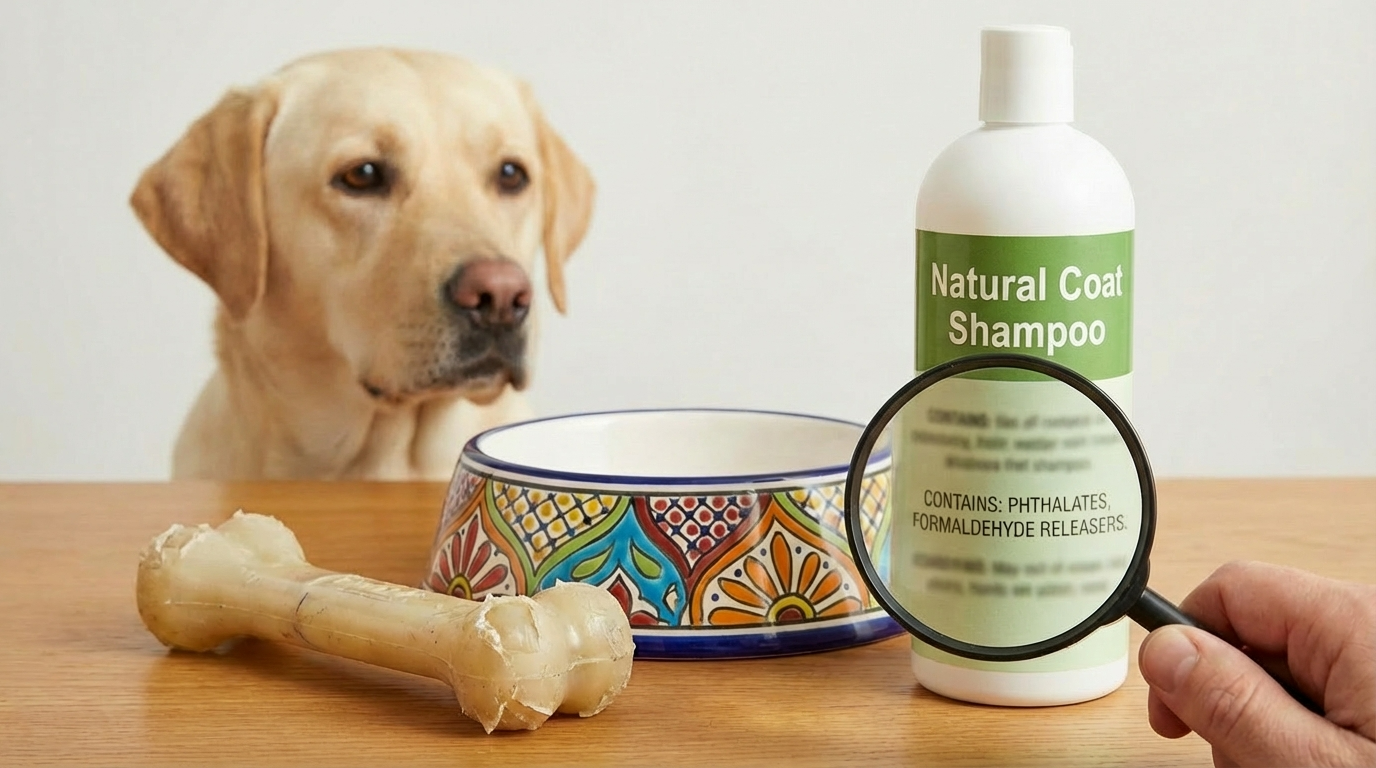
Hidden toxins in pet products are often overlooked, yet they can quietly affect your Labrador’s health over time. From plastic bowls to scented shampoos, everyday items may contain chemicals that seem harmless but carry long-term risks.
Labradors are curious, energetic, and constantly in contact with their environment. They chew toys, lick paws, nap on bedding, and eat from bowls several times a day. Because of this frequent exposure, even small amounts of harmful substances can add up.
So, what exactly are these hidden toxins in pet products? And how can you protect your Labrador without becoming overwhelmed? Let’s explore the risks and the solutions in detail.
Why Hidden Toxins in Pet Products Are Often Ignored
Most pet owners focus on food quality and exercise. While those areas are essential, product safety is often assumed rather than examined.
Packaging promises “natural,” “safe,” or “premium.” However, marketing language does not guarantee chemical safety. Regulations for pet products can vary, and ingredient transparency is not always required.
Additionally, symptoms linked to hidden toxins in pet products may appear gradually. Skin irritation, digestive upset, or behavioral changes might not immediately point to a chemical source.
Because effects are subtle, they are frequently dismissed. Yet cumulative exposure matters.
Common Hidden Toxins in Pet Products
To protect your Labrador, you must first recognize potential culprits.
Phthalates are often found in soft plastics. These chemicals make materials flexible, yet they may disrupt hormonal balance.
BPA, another plastic additive, has raised concerns regarding long-term health effects. Although some products are labeled BPA-free, alternatives may still carry risks.
Formaldehyde can be present in certain shampoos and grooming sprays. It is sometimes used as a preservative.
Artificial fragrances are also common. While they create pleasant scents, they may trigger allergic reactions in sensitive Labradors.
Heavy metals, including lead, have occasionally been detected in low-quality toys.
These hidden toxins in pet products may not be visible, but they can affect skin, digestion, and overall well-being.
How Toxins Enter Your Labrador’s Body
Exposure pathways are surprisingly simple.
First, ingestion occurs when dogs chew toys or lick surfaces. Labradors are especially enthusiastic chewers, increasing risk.
Second, skin absorption plays a role. Chemicals in bedding, collars, and shampoos can be absorbed through the skin.
Third, inhalation happens when sprays or scented products release airborne particles.
Because Labradors interact closely with their environment, multiple exposure routes exist daily.
Over time, small exposures may accumulate.
Skin Reactions Linked to Hidden Toxins in Pet Products
Skin issues are among the most common warning signs.
Redness, itching, and hot spots may develop after contact with chemically treated materials. For example, synthetic bedding sprayed with flame retardants can irritate sensitive skin.
Shampoos containing harsh preservatives may strip natural oils. As a result, dryness and flaking occur.
If your Labrador scratches excessively or develops recurring rashes, product exposure should be considered.
Switching to hypoallergenic or fragrance-free options often reduces symptoms.
Digestive Issues and Chemical Exposure
Digestive upset may also signal a problem.
When Labradors chew low-quality toys, small particles may be swallowed. Additionally, plastic food bowls may leach chemicals into meals, especially when exposed to heat.
Vomiting, diarrhea, or reduced appetite sometimes follow.
Although diet is often blamed first, hidden toxins in pet products may contribute.
Using stainless steel bowls and durable, non-toxic toys can reduce this risk.
Long-Term Health Concerns
Chronic exposure raises deeper concerns.
Endocrine disruptors can interfere with hormone regulation. While research in pets continues, parallels from human studies suggest caution.
Certain flame retardants and plasticizers have been studied for potential links to immune system changes.
Although not every product poses danger, repeated contact increases cumulative risk.
Because Labradors live closely with families, minimizing unnecessary exposure is wise.
Prevention is easier than treatment.
Hidden Toxins in Pet Products and Behavioral Changes
Behavioral shifts sometimes occur alongside physical symptoms.
A Labrador experiencing discomfort may appear restless or irritable. Chronic itching disrupts sleep, which affects mood.
Additionally, exposure to strong fragrances can trigger sensitivity or anxiety.
If unexplained changes in behavior appear, environmental factors should be reviewed.
Small adjustments in product choices may lead to noticeable improvements.
Evaluating Toys for Chemical Safety
Toys are among the most frequently used pet products.
When selecting toys, choose natural rubber or certified non-toxic materials. Avoid items with strong chemical odors.
Check for transparent manufacturing information. Reputable brands often disclose safety testing.
Durability matters as well. Fragile toys break apart easily, increasing ingestion risk.
Because Labradors chew powerfully, strength and safety must go hand in hand.
Quality materials protect teeth and digestive health.
Safer Grooming Products for Labradors
Bath time introduces direct chemical exposure.
Choose shampoos labeled sulfate-free and paraben-free. Fragrance-free options reduce allergy risk.
Additionally, avoid products with vague ingredient lists.
Natural ingredients such as oatmeal or aloe vera soothe sensitive skin.
After bathing, rinse thoroughly. Residue left on the coat may irritate over time.
Grooming should cleanse, not compromise health.
Choosing Safer Bedding and Collars
Bedding often goes unnoticed as a potential source of hidden toxins in pet products.
Look for beds made from organic cotton or untreated fabrics. Avoid synthetic materials treated with flame retardants.
Wash bedding regularly using mild, pet-safe detergents.
Collars should also be examined. Some dyed fabrics contain chemicals that transfer to skin through sweat and friction.
Opt for collars made from durable, untreated materials.
Comfort and safety should always align.
Reading Labels Carefully
Label reading extends beyond food packaging.
Check for certifications such as OEKO-TEX or other safety standards. These indicate tested materials.
Avoid products with unclear sourcing or missing ingredient disclosures.
If information is not readily available, consider contacting the manufacturer.
Transparency builds trust.
The Role of Regulation and Responsibility
Regulations for pet products vary by region. While some standards exist, enforcement can differ.
Therefore, responsibility falls partly on brands and consumers.
Brands must prioritize safe materials. Consumers must ask questions and research options.
When demand for safer alternatives increases, supply follows.
Collective awareness drives change.
Building a Low-Toxin Environment for Your Labrador
Creating a safer space does not require perfection.
Start with high-impact items such as bowls, toys, and grooming products.
Gradually replace questionable products with verified safe alternatives.
Ventilate your home regularly. Fresh air reduces airborne chemical buildup.
Small improvements accumulate over time.
Your Labrador benefits from every positive change.
Recognizing Early Warning Signs
Watch for subtle signals.
Persistent itching, recurring ear infections, or unusual lethargy may indicate environmental stressors.
Consult your veterinarian if symptoms persist.
Keeping a log of product changes can help identify triggers.
Awareness allows quick response.
Conclusion: Protecting Your Labrador from Hidden Risks
Hidden toxins in pet products may not be visible, yet their effects can accumulate quietly. Labradors interact constantly with toys, bedding, grooming supplies, and feeding equipment. Each item carries potential exposure.
By choosing non-toxic materials, reading labels carefully, and favoring transparent brands, you reduce unnecessary risks. Small decisions made consistently create a safer environment.
Your Labrador relies on you to provide not just love and exercise, but also protection from hidden dangers. Thoughtful product choices today can safeguard health for years to come.
FAQs
- What are hidden toxins in pet products?
They are harmful chemicals such as phthalates, BPA, or artificial fragrances found in some pet items. - How can I tell if a product is safe?
Look for clear ingredient lists, safety certifications, and transparent manufacturing details. - Can toxins cause skin problems in Labradors?
Yes, chemical exposure may contribute to itching, redness, or allergic reactions. - Are plastic bowls dangerous for dogs?
Low-quality plastic bowls may leach chemicals. Stainless steel is often a safer choice. - Should I replace all products immediately?
Gradual replacement of high-risk items is practical and effective for reducing exposure.