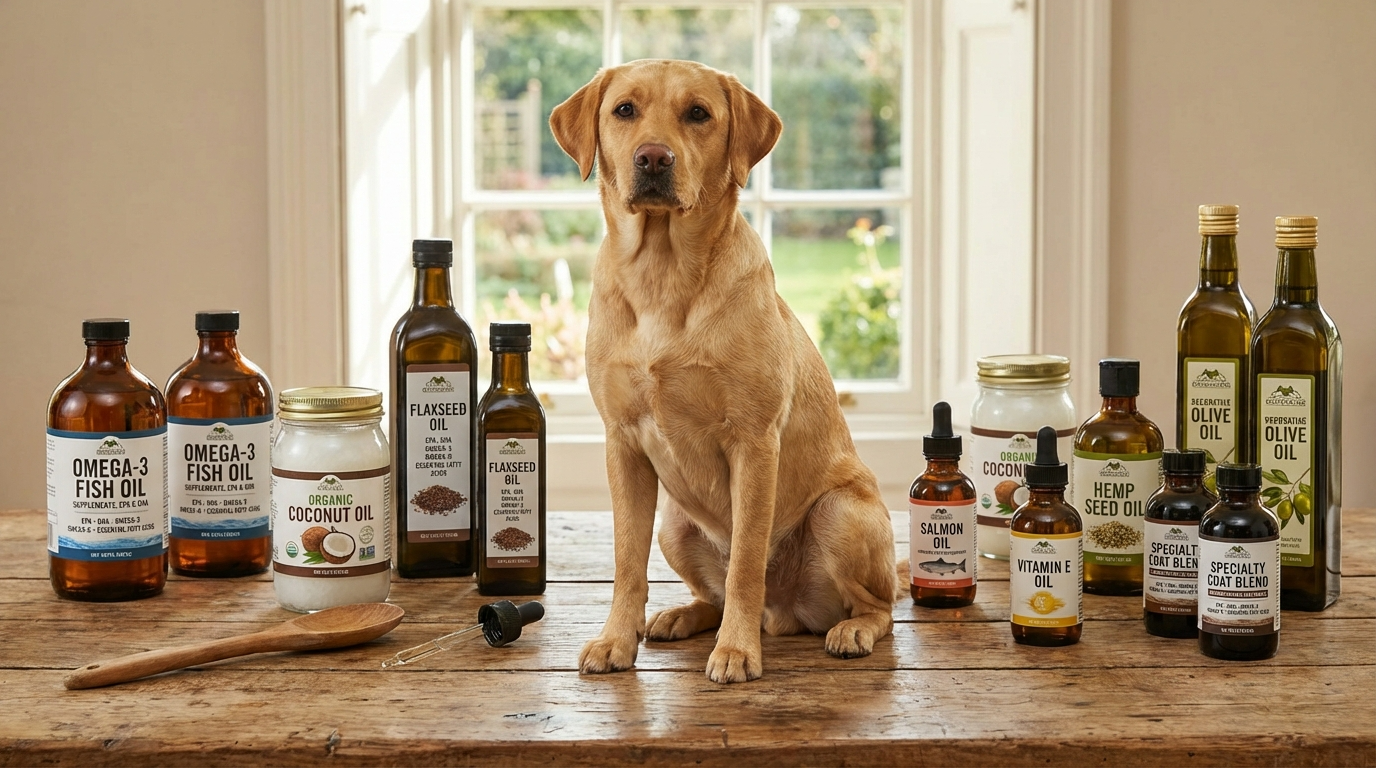
Natural oils for Labrador coat health have become a trusted solution for owners who want healthier skin and a shinier coat without harsh chemicals. Labradors are known for their dense, weather-resistant fur, yet that same coat can hide dryness, flaking, and irritation until problems worsen. When the skin underneath is nourished properly, the coat responds almost immediately.
Think of your Labrador’s skin like soil. When it is dry or depleted, nothing grows well. Add the right nutrients, however, and everything thrives. Natural oils work in a similar way. They restore balance, lock in moisture, and support the skin’s protective barrier.
This article explores the most effective natural oils for Labrador coat care, explains how each one works, and shows you how to use them safely. With the right approach, small changes can lead to visible improvements.
Why Natural Oils for Labrador Coat Health Matter
Labradors shed year-round. They swim often. They roll in grass and sand. All of this stresses the skin.
When the skin becomes dry, the coat follows. Dull fur, excessive shedding, itching, and hot spots may appear. Many commercial grooming products strip natural oils rather than replenish them.
Natural oils for Labrador coat health help restore what is lost. They support elasticity, reduce inflammation, and strengthen the skin barrier. As a result, the coat looks fuller and feels softer.
Most importantly, these oils work with the body rather than against it. That makes them ideal for long-term care.
Understanding Your Labrador’s Skin and Coat Needs
Labradors have a double coat. The outer layer repels water. The undercoat insulates.
This design protects them outdoors but also traps moisture and debris. If the skin underneath dries out, problems can remain hidden.
Seasonal changes also affect coat condition. Cold weather dries the air. Summer swimming strips oils. Diet plays a role as well.
Natural oils for Labrador coat maintenance address these challenges directly. They replenish lipids and soothe irritation at the source.
Understanding this structure helps you choose oils that actually help instead of simply adding shine.
Coconut Oil for Labrador Skin and Coat Support
Coconut oil is one of the most popular natural oils for Labrador coat care. It contains medium-chain fatty acids that support skin hydration.
When applied topically, coconut oil helps reduce dryness and flaking. It can also calm mild irritation caused by allergens or overbathing.
Internally, small amounts may support skin health from within. However, moderation matters.
Coconut oil solidifies at cooler temperatures. Warming it slightly makes application easier.
Its light scent and smooth texture make it well tolerated by most Labradors.
Fish Oil as a Core Oil for Labrador Coat Health
Fish oil is often considered the gold standard among natural oils for Labrador coat improvement. It is rich in omega-3 fatty acids.
These fats reduce inflammation. They support skin cell regeneration. They also improve coat softness and shine.
Fish oil is usually given orally. Capsules or liquid supplements work well when dosed correctly.
Results often appear within weeks. Reduced itching is usually noticed first. Coat improvements follow soon after.
Consistency matters more than quantity. Too much fish oil can cause digestive upset.
Olive Oil for Gentle Skin Nourishment
Olive oil provides gentle hydration and antioxidant support. It is widely available and easy to use.
When used sparingly, olive oil helps soothe dry skin and improve coat texture. It works best for mild dryness rather than severe conditions.
Olive oil can be added to food in small amounts. Topical use is also possible but should be limited to avoid greasiness.
This oil works well for Labradors with sensitive skin who need light nourishment rather than heavy treatment.
Flaxseed Oil for Shedding and Coat Balance
Flaxseed oil is another effective option among natural oils for Labrador coat care. It contains plant-based omega-3 fatty acids.
This oil supports skin hydration and may help reduce excessive shedding. It is often chosen for dogs sensitive to fish products.
Flaxseed oil is typically used as a dietary supplement. It has a mild taste and blends easily with food.
Because it is less concentrated than fish oil, results may take slightly longer to appear.
Still, it remains a valuable alternative.
Jojoba Oil for Topical Coat Conditioning
Jojoba oil closely resembles the skin’s natural sebum. That makes it ideal for topical use.
Unlike heavier oils, jojoba absorbs quickly. It moisturizes without clogging pores.
When applied lightly, it helps restore shine and manage dryness around problem areas.
Jojoba oil is especially helpful for paws, elbows, and areas prone to irritation.
As part of natural oils for Labrador coat grooming, it offers targeted support.
Argan Oil for Shine and Elasticity
Argan oil is often associated with human hair care, but it benefits dogs as well.
It contains vitamin E and essential fatty acids. These nutrients support coat elasticity and shine.
Argan oil works best when used sparingly as a finishing oil. A few drops can transform a dull coat.
Because it is lightweight, it does not leave heavy residue.
For Labradors with coarse or brittle fur, argan oil adds softness without buildup.
Sunflower Oil for Skin Barrier Support
Sunflower oil is rich in omega-6 fatty acids. These fats support the skin’s protective barrier.
When the barrier is strong, moisture stays in. Irritants stay out.
Sunflower oil can be used both internally and topically. It works well for Labradors with environmental sensitivities.
Balance is important. Omega-6 fats should be paired with omega-3s for best results.
Used correctly, sunflower oil complements other natural oils for Labrador coat health.
How to Apply Natural Oils Safely
Application method matters as much as oil choice.
For topical use, start with a small amount. Warm the oil in your hands. Massage gently into the coat and skin.
Focus on dry areas. Avoid overuse. Too much oil attracts dirt.
For dietary use, introduce oils slowly. Monitor stool consistency and appetite.
Every Labrador responds differently. Adjust based on results rather than assumptions.
Frequency Guidelines for Oil Use
More is not better. Consistency wins.
Topical oils are usually applied once or twice per week. Daily use is rarely needed.
Dietary oils are often given daily in small doses. Follow veterinary guidance when possible.
Seasonal adjustments help. Winter may require more support. Summer often needs less.
Natural oils for Labrador coat care work best when integrated thoughtfully.
Signs That Oils Are Helping
Positive signs appear gradually.
Itching decreases. Redness fades. The coat feels softer.
Shedding becomes more manageable. Shine improves without greasiness.
Your Labrador may seem more comfortable during grooming.
These changes signal that the skin barrier is healing.
When Oils May Not Be Enough
Some conditions require more than oils alone.
Persistent infections, severe allergies, or hormonal issues need veterinary care.
Natural oils for Labrador coat health support maintenance, not medical treatment.
If symptoms worsen or persist, professional evaluation is necessary.
Oils work best as part of a broader care strategy.
Combining Oils with Diet and Grooming
Oils do not work in isolation.
A balanced diet supports skin health from within. Proper grooming prevents buildup and irritation.
Gentle shampoos preserve natural oils rather than stripping them.
When diet, grooming, and oils align, results multiply.
Natural oils for Labrador coat improvement thrive within a holistic approach.
Avoiding Common Mistakes with Natural Oils
Overapplication is common. It leads to greasy fur and clogged pores.
Using poor-quality oils also causes problems. Always choose food-grade or pet-safe products.
Ignoring allergies can backfire. Introduce one oil at a time.
Patience matters. Expecting instant results leads to overuse.
Mindful use ensures success.
Puppies, Seniors, and Special Considerations
Age affects skin needs.
Puppies usually need minimal oil support. Seniors may need more.
Arthritic Labradors often benefit from omega-rich oils internally.
Adjustments should be gradual and monitored carefully.
Natural oils for Labrador coat care should evolve with age.
Seasonal Coat Changes and Oil Support
Shedding increases seasonally. Skin stress follows.
Oils help manage transitions between coats.
Spring and fall often benefit most from supplementation.
Topical oils soothe skin stressed by temperature changes.
Seasonal awareness improves results.
Environmental Factors That Affect Coat Health
Indoor heating dries air. Outdoor allergens irritate skin.
Swimming strips oils. Sun exposure dries fur.
Natural oils help counter these effects.
Adjusting routines based on environment supports long-term coat health.
Choosing Quality Oils for Your Labrador
Quality matters.
Cold-pressed oils retain nutrients. Refined oils lose benefits.
Check sourcing and freshness. Rancid oils harm rather than help.
Storage matters too. Keep oils cool and sealed.
High-quality oils deliver consistent results.
Long-Term Benefits of Natural Oils
Over time, improvements compound.
Skin becomes resilient. Coat remains glossy.
Shedding stabilizes. Grooming becomes easier.
Natural oils for Labrador coat health support comfort and appearance together.
Building a Simple Oil Routine
Simplicity works best.
Choose one internal oil and one topical oil.
Use them consistently. Adjust as needed.
Observe changes rather than chasing perfection.
Routine creates lasting benefits.
Conclusion
Natural oils for Labrador coat health offer a gentle, effective way to support skin comfort and coat shine. When chosen carefully and used correctly, these oils restore balance, reduce irritation, and strengthen the skin’s natural defenses. From fish oil to coconut oil, each option plays a role in nourishing your Labrador from the inside out. With patience, consistency, and mindful application, natural oils become a powerful ally in keeping your Labrador comfortable, healthy, and glowing year-round.
FAQ
1. How long does it take to see results from natural oils?
Most Labradors show improvement within two to four weeks of consistent use.
2. Can I use human-grade oils on my Labrador?
Yes, as long as they are pure, food-grade, and used in appropriate amounts.
3. Are natural oils safe for Labradors with allergies?
Many are safe, but oils should be introduced one at a time to monitor reactions.
4. Should oils be applied before or after bathing?
Topical oils are best applied after bathing once the coat is dry.
5. Can natural oils replace veterinary treatments?
No, oils support skin health but do not replace medical care when needed.