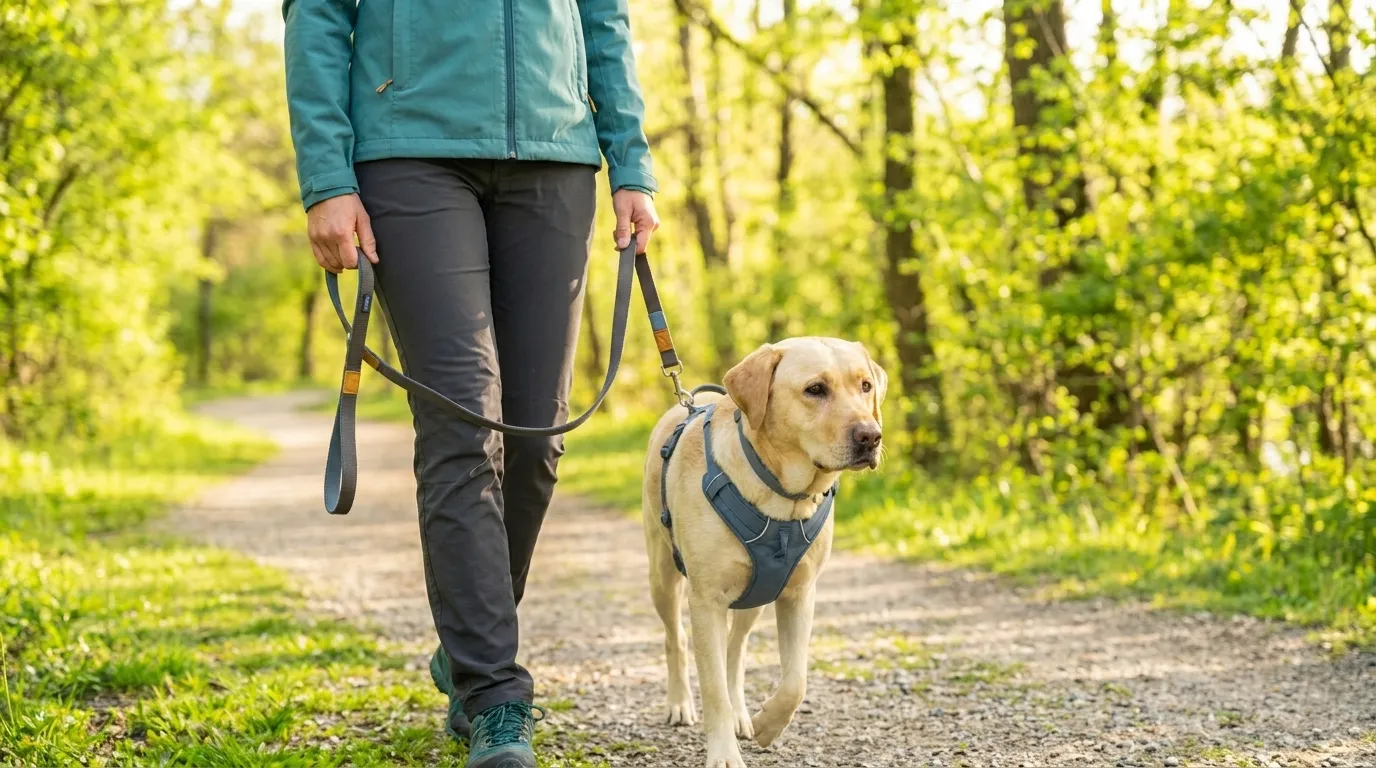
Walking your Labrador should be an enjoyable experience for both of you. However, constant tugging can quickly turn a pleasant stroll into a frustrating battle. If you’re wondering how to stop Labrador leash pulling, you’re certainly not alone. Labradors are strong, enthusiastic dogs, and their natural exuberance often translates into pulling when excited by new smells or sights. Nevertheless, with consistent training and the right techniques, you can teach your Lab to walk politely by your side, making every outing a joy.
Understanding Why Your Labrador Pulls
To effectively stop Labrador leash pulling, it helps to understand the root causes. Often, it’s simply a matter of excitement and a strong desire to explore. Your Lab wants to get to that interesting smell or greet another dog; consequently, they’ve learned that pulling gets them there faster. Another significant factor is often the equipment. A standard flat collar can inadvertently encourage pulling, as the pressure around their neck prompts them to pull against it. Consistency in training and managing their environment are key components to changing this ingrained behavior.
Furthermore, some Labradors pull because they haven’t been taught otherwise. Early Labrador puppy socialization is vital, including early leash training. Without proper guidance, a puppy quickly learns that pulling is an effective way to control the direction and pace of the walk. Therefore, proactive training from a young age is always beneficial. Remember, Labradors are intelligent and eager to please, so they are very receptive to learning new behaviors.
Essential Equipment for Loose Leash Walking
Starting with the right equipment is fundamental. A front-clip harness or a head halter can be incredibly effective in redirecting your Lab’s attention and making pulling less rewarding. A front-clip harness, for example, discourages pulling by turning your dog to the side whenever they lunge forward. This prevents them from gaining momentum. Similarly, a head halter gives you more control over your dog’s head, and where the head goes, the body often follows. Avoid retractable leashes, as these can actually reinforce pulling by teaching your dog that pulling extends their range.
Additionally, ensure your leash is the correct length. A standard 6-foot leash provides enough slack for your dog to explore slightly while still allowing you to maintain control. Always use a comfortable, sturdy leash that won’t slip from your hand. Moreover, consider a treat pouch to keep rewards readily accessible. This will ensure you can mark and reward desired behaviors immediately.
Practical Training Techniques to Halt Leash Pulling
When your dog pulls, immediately stop walking. Only resume once the leash is slack. This teaches your Lab that pulling stops forward momentum, effectively making pulling counterproductive. This technique is often referred to as the