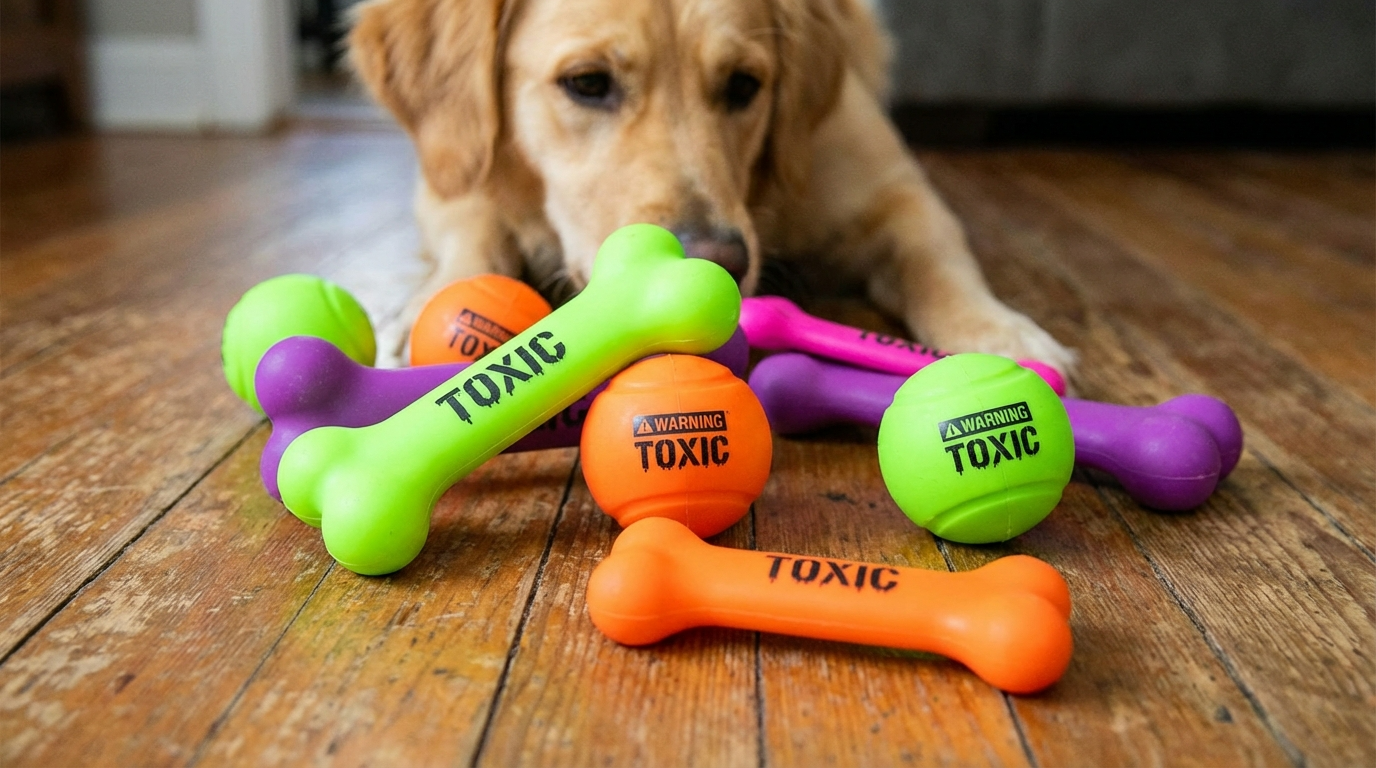
Labradors love toys with their whole hearts. A toy isn’t just entertainment. It’s comfort, stimulation, and companionship rolled into one. That’s exactly why the topic of toxic labrador toys deserves serious attention.
Most owners assume toys sold in pet stores are safe. After all, they’re made for dogs, right? Unfortunately, that assumption can be misleading. Many toys contain chemicals, materials, and design flaws that quietly put Labradors at risk.
The danger isn’t always obvious. It doesn’t always appear as an emergency. Instead, it often shows up slowly through skin irritation, digestive issues, behavioral changes, or unexplained health problems. Understanding these risks helps you make smarter choices and protect your dog from harm hiding in plain sight.
Why Labradors Are Especially Vulnerable to Toxic Toys
Labradors explore the world with their mouths. Chewing isn’t optional for them. It’s instinctive.
Because of that, toxic labrador toys pose a greater threat to this breed than to many others. Labradors don’t nibble politely. They gnaw with commitment. That pressure releases chemicals faster and increases ingestion risk.
Additionally, Labradors tend to be persistent. When a toy squeaks, smells interesting, or feels satisfying, they return to it again and again. Repeated exposure magnifies even low-level toxins.
Their size also matters. Larger toys don’t always mean safer materials. In fact, many oversized toys are made cheaply to reduce cost, not risk.
What Makes a Toy Toxic for Labradors
Toxicity doesn’t always mean immediate poisoning. Often, it means repeated exposure to substances that the body struggles to process.
Toxic labrador toys may contain heavy metals, harmful dyes, plasticizers, flame retardants, or chemical softeners. These substances can leach out through saliva, friction, and heat.
Some toxins accumulate over time. Others irritate tissues directly. Both create problems.
The most concerning part is how rarely these ingredients are disclosed clearly. Labels may be vague. Safety testing may be minimal. Regulation varies widely between manufacturers.
Common Chemicals Found in Toxic Labrador Toys
Several chemicals appear repeatedly in unsafe dog toys.
Phthalates are used to soften plastics. They can disrupt hormones and cause digestive upset. Lead sometimes appears in paint or pigments. Even small amounts create neurological risk.
BPA is another concern. It’s commonly found in plastics and has been linked to endocrine disruption. Synthetic dyes may cause allergic reactions or skin sensitivity.
Toxic labrador toys often include these substances because they reduce manufacturing costs. Safety becomes secondary.
The Hidden Risk of Cheap Plastic Toys
Bright colors attract attention. Soft plastics feel satisfying to chew. However, these features often signal danger.
Cheap plastic toys frequently rely on chemical softeners. As Labradors chew, tiny fragments break off. These fragments may be swallowed or absorbed through the mouth.
Toxic labrador toys made from low-grade plastic degrade faster. That degradation releases more chemicals.
If a toy smells strongly of chemicals, that’s a warning sign. Safe toys rarely have a harsh odor.
Rubber Toys: Not Always as Safe as They Seem
Rubber toys are often marketed as durable and safe. While some are excellent, others hide risks.
Synthetic rubber may contain fillers, dyes, and stabilizers. These additives aren’t always tested for long-term chewing.
Toxic labrador toys sometimes disguise themselves as “indestructible” rubber products. Durability doesn’t equal safety.
Natural rubber tends to be safer. However, labeling isn’t always clear. Knowing the difference matters.
Fabric and Plush Toys Can Be Toxic Too
Soft toys feel harmless. They look comforting. Yet, they carry their own risks.
Dyes used in fabric toys may contain heavy metals. Fillings sometimes include flame retardants or chemical treatments. When stuffing leaks, ingestion risk increases.
Toxic labrador toys in this category often appear harmless until the first tear. Then, exposure accelerates.
Supervision becomes critical. So does quality selection.
How Toxic Toys Affect Labrador Health Over Time
The effects of toxic labrador toys aren’t always immediate. That’s what makes them dangerous.
Short-term symptoms may include vomiting, diarrhea, excessive drooling, or mouth irritation. These signs often pass quickly, masking the cause.
Long-term exposure can contribute to chronic inflammation, liver stress, hormonal imbalance, and immune dysfunction. Skin problems and recurring ear infections sometimes trace back to environmental toxins.
Behavioral changes also appear. Increased anxiety, restlessness, or lethargy may develop gradually.
Why Puppies Face Higher Risk From Toxic Toys
Puppies chew constantly. Their bodies are still developing. Detox systems aren’t fully mature.
That combination makes toxic labrador toys especially dangerous during early life. Chemical exposure during growth can influence immune development and neurological health.
What a puppy tolerates poorly may affect them for years. Prevention matters more than correction.
Choosing safer toys early builds healthier foundations.
Senior Labradors and Chemical Sensitivity
Older Labradors process toxins more slowly. Liver and kidney efficiency declines with age.
Toxic labrador toys place additional burden on aging systems. Symptoms may include confusion, appetite changes, or increased joint stiffness.
Reducing chemical exposure becomes more important, not less, as dogs age.
Simple changes often improve comfort noticeably.
Choking Hazards and Toxicity Often Go Together
Design flaws add another layer of risk.
Small parts, weak seams, and brittle materials increase choking danger. When combined with toxic materials, the risk multiplies.
Toxic labrador toys often fail structurally because they’re cheaply made. Breakage exposes sharp edges and internal components.
Durability protects safety as much as material choice.
Why “Pet-Safe” Labels Can Be Misleading
“Pet-safe” sounds reassuring. Unfortunately, it lacks consistent regulation.
Manufacturers define safety standards themselves in many regions. Testing may be minimal or nonexistent.
Toxic labrador toys can legally carry reassuring language without independent verification.
Reading beyond marketing claims protects your dog better than trusting labels alone.
How to Identify Potentially Toxic Labrador Toys
Observation helps. So does skepticism.
Avoid toys with strong chemical smells. Be cautious with overly bright or unnatural colors. Check for vague material descriptions.
Toxic labrador toys often lack transparency. High-quality brands disclose materials clearly.
When in doubt, choose simplicity over novelty.
Natural Materials That Tend to Be Safer
Not all materials carry equal risk.
Natural rubber, untreated cotton, hemp, and responsibly sourced wood often offer safer alternatives. They break down more predictably and contain fewer additives.
While no toy is completely risk-free, these options reduce exposure significantly.
Toxic labrador toys usually rely on synthetic shortcuts.
Why Supervision Still Matters With Safe Toys
Even safe toys can become unsafe over time.
Wear and tear changes structure. Pieces loosen. Surfaces degrade.
Regular inspection prevents accidents. Remove damaged toys promptly.
Avoid assuming safety lasts forever.
The Role of Chewing Strength in Toy Safety
Labradors chew powerfully. That strength accelerates wear.
A toy safe for a gentle chewer may become dangerous quickly in Labrador jaws.
Toxic labrador toys often fail under pressure, releasing chemicals and fragments.
Choose toys rated for strong chewers and monitor them closely.
Environmental Impact of Toxic Dog Toys
Toxicity doesn’t stop at your dog.
When discarded, these toys enter landfills. Chemicals leach into soil and water.
Choosing safer materials reduces environmental harm too.
Responsible ownership extends beyond your home.
Why Price Shouldn’t Be the Main Factor
Cheap toys save money upfront. However, hidden costs appear later.
Vet visits, chronic health issues, and replacements add up.
Toxic labrador toys often cost less because they cut corners on materials and testing.
Value lies in longevity and safety, not price tags.
Safer Alternatives to Mass-Produced Toys
Handmade toys from trusted sources offer transparency. Reputable brands invest in testing.
DIY toys made from safe household materials can work well when done carefully.
Upcycling safe materials reduces waste and risk.
Creativity often outperforms convenience.
How to Transition Away From Unsafe Toys
Change doesn’t need to be sudden.
Remove the most questionable items first. Replace gradually. Observe reactions.
Dogs adapt quickly when new toys meet their needs.
Safety improvements don’t require perfection.
Teaching Children About Toy Safety
If kids are part of your household, involve them.
Explain why certain toys disappear. Teach inspection habits.
Awareness builds responsibility and empathy.
Dogs benefit from informed families.
What Veterinarians Say About Toxic Dog Toys
Veterinary opinions increasingly highlight environmental toxins.
While emergencies get attention, chronic exposure concerns grow steadily.
Many vets now recommend minimizing synthetic toy exposure, especially for heavy chewers.
Prevention aligns with long-term wellness.
Why Familiar Toys Can Still Be Dangerous
Sentimentality complicates decisions.
Old favorites feel comforting. Yet, materials degrade.
Toxic labrador toys become more dangerous with age, not less.
Letting go protects your dog, even when it feels difficult.
Building a Safer Toy Routine
Rotate toys regularly. Inspect weekly. Clean appropriately.
Limit the number available at once.
Quality over quantity keeps safety manageable.
Conclusion
Toxic labrador toys represent a hidden risk many owners never expect. They don’t announce themselves loudly. Instead, they quietly influence health, comfort, and behavior over time. Labradors, with their powerful chewing habits and close bond to toys, face greater exposure than most breeds. By learning what materials to avoid, recognizing warning signs, and choosing safer alternatives, you protect more than playtime. You protect your dog’s long-term well-being. A toy should bring joy, not hidden harm.
FAQ
1. How can I tell if a Labrador toy is toxic?
Strong chemical smells, vague labeling, and cheap materials are common warning signs.
2. Are all plastic toys unsafe for Labradors?
Not all, but low-quality plastics pose higher risk due to chemical additives and breakage.
3. Can toxic toys cause long-term health problems?
Yes. Repeated exposure may contribute to inflammation, digestive issues, and immune stress.
4. What materials are safest for Labrador toys?
Natural rubber, untreated cotton, hemp, and clearly labeled non-toxic materials are safer options.
5. How often should I replace my Labrador’s toys?
Inspect weekly and replace immediately when damage or degradation appears.