Disclaimer: This content is for informational purposes only and is not a substitute for professional veterinary advice. Ask your veterinarian about your individual dog.
Affiliate disclosure: As an Amazon Associate, Labrador Healthcare may earn a small commission from qualifying purchases made through links on this site, at no extra cost to you. It never changes what we recommend. We have not hands-on tested the product categories below, and we do not quote prices.
Here’s the direct answer on winter paw care for Labradors: wipe and check your Lab’s paws after every cold-weather walk, keep paw fur tidy so ice does not ball up between the toes, and be cautious around sidewalks treated with de-icers. Many owners also try booties or a paw balm. If you notice cracked pads, bleeding or limping that does not settle, it is time to call your vet.
This guide covers how cold, ice and de-icers can affect paws, a simple after-walk routine, what to look for in booties and balms, trimming paw fur and spotting problems early.
How cold, ice and de-icers affect paws
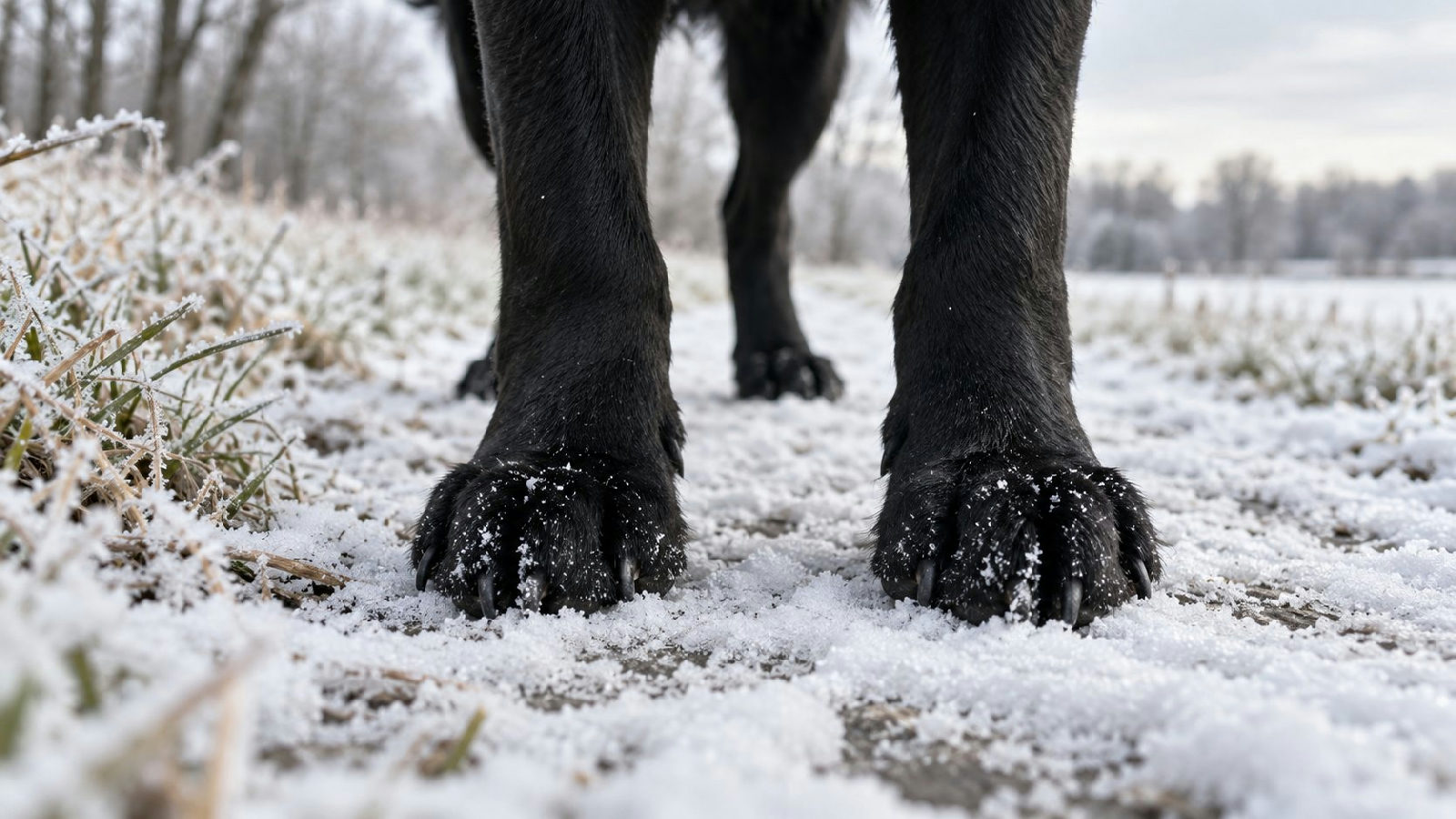
Labradors were bred to work in cold water, and plenty of them treat snow as a personal invitation. Even so, winter conditions can be tough on paws. The ASPCA and the American Kennel Club both publish cold-weather safety reminders for pet owners. Common concerns owners mention include:
- Ice balls: snow and ice can clump in the fur between toes and pads, which may be uncomfortable.
- Dry or cracked pads: cold, dry air and rough surfaces can leave pads rough.
- De-icers and road salt: chemicals used on roads and sidewalks can irritate paws, and dogs may lick them off later.
- Sharp ice and hidden debris: frozen edges and objects under snow can cause small cuts.
Why licking matters
Labradors are thorough lickers. If de-icer residue stays on the paws, a Lab may lick it off once indoors. The Pet Poison Helpline and the ASPCA Animal Poison Control Center both publish information on household and seasonal hazards. If you think your dog has eaten or licked a significant amount of de-icer, call your vet or a pet poison helpline right away.
Wiping and checking paws after walks
A short after-walk routine is the heart of winter paw care for Labradors. Here is a simple step by step version many owners use:
- Keep a towel and a bowl of lukewarm water by the door.
- Rinse or wipe each paw to remove snow, salt and grit, including between the toes.
- Dry thoroughly, especially between toes and pads.
- Check each pad for cuts, cracks, redness or anything stuck between the toes.
- Wipe the legs and belly too, since de-icer and slush can splash up.
- Reward your dog so paw handling stays a positive experience.
If your Lab is not keen on paw handling, start with short, gentle sessions indoors, paired with treats from the daily allowance.
Booties and paw balms: what to look for
Booties and balms are popular winter gear categories. Neither is essential for every dog, and your vet can tell you whether they make sense for yours. If you are shopping, here is a criteria checklist rather than a ranking.
| Category | What to check | Things to keep in mind |
|---|---|---|
| Dog booties | Sizing based on the maker’s paw measurements, a secure but not tight closure, a grippy sole, and water resistance | Many dogs need time to get used to them; introduce slowly indoors and check for rubbing |
| Paw balm or wax | A dog-specific product, a clear ingredient list, and instructions for use | Follow the label, and ask your vet before using any product on cracked or sore pads |
| Pet-safe ice melt for your own steps | Products labeled for use around pets, with clear directions | Pet-safe labels may still cause irritation; rinse paws after walks anyway |
Measure your Lab’s paws before buying booties, since sizing varies between makers. If booties seem to rub or your dog walks awkwardly in them, take them off and try a different fit or style.
Introducing booties
- Put one bootie on for a few seconds indoors and reward.
- Build up to all four over several short sessions.
- Try a short walk around the house, then the yard.
- Check paws after each session for redness or rubbing.
Trimming paw fur
Labradors have fairly short coats, but some grow tufts of fur between their toes and pads. Trimming that fur may help reduce ice balls. Many owners ask a groomer or vet nurse to show them how first. If you trim at home:
- Use blunt-ended scissors or clippers designed for pets.
- Trim only the fur level with the pads, never close to the skin.
- Work in good light with your dog calm and relaxed.
- Stop if your dog is wriggly, and try again later or ask for help.
Spotting cracked pads or limping
Winter paw care for Labradors also means watching for signs that something is not right. Look out for:
- Licking or chewing at paws more than usual
- Limping, holding up a paw or walking gingerly
- Cracks, cuts, redness or swelling on the pads or between toes
- Bleeding, or pads that look raw
- Reluctance to walk on certain surfaces
Small changes may settle with rest and a gentler walking route, but anything that does not improve, or looks sore, is a reason to call your vet.
Plan winter walks around paws
Many owners choose routes with less de-icer, such as grass, parks or quieter residential streets, and keep walks shorter on very cold days. Indoor games can fill the gap when it is too icy outside.
Winter paw care for Labradors who love water
Plenty of Labradors will wade into a half-frozen pond if you let them. Cold water and wet fur add a few extra things to think about in winter:
- Thin ice: keep your dog on a lead near frozen ponds, lakes and rivers, since ice may not hold a dog’s weight.
- Drying off: towel your dog thoroughly after any swim or snow play, paying attention to paws, belly and the base of the tail.
- Warm-up time: give your Lab a warm, draft-free spot to rest after cold, wet walks.
- Puddles near roads: discourage drinking from roadside puddles, which may contain de-icer or other chemicals.
Older dogs, puppies and dogs with health conditions may feel the cold more. Ask your vet how long winter walks should be for your individual dog and whether a dog coat makes sense.
A simple winter paw care for Labradors checklist
- Towel and water bowl by the door
- Paw check after every walk
- Fur between toes kept tidy
- Booties or balm only if they suit your dog
- Routes chosen to avoid heavy de-icer where possible
When to call your vet
Contact your vet if you notice any of the following, and seek urgent care if your dog may have eaten de-icer or antifreeze:
- Bleeding, deep cuts or pads that look raw
- Limping that does not settle with rest
- Swelling, heat or discharge in a paw
- Constant licking or chewing at the feet
- Drooling, vomiting or wobbliness after licking paws or drinking from puddles
For possible poisoning, contact your vet or the ASPCA Animal Poison Control Center straight away. Check the ASPCA website for current contact details and any fees. Your vet knows your dog best and can tell you which signs need same-day attention.
Questions to ask your vet
- Is my Lab’s paw skin healthy, or are there signs of dryness or cracking?
- Would booties or a paw balm make sense for my dog?
- Is there a paw-care product you would suggest, or one to avoid?
- Should I trim the fur between my dog’s toes, and can you show me how?
- Which signs of a paw problem mean I should call you?
- What should I do if my dog licks de-icer or drinks from a puddle near the road?
Further reading
These organizations publish general information on winter safety and pet care. Use them as background, and talk to your vet about your own dog.
- ASPCA, including the Animal Poison Control Center
- American Kennel Club for Labrador and cold-weather information
- Pet Poison Helpline for information on seasonal hazards
For more Lab-specific guides, browse the articles on the Labrador Healthcare homepage. A towel by the door and a two-minute check after each walk make winter paw care for Labradors a simple habit through the cold months.