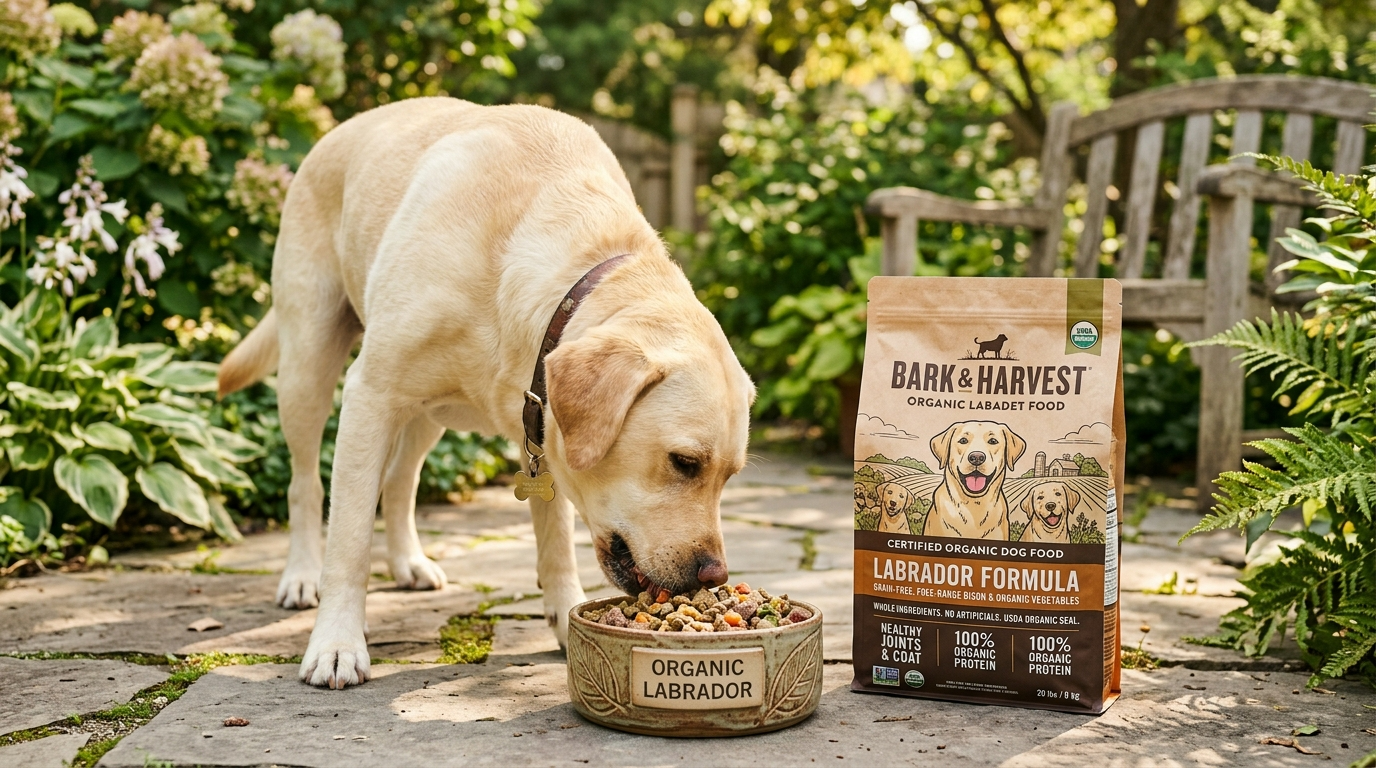
Labradors are energetic, food-loving companions who thrive on balanced nutrition. Because they are prone to weight gain and allergies, choosing the best organic Labrador food can significantly improve long-term health. Clean, organic formulas reduce exposure to synthetic pesticides, artificial additives, and questionable fillers.
Organic feeding focuses on high-quality protein, wholesome carbohydrates, and natural fats. As a result, your Labrador benefits from improved digestion, steady energy, and healthier skin. Moreover, organic standards promote transparency in sourcing and ingredient quality.
When you invest in the best organic Labrador food, you support vitality from puppyhood through senior years.
Why Organic Food Matters for Labradors
Labradors often struggle with sensitive stomachs and skin irritation. Therefore, minimizing chemical exposure can reduce inflammation. Organic diets avoid synthetic fertilizers, antibiotics, and artificial preservatives.
Because Labs eat enthusiastically, ingredient quality matters daily. Small amounts of additives may accumulate over time. In contrast, the best organic Labrador food relies on cleaner farming practices and responsibly raised proteins.
Additionally, organic fruits and vegetables provide higher antioxidant content. These nutrients support immune strength and cellular repair. While conventional diets may meet minimum standards, organic options often prioritize ingredient integrity.
By choosing thoughtfully, you reduce potential dietary stressors and promote balanced health.
Key Ingredients to Look For
Understanding labels helps you evaluate quality. The best organic Labrador food lists a named animal protein as the first ingredient. Chicken, turkey, beef, and salmon are common examples.
Healthy fats such as organic flaxseed or fish oil support joint flexibility. Since Labradors frequently develop hip issues, omega-3 fatty acids play a vital role.
Look for whole-food carbohydrates like sweet potatoes or brown rice. These provide fiber and sustained energy. Avoid vague terms like “meat by-product” or artificial coloring.
Certified organic labeling ensures ingredients meet strict agricultural standards. Transparency signals trustworthiness.
When ingredient lists remain short and recognizable, quality usually follows.
Top Organic Brand Categories to Consider
Several reputable companies produce organic formulas designed for large breeds. While availability varies by region, certain qualities distinguish leading brands.
The best organic Labrador food brands typically offer:
- USDA-certified organic ingredients
- Human-grade sourcing
- No artificial preservatives
- Balanced large-breed formulas
- Transparent manufacturing practices
Some brands focus on fresh, refrigerated meals. Others provide dry kibble made with organic grains and proteins. Both options can support health when properly balanced.
Research independent reviews and veterinary endorsements. Brand reputation reflects consistency and safety standards.
Fresh Organic vs. Organic Kibble
Owners often debate between fresh meals and kibble. Fresh organic formulas preserve moisture and natural enzymes. Because Labradors digest fresh protein efficiently, many thrive on minimally processed diets.
However, the best organic Labrador food does not require abandoning kibble entirely. High-quality organic kibble remains convenient and shelf-stable.
Fresh meals typically cost more. Meanwhile, organic kibble offers affordability and ease of storage. Consider your schedule, budget, and your dog’s preferences.
Transition gradually when changing formats. Sudden dietary shifts may upset digestion.
Both fresh and dry organic foods can support vitality when properly formulated.
Benefits for Skin and Coat Health
Skin conditions are common in Labradors. Allergies often manifest as itching, redness, or ear infections. Organic feeding reduces exposure to synthetic additives that may trigger reactions.
The best organic Labrador food includes omega-rich ingredients that nourish the skin barrier. Salmon oil and flaxseed improve coat shine and elasticity.
Because organic diets exclude artificial dyes, skin irritation risk decreases. Additionally, antioxidant-rich vegetables help reduce inflammation.
Consistent nutrition supports gradual improvement. Visible coat changes may appear within weeks of dietary transition.
Healthy skin reflects balanced internal wellness.
Weight Management and Portion Control
Labradors have strong appetites and slower satiety signals. Therefore, even healthy food requires careful portion control.
The best organic Labrador food supports weight stability through nutrient-dense ingredients rather than empty calories. High-quality protein promotes lean muscle retention.
Fiber-rich carbohydrates create fullness without excessive caloric intake. Measure portions according to activity level and age.
Split daily rations into two meals to maintain steady blood sugar. Avoid free feeding, which encourages overeating.
Balanced weight protects joints and cardiovascular health. Nutrition and exercise must work together.
Supporting Joint Health Naturally
Large breeds face higher joint strain. Consequently, early nutritional support matters.
The best organic Labrador food often includes glucosamine and chondroitin. These compounds strengthen cartilage and support mobility.
Additionally, omega-3 fatty acids reduce inflammation around joints. Organic proteins also promote muscle maintenance, which stabilizes movement.
Begin joint-supportive diets during adulthood, not only senior years. Preventative nutrition reduces future discomfort.
Regular veterinary checkups ensure proper weight and joint assessment.
Puppy Nutrition and Organic Options
Labrador puppies grow rapidly during their first year. Balanced mineral levels prevent skeletal stress.
The best organic Labrador food for puppies contains controlled calcium and phosphorus. Excess minerals can damage developing joints.
Choose formulas labeled for large-breed puppies. These blends encourage steady growth rather than rapid weight gain.
Organic puppy food also avoids artificial additives during critical development stages.
Gradual transitions help prevent digestive upset. Consult your veterinarian before switching young puppies to new diets.
Senior Labradors and Adjusted Diets
As Labradors age, metabolism slows. Calorie needs decrease, yet protein remains essential.
The best organic Labrador food for seniors emphasizes lean protein and moderate fat levels. Antioxidants support cognitive function.
Because aging joints require extra care, omega-rich ingredients become increasingly important. Additionally, fiber aids digestion in older dogs.
Monitor body condition regularly. Adjust portions as activity levels change.
Senior-specific organic formulas address age-related needs without sacrificing ingredient purity.
Reading Labels and Certifications
Organic claims vary widely. Look for official certification symbols such as USDA Organic.
The best organic Labrador food provides clear sourcing information. Brands should disclose manufacturing locations and ingredient origins.
Avoid vague marketing phrases without certification. “Natural” does not always mean organic.
Research company recall history. Reliable brands maintain high safety standards.
Clear labeling empowers informed decisions.
Transitioning to Organic Feeding
Switch gradually over seven to ten days. Mix increasing amounts of organic food with current meals.
The best organic Labrador food may initially cause mild digestive adjustment. However, slow transitions minimize issues.
Monitor stool consistency and energy levels. Positive changes often include improved coat shine and steadier energy.
Stay patient during adaptation. Every dog responds differently to dietary shifts.
Consistency supports successful long-term change.
Budget Considerations and Value
Organic diets often cost more upfront. However, quality ingredients may reduce veterinary expenses over time.
The best organic Labrador food delivers concentrated nutrition. Therefore, feeding portions may remain moderate.
Compare cost per serving rather than bag price alone. Bulk purchasing can reduce expense.
Consider partial integration if full transition strains budget. Even mixing organic food improves overall diet quality.
Long-term health savings often outweigh short-term price differences.
Common Mistakes to Avoid
Avoid switching abruptly between brands. Sudden changes upset digestion.
Do not overfeed simply because food is organic. Portion control remains essential.
The best organic Labrador food still requires balanced exercise and routine veterinary care.
Check expiration dates carefully. Organic formulas may contain fewer preservatives.
Finally, avoid assuming every organic product suits your specific dog. Individual sensitivities vary.
Careful observation ensures optimal results.
Conclusion
Feeding your Labrador with intention shapes lifelong health. The best organic Labrador food combines clean sourcing, balanced nutrition, and thoughtful formulation. By prioritizing certified ingredients, high-quality protein, and natural fats, you support digestion, coat health, and joint strength.
Organic feeding reduces exposure to synthetic chemicals while promoting transparency in manufacturing. Although cost may rise slightly, long-term benefits often justify the investment. When paired with proper portion control and regular exercise, organic nutrition fosters vitality at every life stage. Choosing wisely today helps your Labrador enjoy a stronger, healthier tomorrow.
FAQ
- Is organic dog food better for sensitive Labradors?
Many dogs with sensitivities improve when diets exclude artificial additives and synthetic chemicals. - Can I mix organic and conventional food?
Yes, gradual blending helps transition while improving overall ingredient quality. - How long before I see health improvements?
Coat shine and digestion may improve within three to six weeks. - Are grain-free organic diets necessary?
Not always. Whole organic grains can provide fiber and nutrients unless allergies exist. - Does organic food prevent joint problems?
While not a cure, nutrient-rich formulas with omega-3s and joint support may reduce inflammation.