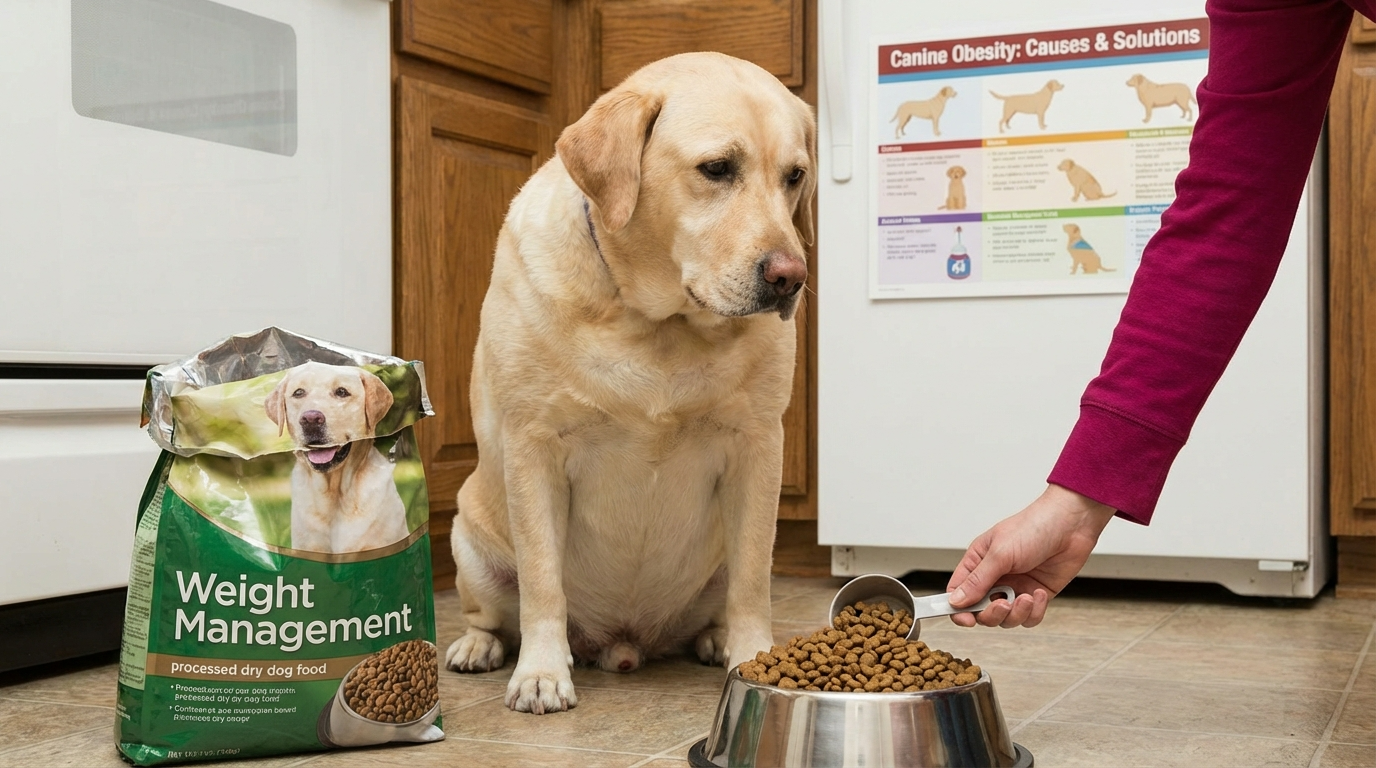
Labradors have an honest relationship with food. They don’t pretend to be picky. They don’t hide their appetite. If eating were a sport, Labradors would train year-round. Because of that reputation, weight gain is often blamed on greed or overfeeding alone.
However, the real issue usually starts in the bowl.
Processed labrador food obesity develops quietly, even when portions seem reasonable. Highly processed diets alter hunger signals, slow metabolism, and encourage fat storage. Over time, weight gain becomes less about discipline and more about biology working against your dog.
The good news is that obesity isn’t inevitable. When you understand how processed food affects Labradors, fixing the problem becomes far more manageable.
Why Labradors Gain Weight So Easily
Labradors are biologically wired to love food. Many carry a genetic trait that weakens satiety signals. In simple terms, the “I’m full” message arrives late or not at all.
When heavily processed diets enter the picture, that weakness becomes amplified. Flavor enhancers increase cravings. Soft textures reduce chewing. Digestion speeds up.
As a result, dogs feel hungry again quickly. This is how excess weight develops even without obvious overfeeding.
Image alt text suggestion: overweight labrador standing indoors
How Processed Dog Food Alters Hunger Signals
Whole foods digest slowly. They require chewing, stomach work, and hormonal coordination. Processed food skips many of these steps.
Kibble made with refined starches breaks down fast. Blood sugar rises sharply. Insulin follows.
Once insulin spikes, fat storage increases. Energy access drops. Hunger returns early.
This cycle fuels processed labrador food obesity, even when daily calories appear controlled.
The Hidden Calorie Density in Processed Diets
Processed foods are compact. A small scoop can carry a large calorie load.
Fat coatings improve taste. Simple carbohydrates increase energy density. Visual portion size becomes misleading.
Owners often feed consistently yet unknowingly oversupply calories.
Weight gain sneaks in quietly. Then one day, the harness no longer fits.
Refined Carbohydrates and Labrador Weight Gain
Dogs don’t need refined grains. Yet, many processed diets rely on them heavily.
Corn, wheat, rice flour, and potato starch convert to sugar quickly. Repeated sugar spikes strain insulin regulation.
Over time, fat storage becomes the body’s default.
Obesity linked to processed labrador food often reflects carbohydrate overload rather than fat intake alone.
How Low-Quality Fats Slow Metabolism
Not all fats are equal.
Rendered fats improve shelf life but often promote inflammation. Inflammation interferes with insulin sensitivity and fat burning.
Metabolism slows. Energy levels drop. Exercise becomes harder.
At that point, weight loss feels impossible, even with effort.
Why “Weight Control” Foods Often Disappoint
Many diet formulas reduce fat but increase starch.
Dogs feel full briefly. Hunger returns fast.
Fiber is added artificially, yet digestion remains rushed.
Obesity related to processed labrador food persists because the food structure stays the same.
Only the label changes.
Emotional Feeding and Processed Diets
Processed food tastes irresistible. Labradors beg harder. Owners feel guiltier.
Extra snacks slip in. Treats accumulate.
This emotional loop strengthens weight gain patterns.
Food becomes comfort for both dog and human, reinforcing the problem unintentionally.
Free-Feeding and Constant Access Problems
Free-feeding works poorly with processed food.
Grazing erases hunger cues completely. Dogs eat out of boredom rather than need.
Weight gain accelerates without obvious overeating.
Structured meals restore rhythm and awareness.
Health Consequences of Obesity in Labradors
Extra weight stresses joints first. Hips and elbows suffer.
Then stamina declines. Heat tolerance worsens. Breathing becomes labored.
Obesity also increases diabetes risk and shortens lifespan.
Food-related weight gain affects far more than appearance.
Image alt text suggestion: labrador struggling with excess weight during walk
Behavioral Changes Linked to Poor Diet Quality
Overweight Labradors often appear lazy. That’s misleading.
Blood sugar swings reduce energy. Inflammation affects mood.
Dogs may seem restless, irritable, or unfocused.
Improved nutrition often restores enthusiasm quickly.
Why Exercise Alone Rarely Solves the Issue
Exercise helps. It doesn’t cure dietary imbalance.
A Labrador would need extreme activity to offset processed calories. That risks injury.
Nutrition must change first. Movement supports progress afterward.
Why Portion Control Isn’t Enough
Smaller portions of poor-quality food still spike insulin.
Dogs feel deprived. Begging increases.
Owners struggle to stay consistent.
Weight loss improves faster when food quality changes alongside portions.
Transitioning Away From Highly Processed Food
Change should be gradual.
Mix new food slowly. Observe digestion and energy. Adjust pace.
The body needs time to reset hunger signals.
Consistency matters more than speed.
Choosing Less Processed Labrador Diets
Look for recognizable ingredients.
Moderate carbohydrates. Quality protein. Natural fats.
Fresh, gently cooked, or minimally processed foods improve satiety.
Simpler diets work better long term.
Protein’s Role in Healthy Weight Loss
Protein increases metabolic cost.
It preserves muscle, which burns calories at rest.
Dogs feel fuller longer.
Higher-quality protein supports fat loss safely.
Healthy Fats That Support Metabolism
Omega-3 fats reduce inflammation.
They improve insulin sensitivity and joint comfort.
Replacing low-quality fats improves energy and movement.
Weight loss becomes easier.
Using Fiber Correctly
Whole vegetables slow digestion naturally.
They stabilize blood sugar and extend fullness.
Artificial fiber additives rarely work as well.
Real food produces real satiety.
Meal Timing and Structure
Two measured meals work best.
Predictable timing restores hunger awareness.
Dogs stop grazing and start responding to true appetite.
Treats That Sabotage Progress
Treats count more than owners realize.
Processed treats often mirror the same problems as kibble.
Use low-calorie, whole-food options instead.
Reward intentionally.
Tracking Progress the Healthy Way
Use body condition scoring.
Check waist shape. Feel ribs lightly.
Progress shows gradually.
Patience pays off.
Safe Weight Loss Expectations
Slow loss protects organs and joints.
Rapid changes cause stress.
Aim for steady improvement over months.
When Veterinary Guidance Helps
Medical issues sometimes contribute.
Joint pain can limit activity. Hormonal problems may interfere.
Professional input ensures safety.
Creating a Long-Term Feeding Plan
Weight loss ends. Maintenance continues.
Choose food your dog can eat for life.
Avoid extreme cycles.
Consistency protects results.
Why Labradors Thrive on Simpler Nutrition
Less processing means clearer signals.
Hunger stabilizes. Energy evens out.
Dogs feel better. Owners relax.
Conclusion
Processed labrador food obesity doesn’t come from careless owners. It develops because modern diets work against a Labrador’s natural biology. Highly processed ingredients disrupt hunger signals, promote fat storage, and slow metabolism over time. The solution isn’t punishment or extreme restriction. It’s smarter food choices, better structure, and patience. By reducing processing, improving ingredient quality, and restoring feeding rhythm, Labradors regain energy, mobility, and comfort. Healthy weight becomes a side effect of better nutrition, not a constant struggle.
FAQ
1. Can processed food really cause Labrador obesity?
Yes. Highly processed diets can promote weight gain even with controlled portions.
2. How quickly should my Labrador lose weight?
Slow, steady loss over several months is safest.
3. Is grain-free food better for weight control?
Not always. Ingredient quality matters more than grain content.
4. Should treats be eliminated entirely?
No. Replace them with healthier options and limit frequency.
5. When will improvements become noticeable?
Energy often improves within weeks, while visible weight loss takes longer.