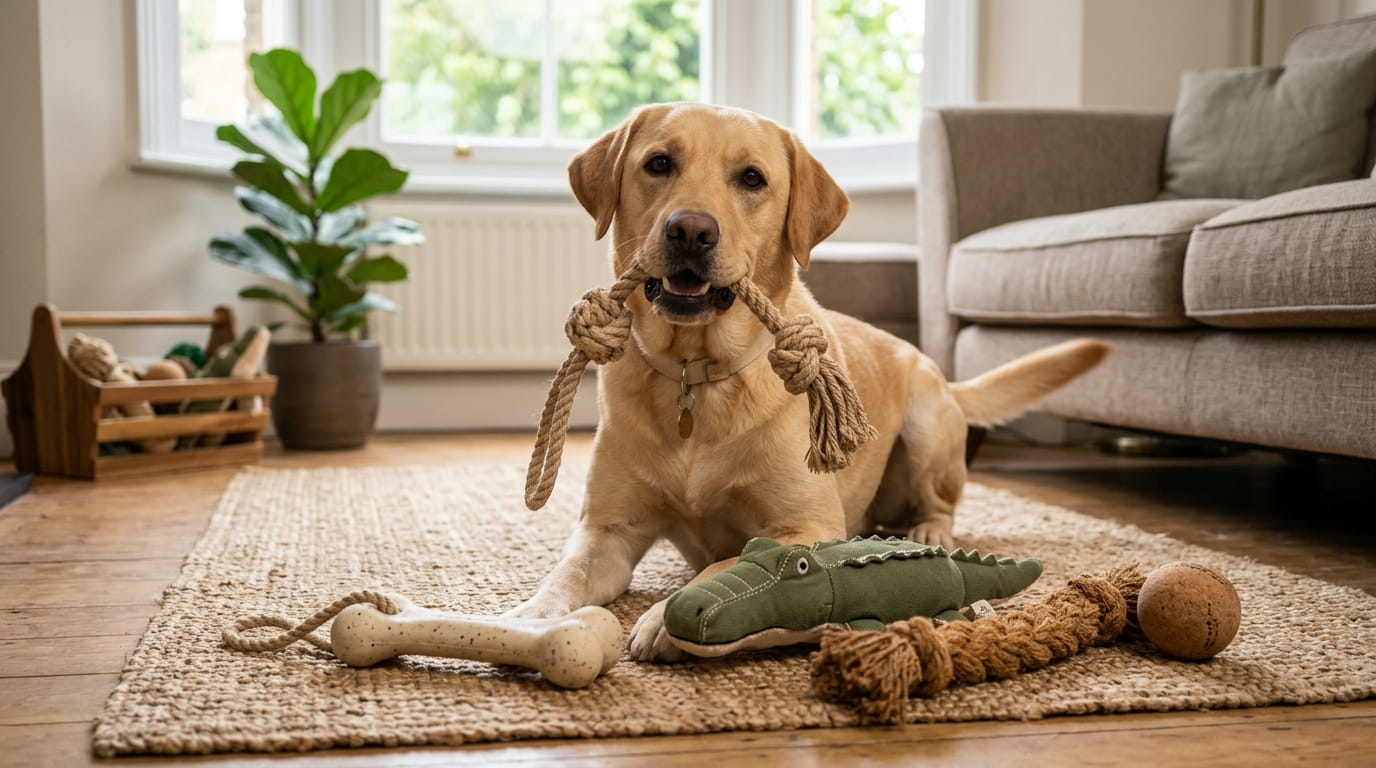
Eco friendly Labrador toys are a smart choice for owners who want safer play, stronger materials, and less waste in the home. Labradors love to chew, carry, fetch, tug, and explore with their mouths, so toy quality matters more for this breed than it might for a gentler dog. However, no toy is truly risk-free for every dog. Even the strongest toy can become unsafe if it is too small, too hard, poorly made, or damaged after heavy chewing. Therefore, the best goal is to choose toys that are safer, durable, easy to clean, and well matched to your Labrador’s size, strength, and play style.
Why Labradors Need Safer, Stronger Toys
Labradors are joyful, active dogs with a strong need for daily enrichment. They often enjoy carrying toys around the house, chasing balls in the yard, tugging with their people, or chewing while they relax. Because of that, toys can support both physical exercise and mental stimulation. A good toy gives your dog something useful to do, especially during quiet time, rainy days, or moments when you need them to settle.
However, Labradors can also destroy weak toys quickly. A thin plush toy may lose stuffing in minutes. A cheap ball may split after a few hard bites. A rope toy may unravel if the fibers are loose. Once pieces break off, your dog may swallow them, and that can create a choking or digestive risk. For this reason, eco friendly Labrador toys need more than a sustainable label. They need thoughtful design, strong construction, and safe sizing.
Durability also affects waste. If you keep replacing flimsy toys, you create more trash and spend more money over time. A stronger toy may cost more at first, but it can last longer and reduce clutter. In many cases, buying fewer, better toys is the more eco-conscious choice. It also makes your dog’s play area easier to manage.
Safety starts with knowing your dog. Some Labradors gently carry toys like prized treasures. Others chew with serious power. Some love fetch more than chewing, while others obsess over squeakers. When you match the toy to the dog, play becomes safer and more satisfying.
What Makes a Toy Truly Eco-Friendly?
A toy can be eco-friendly in several ways. It may use natural rubber, recycled rubber, hemp, organic cotton, recycled fabric, wool, bamboo fiber, or repurposed plastic. It may also come in minimal packaging, use safer dyes, or support a brand that focuses on lower-waste production. However, the material alone does not tell the whole story. A toy also needs to last long enough to be useful.
Eco friendly Labrador toys should reduce unnecessary waste while still protecting your dog. A natural toy that falls apart in one afternoon may not help the planet or your Labrador. Likewise, a recycled toy that cracks into sharp pieces does not belong in a strong dog’s mouth. The best options combine responsible materials with practical strength.
Look for clear product details. A trustworthy brand should explain what the toy contains, how to clean it, which dogs it suits, and whether it works for chewing, fetch, tug, or enrichment. Vague phrases like “green,” “natural,” or “non-toxic” sound nice, but they do not always provide enough information. Clear labels help you make better choices.
Also, pay attention to smell and texture. A strong chemical odor can be a warning sign. Sticky surfaces, brittle plastic, loose parts, and weak seams can also point to poor quality. When a toy feels questionable in your hand, it may not be the right toy for your dog’s mouth.
Best Materials for Labrador Chewing and Play
Natural rubber is one of the most useful materials for Labradors. It can flex under pressure, bounce during fetch, and hold treats for enrichment. Good rubber toys feel firm but not rock-hard. This balance matters because very hard toys can stress teeth, especially if your Labrador chews with force. A safer rubber toy should have some give when pressed.
Recycled rubber can also work well when the brand uses pet-safe standards. These toys often suit fetch, chewing, and outdoor play. Still, inspect them before giving them to your dog. Avoid any rubber toy that flakes, cracks easily, or smells harsh. A durable recycled option should feel smooth, solid, and appropriate for heavy use.
Hemp and organic cotton can work well for tug toys or gentle chew toys. Hemp fibers are often strong, which makes them useful for dogs that like gripping and pulling. However, fabric toys need supervision. If your Labrador starts shredding and swallowing threads, remove the toy. Trim loose fibers when possible, and replace the toy once it loses structure.
Eco friendly Labrador toys made from recycled plush can suit dogs that enjoy carrying soft items. Still, they may not suit power chewers. If your dog loves to rip toys apart, skip soft plush designs or use them only during supervised play. Choose reinforced seams, minimal stuffing, and no small glued-on decorations.
How to Choose by Play Style
The safest toy depends on how your Labrador plays. A fetch-loving dog needs a different toy than a dedicated chewer. A food-motivated dog may enjoy puzzle toys more than balls. A gentle senior may prefer soft textures, while a young adult may need tougher rubber and structured activity. Therefore, think about the job the toy needs to do before you buy it.
For chewing, choose toys that are large enough, smooth enough, and strong enough for your dog’s bite. Avoid toys that your Labrador can fit fully inside their mouth. Also, avoid toys that break into sharp edges. A chew toy should invite safe chewing without encouraging your dog to swallow pieces.
For fetch, choose balls or bumpers designed for dogs, not random household objects. Some Labradors love tennis balls, but heavy chewers can wear them down quickly. Dog-safe fetch balls made from durable rubber often last longer and clean more easily. If your Labrador swims, floating fetch toys can add fun to supervised water play.
For tug, choose toys that give both you and your dog enough grip. Wider tug toys help protect your hands and reduce accidental nipping. Rubber tugs, hemp ropes, and recycled fabric braids can work well. However, tug should include simple rules. Teach your Labrador to drop the toy, pause, and restart calmly.
Why “100% Safe” Needs Realistic Thinking
Many owners search for toys that are completely safe. That desire makes sense, especially when you care about your dog’s health. However, no toy can be 100% safe in every situation. Size, chewing style, supervision, age, dental health, and wear all change the risk. A toy that works perfectly for one Labrador may fail quickly with another.
Eco friendly Labrador toys can be safer when you choose carefully, but they still need regular checks. Inspect each toy for cracks, missing pieces, loose threads, deep bite marks, weak seams, or exposed stuffing. If the toy changes shape or starts shedding material, remove it. This simple habit can prevent many problems.
Hardness also matters. A toy that feels indestructible may be too hard for teeth. As a general guide, avoid toys that do not flex at all or feel harder than your dog’s teeth. If you would not want the toy hitting your shin, it may not be ideal for excited indoor play either.
Supervision remains important, especially with new toys. Watch how your Labrador uses the toy during the first few sessions. Some dogs chew calmly, while others focus on tearing weak spots. Once you understand your dog’s pattern, you can decide which toy types deserve regular rotation and which ones need closer monitoring.
Durability Supports Safety and Sustainability
Durability is one of the most important features in eco friendly Labrador toys because a longer-lasting toy usually creates less waste. A toy that survives months of regular play beats several cheap toys that fail within days. It also reduces the chance that your dog will swallow broken fragments, stuffing, or squeakers.
Strong construction often matters more than cute design. Labradors do not care if a toy looks adorable online. They care about texture, movement, smell, shape, and interaction. A simple rubber ring may beat a complicated plush character with loose pieces. When shopping, choose function before style.
Seams deserve special attention. If you choose fabric toys, look for reinforced stitching and strong edges. Avoid toys with buttons, plastic eyes, ribbons, glued details, or tiny parts. These features may make the toy look fun to people, but they create unnecessary risk for dogs.
Eco friendly Labrador toys should also fit your home routine. A durable toy that is hard to clean may collect dirt, saliva, food residue, and odor. Over time, that can make it less pleasant and less hygienic. Washable toys last longer because you can keep them fresh and safe for repeat use.
Enrichment Toys for Smarter Play
Labradors need mental exercise as much as physical exercise. Many behavior problems start when a smart, energetic dog feels bored. Puzzle toys, treat-dispensing rubber toys, snuffle mats, and slow feeders can help your Labrador use their nose and brain. These toys provide a job, which can reduce restless chewing and attention-seeking behavior.
Eco friendly Labrador toys designed for enrichment should be sturdy and easy to clean. Food residue can build up quickly inside grooves, corners, and treat openings. Choose toys that rinse well or can go in the dishwasher if the brand allows it. Clean them after messy fillings so bacteria and odors do not build up.
Treat-stuffable rubber toys can help during crate time, work hours, or calm evening routines. Use part of your dog’s regular meal instead of adding too many extra treats. This keeps calories under control, which matters for Labradors because they often gain weight easily. You can also soften kibble with water or add a small amount of plain pumpkin if your dog tolerates it.
Snuffle mats made from recycled fabric can also work well. They encourage sniffing, which many dogs find calming. However, remove the mat if your Labrador chews the fabric instead of searching for food. The goal is sniffing and problem-solving, not shredding and swallowing.
Cleaning, Rotation, and Storage Habits
Good toy care makes safer play easier. Wash rubber toys after treat stuffing or outdoor use. Rinse fetch toys after mud, sand, or pond water. Dry fabric toys fully before storing them. Damp toys can smell bad, collect dirt, or develop mildew when they sit in closed bins.
Toy rotation can also help eco friendly Labrador toys last longer. Instead of leaving every toy out all day, offer two or three at a time. After a few days, swap them with clean toys from storage. This keeps toys interesting and gives you regular chances to inspect them.
Storage should allow airflow. A basket works better than a sealed container for toys that may still hold moisture. Keep outdoor toys separate from indoor toys, especially if your Labrador plays in dirt, grass, or water. This simple system keeps your home cleaner and makes toy checks easier.
Retire toys before they become dangerous. Many owners wait until a toy looks completely destroyed, but that can be too late. If the toy has missing chunks, exposed stuffing, loose rope, sharp edges, or a split seam, remove it. Responsible toy use includes knowing when to say goodbye.
Common Buying Mistakes to Avoid
One common mistake is choosing toys by size label alone. A toy marked “large” may still be too small for a big Labrador with a wide mouth. Always judge the actual shape and dimensions. If your dog can push the toy toward the back of their mouth, choose a larger option.
Another mistake is assuming natural always means safe. Wood, bone, antlers, and hard natural chews can crack teeth or splinter. Some dogs handle certain chews well, but many Labradors chew too strongly. When in doubt, choose flexible toys that reduce tooth stress.
Eco friendly Labrador toys should not include unnecessary decorations. Skip toys with plastic eyes, bells, ribbons, weak squeakers, or glued parts. Even if your dog does not swallow them, these pieces can create mess and shorten toy life. Simple designs often work better for active dogs.
Do not buy too many toys at once. Start with a few strong options and observe your Labrador’s preferences. Your dog may love rubber chews but ignore fabric ropes. They may prefer fetch toys over puzzles. Buying slowly helps you avoid waste and choose better over time.
Conclusion: Better Toys Make Play Safer and Greener
Eco friendly Labrador toys can help your dog play, chew, fetch, tug, and relax in safer ways. The best choices combine responsible materials, strong construction, proper sizing, and easy cleaning. They also match your Labrador’s real habits. A gentle carrier may enjoy a recycled plush toy, while a strong chewer needs durable rubber. A bored dog may need enrichment, while a fetch lover may need a tough ball or floating bumper.
The phrase “100% safe” sounds comforting, but safety comes from better decisions and regular care. Choose toys thoughtfully, supervise new play, inspect often, and retire damaged items early. Also, buy fewer toys of better quality instead of replacing weak toys again and again. With the right approach, you can reduce waste, protect your dog, and create playtime that feels fun, practical, and more responsible every day.
FAQ
1. What Toy Material Is Safest for Labradors?
Flexible natural rubber often works well for many Labradors because it can handle chewing and fetch. However, the safest choice depends on your dog’s size, chewing strength, and play habits.
2. Are Sustainable Dog Toys Strong Enough for Heavy Chewers?
Some sustainable toys are strong enough, especially those made from quality rubber or reinforced fibers. Still, heavy chewers need supervision and regular toy checks.
3. How Do I Know When to Replace a Dog Toy?
Replace a toy when it has cracks, missing pieces, exposed stuffing, loose threads, sharp edges, or deep chew damage. Weekly inspections help you catch problems early.
4. Are Recycled Plush Toys Good for Labradors?
Recycled plush toys can work for gentle Labradors that like carrying soft toys. However, they may not suit dogs that shred fabric or swallow stuffing.
5. Can Enrichment Toys Help a Bored Labrador?
Yes, puzzle toys, treat-dispensing toys, and snuffle mats can help a bored Labrador use their brain. For best results, rotate toys and supervise new activities.