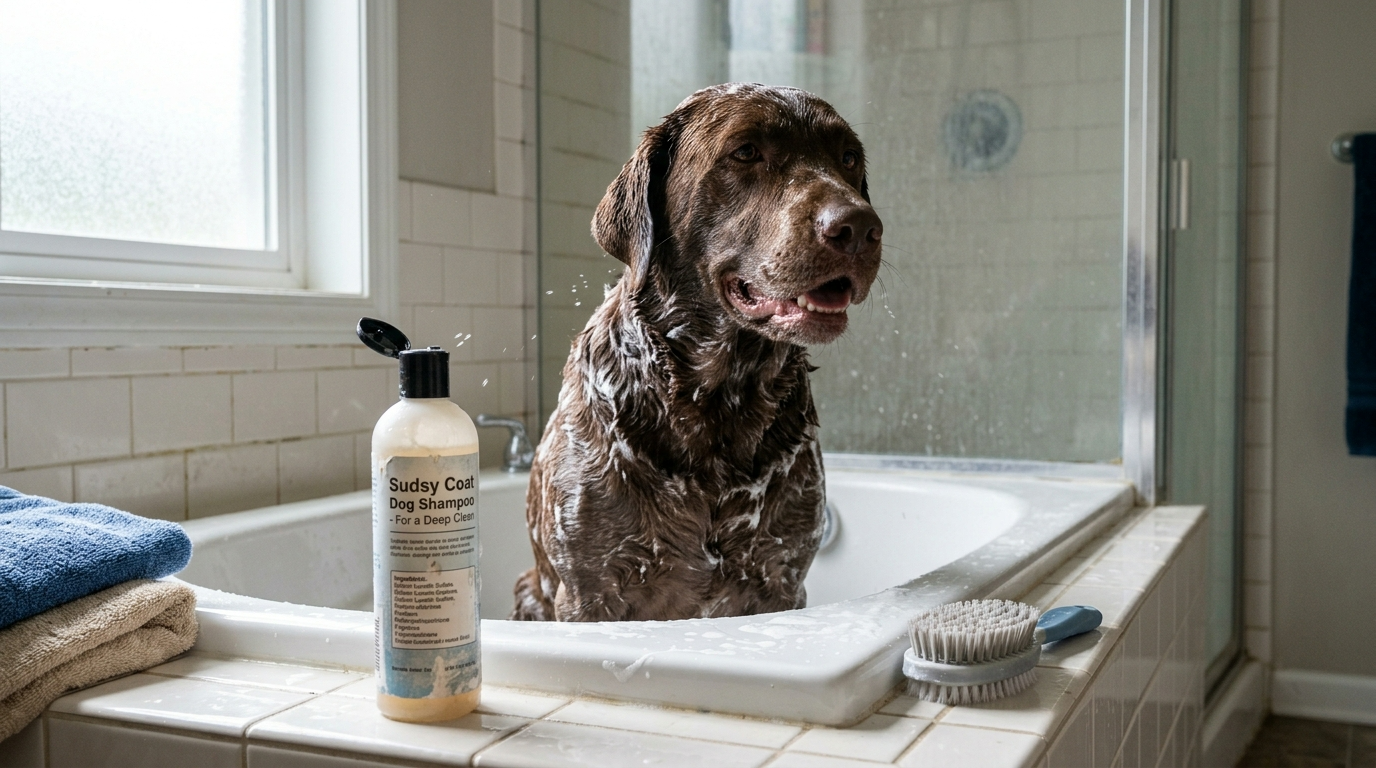
Labrador shampoo synthetic chemicals are often hidden behind pleasant scents and attractive labels. However, many commercial grooming products contain harsh ingredients that may irritate your dog’s skin and affect long-term health.
Because Labradors have dense double coats and sensitive skin, product choice matters greatly. Frequent bathing increases exposure to questionable compounds. Therefore, understanding what goes into your dog’s shampoo helps protect their comfort and overall well-being.
Understanding a Labrador’s Skin and Coat
Labradors have a thick, water-resistant double coat. This coat protects them from weather, dirt, and moisture. Beneath that fur lies skin that is more delicate than many owners realize.
Canine skin is thinner than human skin. In fact, it absorbs substances more easily. As a result, chemicals applied during bathing may penetrate quickly.
Additionally, Labradors often love water and outdoor play. Consequently, they require regular grooming. Repeated exposure to harsh products increases cumulative risk.
Choosing safe ingredients becomes essential, especially when bathing occurs monthly or more often.
Common Synthetic Ingredients to Watch For
Many grooming products contain compounds designed to clean aggressively, create foam, or preserve shelf life. While effective for marketing, these ingredients may not benefit your dog.
Sulfates
Sodium lauryl sulfate and similar agents create rich lather. However, they strip natural oils from the coat. Over time, this causes dryness and irritation.
Artificial Fragrances
Synthetic scents mask odors. Unfortunately, fragrance blends may contain dozens of undisclosed chemicals. Some can trigger allergic reactions or skin sensitivity.
Parabens
Parabens preserve product freshness. Yet research links them to hormonal disruption in certain contexts. While evidence in dogs continues to evolve, caution remains wise.
When evaluating Labrador shampoo synthetic chemicals, always read the ingredient list carefully.
Why Skin Irritation Happens
Skin irritation rarely appears instantly. Instead, it develops gradually.
Repeated washing with harsh cleansers removes protective oils. As these oils disappear, the skin barrier weakens. Consequently, itching and redness increase.
Labradors may scratch excessively. They may also develop flaky patches or dull coats. Although allergies often receive blame, shampoo ingredients sometimes play a hidden role.
Gentle grooming supports natural oil balance. Harsh formulas disrupt it.
The Impact on Long-Term Health
Topical exposure does not stay only on the surface. Dogs groom themselves and may ingest residues. Furthermore, skin absorption introduces substances directly into the body.
While one bath may not cause harm, chronic exposure raises concern. Labrador shampoo synthetic chemicals can accumulate through frequent use.
Some ingredients release volatile compounds during bathing. Indoor air quality may decline as well. Over time, sensitive dogs may experience respiratory irritation.
Although research remains ongoing, prevention remains easier than treatment.
How to Identify Safer Alternatives
Not all shampoos are harmful. Many brands now focus on natural or low-toxin formulas.
Look for:
- Plant-based cleansers
- Oatmeal extracts
- Aloe vera
- Coconut-derived surfactants
- Essential oils in safe concentrations
However, natural does not always mean safe. Always confirm that products are formulated specifically for dogs.
When comparing labels, shorter ingredient lists often indicate fewer additives.
Understanding “Hypoallergenic” Claims
Marketing terms can mislead. Hypoallergenic does not guarantee safety.
Instead, it suggests reduced likelihood of causing allergies. However, ingredient transparency matters more than labeling claims.
Review each component individually. If a product lists “fragrance” without details, proceed cautiously.
Because Labradors commonly experience seasonal allergies, minimizing additional irritants helps reduce flare-ups.
The Role of pH Balance
Canine skin differs from human skin in pH. Dogs require slightly more neutral formulations.
Human shampoos often disrupt this balance. Consequently, dryness and irritation increase.
Labrador shampoo synthetic chemicals sometimes alter pH as well. When the natural balance shifts, bacteria and yeast may overgrow.
Choose formulas specifically designed for dogs. Balanced pH supports skin health and coat shine.
Signs Your Shampoo May Be Causing Problems
Watch for early warning signs.
These may include:
- Persistent itching after baths
- Redness around ears or belly
- Dull or brittle fur
- Increased shedding
- Hot spots
If symptoms appear shortly after switching products, consider changing back to a gentler formula.
Because Labradors cannot verbally communicate discomfort, behavioral clues become important indicators.
Bathing Frequency and Chemical Load
Labradors do not require weekly baths unless medically necessary. Overwashing increases exposure and removes protective oils.
Most adult Labradors benefit from bathing every four to eight weeks. Active dogs may need more frequent rinsing, but plain water often suffices.
Reducing frequency lowers cumulative contact with Labrador shampoo synthetic chemicals.
Between baths, brushing distributes natural oils and maintains coat cleanliness.
Natural Ingredients That Support Coat Health
Gentle alternatives nourish rather than strip.
Oatmeal soothes itchy skin. Aloe hydrates and calms inflammation. Chamomile provides mild anti-inflammatory effects.
Coconut-derived cleansers create foam without aggressive stripping. Shea butter adds moisture retention.
When formulated properly, these ingredients clean effectively while protecting the skin barrier.
Therefore, consider rotating to botanical-based products that prioritize skin health.
Environmental Considerations
Synthetic compounds rinse down drains after bathing. These substances may enter waterways.
Eco-friendly grooming reduces environmental impact. Biodegradable formulas break down more safely.
Choosing safer products benefits not only your Labrador but also the broader ecosystem.
Because Labradors often enjoy outdoor lifestyles, protecting natural environments aligns with responsible ownership.
Consulting Your Veterinarian
If your dog experiences chronic skin issues, consult your veterinarian. Underlying allergies, parasites, or infections may require treatment.
However, reviewing grooming products should form part of the evaluation. Sometimes switching shampoos resolves mild irritation.
Discuss ingredient concerns openly. Veterinary dermatologists can recommend appropriate alternatives.
Practical Buying Checklist
Before purchasing a grooming product, ask:
- Is the ingredient list transparent?
- Does it avoid sulfates and parabens?
- Is it formulated specifically for dogs?
- Does it include soothing botanicals?
- Are there verified customer reviews?
Careful evaluation prevents unnecessary exposure.
Creating a Low-Toxin Grooming Routine
Improving grooming safety involves more than just shampoo selection.
Rinse thoroughly after each bath. Residual product increases irritation risk. Dry completely to prevent moisture-related skin issues.
Store products away from extreme heat, which may alter composition.
Additionally, use stainless steel grooming tools rather than plastic when possible.
By reducing contact with Labrador shampoo synthetic chemicals, you protect skin integrity over time.
Conclusion
Labrador shampoo synthetic chemicals may seem harmless at first glance. Yet repeated exposure can contribute to irritation, dryness, and potential long-term health concerns.
Because Labradors have sensitive skin and require regular grooming, ingredient quality matters deeply. By choosing gentle, transparent formulas, you preserve natural oils and reduce chemical burden.
Small changes create lasting benefits. Select plant-based cleansers, avoid artificial fragrances, and maintain balanced bathing frequency. Ultimately, a thoughtful grooming routine supports comfort, coat shine, and overall well-being.
Your Labrador relies on you for daily care. Making informed shampoo choices ensures healthier skin and a happier life.
FAQ
- Are natural dog shampoos always safer?
Not always. Review ingredient lists carefully and ensure formulas are specifically designed for canine skin. - How often should I bathe my Labrador?
Most adult Labradors need baths every four to eight weeks unless advised otherwise by a veterinarian. - Can harsh grooming products cause itching?
Yes. Aggressive cleansers and artificial fragrances often lead to dryness and skin irritation. - Is human shampoo safe for dogs?
No. Human products disrupt canine pH balance and may worsen skin problems. - What ingredients should I avoid in pet shampoos?
Avoid sulfates, parabens, artificial fragrances, and unclear preservative blends whenever possible.