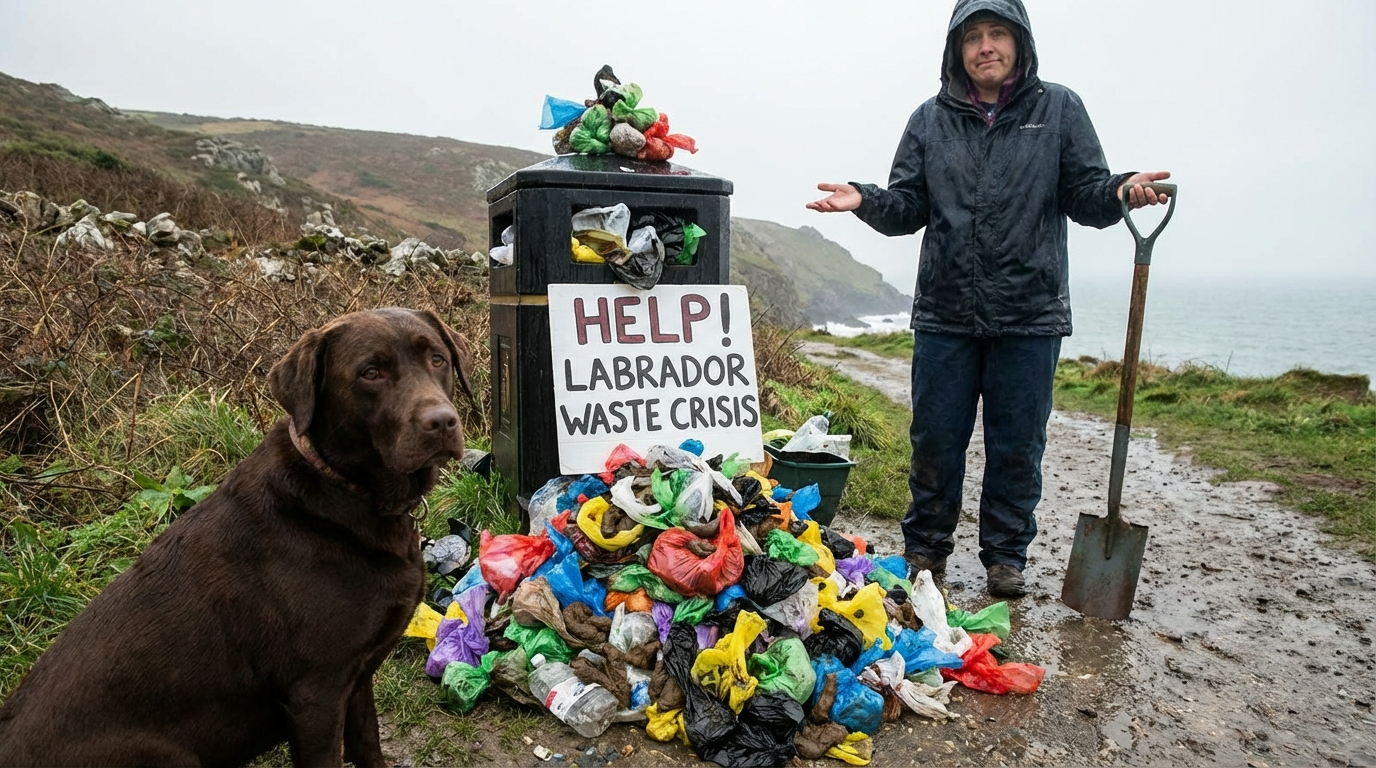
The labrador waste crisis rarely makes headlines, yet it grows larger every day. Food packaging piles up. Plastic toys snap in half. Training pads are tossed after single use. Leashes fray. Bowls crack. Beds flatten. One Labrador can generate an astonishing amount of waste over a lifetime.
Now multiply that by millions of Labradors worldwide. Suddenly, the problem feels impossible to ignore.
However, there is a better way forward. The circular economy offers a framework that challenges the idea of “use it once, then throw it away.” Instead, it focuses on keeping materials in use longer, reducing pollution, and designing products with purpose.
When applied to dog ownership, and Labradors specifically, the circular economy can help slow the labrador waste crisis without sacrificing care, comfort, or quality of life.
Understanding the labrador waste crisis
Labradors are one of the most popular dog breeds globally. Their size, appetite, and playful nature contribute directly to high consumption. Large food bags. Frequent toy replacements. Bigger accessories. More waste.
Most pet products follow a linear model. Resources are extracted, products are made, used briefly, and then discarded. Landfills grow. Microplastics spread. Manufacturing emissions rise.
The labrador waste crisis is not caused by neglect. It is caused by design. Products were never meant to last, be repaired, or return safely to the earth.
That realization changes how solutions are approached.
Why Labradors amplify pet waste problems
Labradors are enthusiastic chewers. Many toys last minutes, not months. Training tools wear out quickly. Bedding compresses under weight.
Food consumption also plays a role. Large bags often include inner plastic linings that are not recyclable. Wet food pouches add even more waste.
Because Labradors are active, replacements happen often. That frequency accelerates the waste cycle.
Solving the labrador waste crisis requires acknowledging these realities, not ignoring them.
What the circular economy really means
The circular economy replaces the idea of waste with regeneration. Products are designed to be reused, repaired, refilled, or composted. Materials stay in circulation longer.
Instead of asking, “How cheap can this be?” the question becomes, “How long can this last?”
For Labrador owners, this means choosing items that serve multiple purposes, withstand wear, and minimize disposal.
Small changes, repeated consistently, shift the entire system.
How circular design reduces the labrador waste crisis
Circular design focuses on durability and lifecycle thinking. A chew toy designed to be indestructible prevents dozens of broken replacements. A refillable food container eliminates repeated plastic bags.
When products last longer, fewer resources are extracted. Less energy is used. Less waste is created.
The labrador waste crisis is not solved by one product. It is reduced through smarter design choices across food, toys, grooming, and accessories.
Rethinking dog food packaging
Food packaging is one of the largest contributors to the labrador waste crisis. Traditional kibble bags are difficult to recycle. Wet food trays and pouches add complexity.
Circular solutions include:
- Bulk food purchasing with refill stations
- Compostable packaging
- Reusable airtight containers
- Brands offering return-and-refill programs
These approaches reduce single-use plastics while maintaining food quality.
Food is consumed daily. Improvements here create immediate impact.
Durable toys as waste prevention
Cheap toys feel harmless until they accumulate. A shredded toy thrown away weekly becomes a mountain over years.
Circular economy thinking encourages fewer, better toys. Materials like natural rubber, hemp, and reinforced fabric last longer and break down more safely.
Some brands now offer toy recycling or repair programs. When parts wear out, replacements are sent instead of entire products.
This shift alone significantly eases the labrador waste crisis.
Beds, bowls, and long-term use
Large dog beds often flatten quickly. Many end up in landfills within a year.
Circular alternatives include:
- Modular beds with replaceable covers
- Stuffing made from recycled fibers
- Washable components designed for longevity
Bowls made from stainless steel or ceramic outlast plastic versions and avoid microplastic shedding.
Longevity reduces replacement frequency. That reduction matters.
Training products and reusability
Training pads, disposable wipes, and short-lived tools add up fast. The labrador waste crisis grows quietly through convenience items.
Reusable training pads, washable cloths, and durable leads reduce waste without increasing effort.
Initially, reusable options may feel unfamiliar. Over time, they become second nature.
Convenience does not have to equal disposability.
Repair culture and pet ownership
One missing piece in pet care is repair. When a leash frays or a harness strap loosens, replacement feels easier than repair.
Circular thinking brings repair back into focus. Reinforced stitching, replaceable clips, and modular designs make fixing items practical again.
Repair keeps materials in circulation and builds respect for resources.
It also saves money.
Second-hand and shared pet products
Some pet items are used briefly. Puppy crates. Training gates. Car barriers.
Sharing, reselling, or donating these items keeps them out of landfills. Community groups and local shelters often welcome gently used gear.
The labrador waste crisis shrinks when ownership becomes more community-oriented.
Ownership does not always require new purchases.
Composting organic pet waste responsibly
While food packaging creates visible waste, organic waste matters too. Proper composting of dog hair, biodegradable wipes, and certified compostable products reduces landfill strain.
Dog waste itself requires careful handling, yet some municipal composting programs now accept it.
Responsible disposal supports broader circular systems.
Why consumer choices influence manufacturers
Manufacturers respond to demand. When Labrador owners prioritize durability, refill systems, and eco-conscious design, companies adapt.
Each purchase becomes a signal. Each refusal matters.
The labrador waste crisis exists partly because disposability has been normalized. Changing that expectation drives innovation.
Cost myths around circular pet products
One common misconception is that sustainable products cost more. While upfront prices may be higher, long-term costs are often lower.
Fewer replacements. Less waste. Better quality.
A toy that lasts two years costs less than ten cheap ones replaced monthly.
Circular economy choices reward patience.
Teaching the next generation of dog owners
Sustainable habits spread through example. Children raised around thoughtful pet care learn responsibility naturally.
The labrador waste crisis is not only environmental. It is educational.
The role of local communities
Local pet stores, refill stations, and community exchanges support circular practices. Supporting these spaces strengthens local economies and reduces transportation emissions.
Community-driven solutions scale faster than individual efforts alone.
What happens if nothing changes
If current trends continue, the labrador waste crisis will intensify. More plastics will enter waterways. Manufacturing emissions will rise. Landfills will expand.
Doing nothing is not neutral. It carries consequences.
Circular solutions offer a practical alternative.
Why progress does not require perfection
No owner eliminates waste completely. Progress matters more than purity.
Switching one product at a time creates momentum. Awareness grows. Habits evolve.
The labrador waste crisis is reduced through consistent effort, not guilt.
The emotional reward of sustainable ownership
Many owners report unexpected benefits. Less clutter. Fewer purchases. Greater intentionality.
Sustainable ownership feels calmer. Purpose replaces impulse.
That emotional shift sustains long-term change.
Looking ahead at innovation in pet sustainability
Innovation continues. Edible packaging. Biodegradable composites. Smart refill systems.
The future of pet care is evolving. Labradors will benefit from products designed with their strength and enthusiasm in mind.
Circular thinking fuels that innovation.
Conclusion
The labrador waste crisis did not appear overnight, and it will not disappear instantly. Yet the circular economy offers a realistic, compassionate path forward. By choosing durable products, supporting reuse, embracing repair, and demanding better design, Labrador owners can reduce waste without sacrificing care. Each decision, repeated daily, reshapes the system. When resources are valued and kept in circulation, both dogs and the planet benefit.
FAQ
1. What is the labrador waste crisis?
It refers to the growing environmental impact caused by disposable pet products, packaging, and frequent replacements linked to Labrador ownership.
2. How does the circular economy help reduce pet waste?
It promotes reuse, durability, repair, and recycling, keeping materials in use longer and reducing landfill waste.
3. Are sustainable pet products safe for Labradors?
Yes, many are designed specifically for durability, safety, and non-toxic use with large, active dogs.
4. Do circular economy products cost more?
They may cost more upfront, but often save money over time due to longer lifespan and fewer replacements.
5. What is one easy way to start reducing waste today?
Switching to durable toys or reusable food containers is a simple first step with immediate impact.