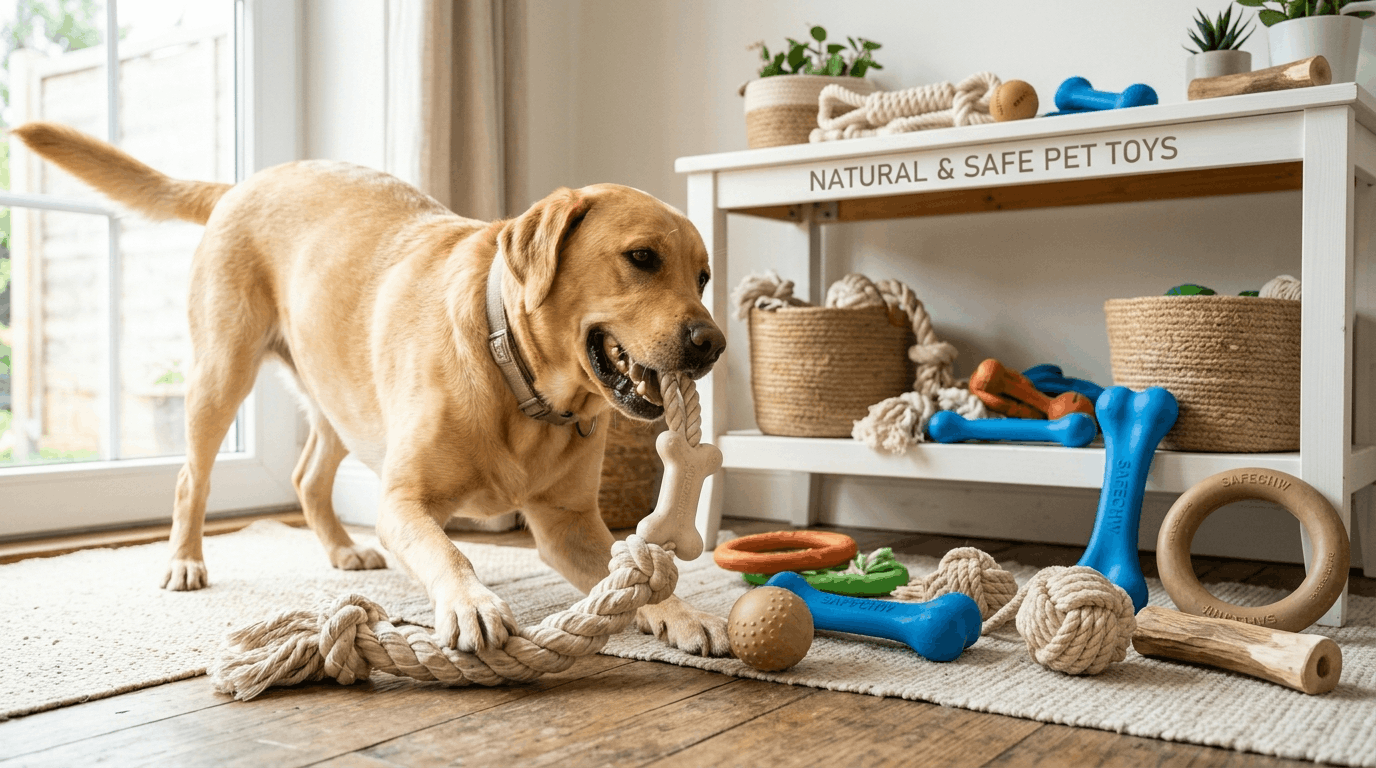
Labradors love to chew, chase, tug, fetch, and carry toys everywhere they go. Their playful personalities and strong jaws make toys an important part of daily life. However, not every dog toy is actually safe for long-term use. Many products contain questionable chemicals, weak materials, or poorly designed parts that may create serious health risks for dogs. Because of this, more owners are now searching for non-toxic Labrador toys that support safer and healthier play.
Labradors interact with toys differently than many breeds. They chew aggressively, carry toys constantly, and often spend hours with them every day. Consequently, the materials inside those toys matter far more than most owners realize. Harmful chemicals, sharp fragments, and poorly made plastics may expose dogs to unnecessary risks over time.
Safe toys should do more than simply entertain a dog. They should also support healthy chewing habits, protect teeth and gums, and reduce exposure to toxic ingredients. Since Labradors are naturally energetic and curious, durable and non-toxic materials become especially important for preventing injuries and digestive issues.
Understanding which toy materials are safe allows owners to make smarter choices while avoiding products that may cause harm. In many cases, choosing higher-quality toys creates better long-term safety, durability, and peace of mind.
Why Toy Safety Matters for Labradors
Labradors are enthusiastic chewers with strong jaws and endless energy. While this playful behavior makes them entertaining companions, it also increases the risk of toy-related injuries and chemical exposure.
Many dogs chew toys aggressively enough to break pieces apart. If materials splinter, crack, or tear easily, Labradors may swallow dangerous fragments accidentally. Consequently, unsafe toys can create choking hazards or digestive blockages that require emergency veterinary care.
Chemical exposure presents another concern. Some low-quality toys contain substances such as phthalates, BPA, artificial dyes, or heavy metals. Although dogs may not show immediate symptoms, repeated exposure over time could negatively affect health.
Labradors often carry toys in their mouths for long periods each day. Therefore, harmful materials may remain in constant contact with saliva and gums. Puppies are especially vulnerable because they chew more intensely during teething stages.
Poor-quality toys also wear down faster. Broken seams, detached squeakers, or cracked plastic pieces may quickly become dangerous. Since Labradors play vigorously, durability becomes just as important as material safety.
Choosing non-toxic Labrador toys helps reduce these risks while encouraging healthier play habits. In addition, safer toys often last longer, making them more practical for active dogs.
Best Safe Materials for Labrador Toys
Several materials work especially well for durable and non-toxic Labrador toys. These materials provide safer chewing experiences while reducing the likelihood of harmful chemical exposure.
Natural rubber is one of the best options for active Labradors. High-quality natural rubber toys are flexible, durable, and less likely to splinter into dangerous pieces. Additionally, many rubber toys help clean teeth while satisfying chewing instincts.
Food-grade silicone also works well in certain dog toys. Silicone remains softer on teeth while avoiding many harsh chemicals found in low-quality plastics. However, durability still matters because Labradors can destroy weaker silicone products quickly.
Organic cotton rope toys are another safer option when properly made. Natural fibers reduce chemical exposure compared to synthetic fabrics. Rope toys can also support dental cleaning during supervised chewing sessions.
Hemp fabric is becoming more popular because it is durable, natural, and resistant to mold. Many eco-friendly dog toy companies now use hemp as a safer alternative to heavily processed synthetic materials.
Untreated natural wood chew toys designed specifically for dogs may also provide safe enrichment. However, owners should only choose products created for canine use because certain woods splinter dangerously.
Wool felt toys made without synthetic dyes can work well for gentler play. Still, Labradors that destroy plush toys quickly may require stronger materials for safety.
Durability should always match the dog’s chewing style. Even non-toxic materials become unsafe if the toy breaks apart easily.
Materials Owners Should Avoid
Many inexpensive dog toys contain materials that may create unnecessary risks for Labradors. Understanding which materials to avoid helps owners make safer purchasing decisions.
Cheap plastic toys often contain questionable chemicals such as BPA or phthalates. These substances may leach gradually during chewing and saliva exposure. Additionally, brittle plastic can crack into sharp fragments.
Vinyl toys deserve caution as well. Some low-quality vinyl products contain softening chemicals that are not ideal for dogs that chew aggressively.
Latex may trigger allergic reactions in sensitive dogs. Although some latex toys remain safe, poor-quality versions often tear easily under strong chewing pressure.
Artificial dyes and strong chemical fragrances also raise concerns. Brightly colored toys may appear appealing to humans, yet dogs do not need synthetic coloring for enjoyment. Excessive fragrance can irritate a Labrador’s sensitive nose and mouth.
Foam-filled plush toys can become dangerous quickly once damaged. Labradors frequently rip open stuffed toys and swallow internal filling materials accidentally.
Toys with small detachable pieces should also be avoided. Eyes, squeakers, buttons, or decorative parts may become choking hazards once loose.
Tennis balls require moderation as well. Although many Labradors love them, abrasive surfaces may gradually wear down teeth during excessive chewing.
Selecting non-toxic Labrador toys means focusing not only on materials themselves but also on how safely the toy is constructed overall.
Why Durability Is Just as Important as Safety
Even safe materials become dangerous if a toy falls apart too quickly. Labradors are powerful chewers that place significant stress on toys during play. Therefore, durability directly affects safety.
Weak toys often create hazards when pieces break off unexpectedly. Rubber chunks, torn fabric, or cracked plastic fragments may become choking risks or cause digestive blockages if swallowed.
High-quality construction helps prevent these problems. Strong seams, thick rubber, reinforced stitching, and durable design reduce the chance of sudden damage during rough play.
Owners rubber, reinforced stitching, and durable design reduce the chance of sudden damage during rough play.
Owners should always inspect toys regularly for wear and tear. Small cracks or loose sections may quickly become larger safety issues once a Labrador continues chewing.
Size also matters greatly. Toys that are too small may become choking hazards for large Labradors. Choosing appropriately sized products reduces accidental swallowing risks significantly.
Aggressive chewers typically require heavier-duty materials designed specifically for strong jaws. Softer toys may still work for gentle play or supervised interaction, but heavy chewers usually need more durable options daily.
Rotating toys can also extend product lifespan. Constant chewing on the same toy may weaken materials faster over time.
Safe play depends on both material quality and structural integrity. Consequently, durability should never be overlooked when selecting dog toys.
Safe Chewing Supports Dental Health
Chewing is a natural behavior for Labradors, especially during puppyhood. Healthy chewing habits provide mental stimulation while supporting oral health and stress relief.
Non-toxic Labrador toys often help clean teeth naturally through chewing action. Rubber textures and rope fibers may reduce plaque buildup gently while massaging the gums.
Teething puppies especially benefit from safe chew toys because chewing relieves discomfort during tooth development. Without appropriate toys, puppies may redirect chewing toward furniture, shoes, or unsafe household objects.
Mental relaxation is another important benefit. Chewing releases calming hormones that help many Labradors settle after exercise or stimulation. Consequently, appropriate chew toys may reduce boredom and destructive behavior indoors.
Frozen rubber toys can provide additional comfort during teething stages. Cooling effects help soothe irritated gums while encouraging positive chewing habits.
However, excessively hard toys should be avoided. Materials harder than a dog’s teeth may increase the risk of fractures or dental damage over time.
Balanced chewing opportunities help Labradors remain mentally engaged while supporting healthier oral habits naturally.
Choosing Safe Toys for Labrador Puppies
Puppies require extra caution because they explore the world almost entirely through their mouths. During teething stages, Labrador puppies chew constantly, which increases exposure to whatever materials their toys contain.
Soft but durable rubber toys usually work best for young Labradors. Puppies need enough resistance to satisfy chewing instincts without damaging developing teeth.
Puppy-safe rope toys made from natural fibers can also provide healthy chewing outlets. However, owners should supervise use carefully because loose strands may become dangerous if swallowed.
Stuffed toys for puppies should contain secure stitching and minimal detachable parts. Labradors often destroy plush toys quickly, so supervision remains important during play.
Strong chemical smells are warning signs that a toy may contain excessive additives or synthetic materials. Safer products generally have minimal odor.
Teething puppies often benefit from texture variety. Different surfaces help stimulate the gums while preventing boredom during development.
Choosing non-toxic Labrador toys early in life helps establish healthier habits while reducing exposure to questionable materials during important growth stages.
Eco-Friendly Toys and Long-Term Wellness
Many owners now prefer environmentally friendly dog toys because they often use safer materials and simpler manufacturing methods. Eco-conscious products frequently avoid excessive chemicals, artificial dyes, and unnecessary plastics.
Natural rubber, hemp, recycled cotton, and biodegradable materials have become increasingly popular in modern dog toy design. These materials often provide both durability and lower environmental impact.
Sustainable manufacturing also tends to encourage better ingredient transparency. Companies focused on eco-friendly production usually provide clearer information about sourcing and safety standards.
Reducing plastic waste benefits not only the environment but also household safety. Poor-quality plastic toys often break quickly and require constant replacement.
High-quality eco-friendly toys may initially cost more, yet they often last longer for powerful Labrador chewers. Consequently, owners sometimes spend less over time replacing damaged toys.
Long-term wellness involves more than nutrition and exercise alone. Safe daily products also contribute to healthier living conditions and reduced chemical exposure overall.
How to Inspect Toys for Safety
Even the safest toy requires regular inspection because wear and tear eventually affects all products. Labradors can damage toys quickly, especially during aggressive chewing sessions.
Owners should check for cracks, loose seams, torn fabric, or weakened rubber regularly. Small damage can worsen rapidly once chewing continues.
Squeakers and internal components deserve special attention. If parts begin separating from the toy, replacement is usually the safest option.
Cleaning toys regularly also supports safer play. Dirt, bacteria, and saliva buildup may create hygiene issues over time. Warm water and mild soap usually work well for many non-toxic materials.
Discard toys immediately if pieces break off easily. Waiting too long increases the risk of accidental swallowing or choking.
Supervised play remains important for strong chewers, especially when introducing new toys. Observing how a Labrador interacts with a toy helps identify whether the material and design are appropriate.
Regular inspection extends toy lifespan while helping owners prevent accidents before they happen.
Creating a Safer Play Environment for Your Labrador
Playtime should feel fun, enriching, and safe for every Labrador. Since these dogs spend so much time chewing and carrying toys, material quality deserves careful attention. Choosing non-toxic Labrador toys helps reduce exposure to harmful chemicals while supporting healthier chewing habits and safer daily interaction.
Labradors thrive when they receive durable toys that match their energy and chewing strength. High-quality natural rubber, organic fibers, and food-grade materials often provide the best balance between safety and durability. Meanwhile, avoiding weak plastics, harsh chemicals, and detachable parts helps reduce unnecessary risks.
Safe toys also support mental stimulation, dental health, and emotional well-being. Chewing gives Labradors healthy outlets for energy while encouraging calmer behavior indoors. Therefore, selecting safer products contributes to both physical and emotional health over time.
Owners should remember that even the best toys require supervision and regular inspection. Active Labradors can damage products quickly, so monitoring wear and replacing damaged toys remains extremely important.
Ultimately, safer play begins with smarter choices. By focusing on durable construction, natural materials, and non-toxic ingredients, Labrador owners can create a healthier environment that supports happier, safer, and more enjoyable daily play for years to come.
FAQ
1. What is the safest material for dog chew toys?
Natural rubber is often considered one of the safest and most durable materials for strong chewers like Labradors.
2. Are rope toys safe for Labradors?
Yes, when made from natural fibers and used under supervision to prevent swallowing loose strands.
3. Why should I avoid cheap plastic dog toys?
Low-quality plastics may contain harmful chemicals and can crack into dangerous pieces during chewing.
4. How often should I replace dog toys?
Replace toys immediately if they become cracked, torn, or loose enough to create choking hazards.
5. Can soft plush toys be dangerous for Labradors?
Yes. Labradors may rip open plush toys and swallow stuffing or small parts if left unsupervised.