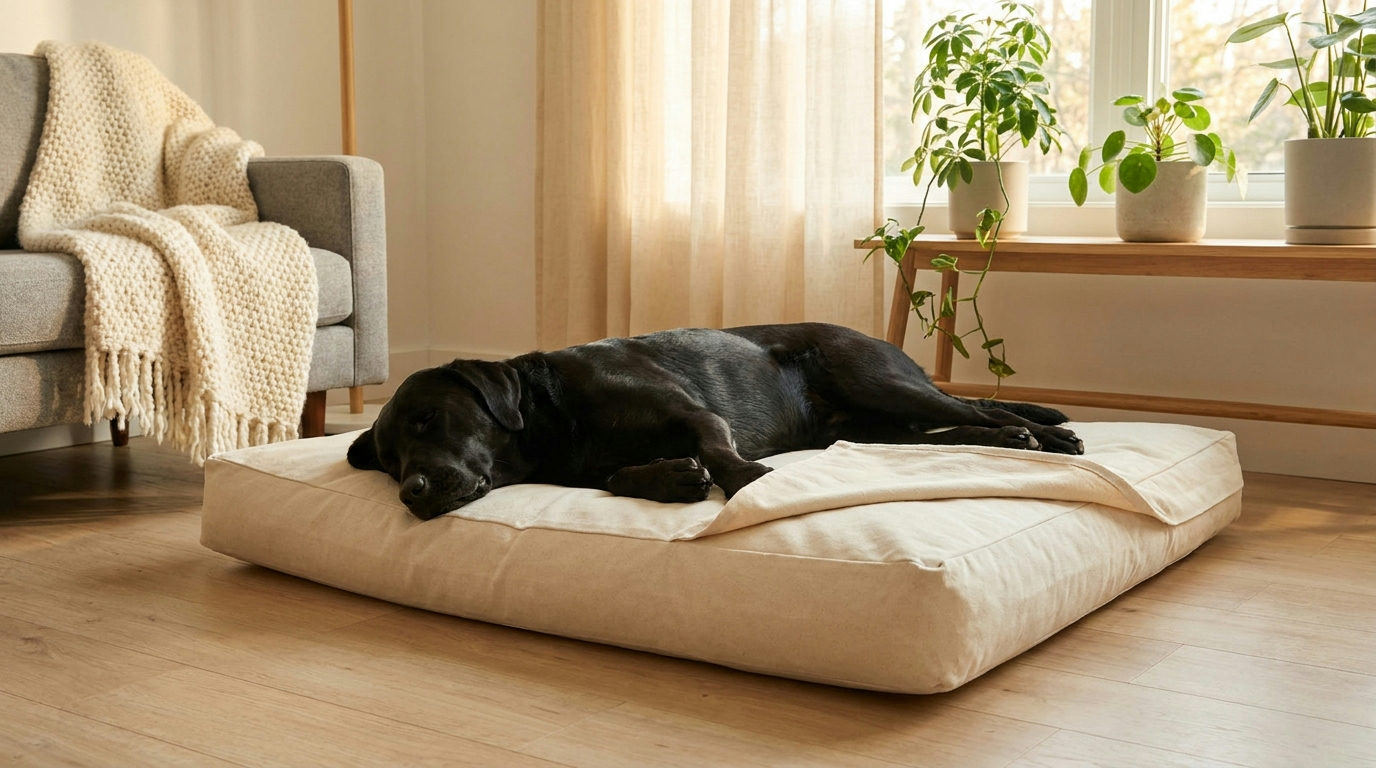
The most sustainable dog bed for a Labrador is one that lasts for years, can be washed and repaired, and is made from materials you can verify. Look for a tough, removable cover, a fill you can replace or top up, and specific, certified claims such as recycled content percentages or independent textile certifications. A cheap bed that is flattened or shredded within months is rarely the greener choice, whatever the label says.
Affiliate disclosure: Labrador Healthcare may earn a commission if you buy through links on this site, at no extra cost to you. We have not hands-on tested specific products for this guide; it sets out the selection criteria we recommend.
Why beds are a big eco decision for Lab owners
A Labrador bed is one of the bulkiest things a dog owner buys, and one of the most likely to end up in landfill. Large foam-filled beds are awkward to recycle, and a big dog that digs, chews or simply flattens its bed can get through several over a lifetime. Choosing well once is the simplest way to cut that waste.
What makes a dog bed genuinely sustainable
1. Durability first
For a 30 kg dog, durability is the most important eco feature. Look for heavy-duty woven fabrics such as canvas or thick recycled polyester, double-stitched seams and robust zips. If your Labrador is a chewer, a bed with a tough frame or a design without loose edges will outlast a plush pillow many times over.
2. A removable, washable cover
Labradors bring half the park home. A cover you can take off and machine wash keeps the bed hygienic without replacing the whole thing. Some makers sell replacement covers separately, which extends the life of the insert.
3. Replaceable or refillable fill
Beds with a zipped inner liner let you top up or replace the fill when it compresses, rather than throwing away the entire bed. This is one of the most practical sustainability features and it is surprisingly rare.
4. Materials you can verify
Common options include recycled polyester fill made from plastic bottles, natural fibres such as cotton, wool or kapok, and various foams. Each has trade-offs: natural fibres are renewable but may flatten faster or be harder to wash, while recycled synthetic fill reuses existing plastic but is still plastic. There is no perfect material, only honest ones.
Certifications worth knowing
- OEKO-TEX Standard 100: an independent certification that textiles have been tested for a range of harmful substances. It speaks to what your dog is lying on, not to environmental impact, but it is useful for a dog that sleeps with its face in the fabric.
- Global Organic Textile Standard (GOTS): covers organic fibre content along with environmental and social criteria in processing. Relevant for cotton or other natural-fibre covers.
- Recycled content claims: under the FTC’s Green Guides (16 CFR Part 260), recycled content claims should be specific and, where a product is only partly recycled, qualified with the proportion. “Made with 90% recycled polyester fill” is meaningful; “made with recycled materials” on its own tells you much less.
Look for a certificate or licence number you can check. A green logo with no organisation behind it is decoration, not evidence.
Comfort still matters
A sustainable bed your dog will not use is not sustainable at all. Labradors are big, heavy and prone to joint problems, so look for:
- Enough length for your dog to stretch out fully
- Fill deep and supportive enough that hips and elbows do not sink to the floor
- A bolster or raised edge if your dog likes to rest its head
- A water-resistant liner if you have a young, senior or often-wet Lab
For older dogs, supportive bedding is part of comfort care. Our guide to managing senior Labrador arthritis covers this in more detail.
End-of-life options
Before you buy, ask what happens when the bed wears out. Some brands run take-back or recycling schemes. Otherwise, animal shelters and rescues often welcome clean, usable beds, and old covers make excellent car-boot liners or towels for muddy paws. Separating natural-fibre covers from synthetic fill makes any recycling or composting more realistic.
A quick checklist
- Is it sized for a full-grown Labrador stretched out?
- Does the cover come off and wash easily?
- Can the fill be topped up or replaced?
- Are material claims specific and backed by a checkable certification?
- Will it survive your dog’s digging and chewing habits?
For more ideas on greener gear, see our guide to eco-friendly Labrador accessories.
The bottom line
A sustainable dog bed for a Labrador is less about a single eco material and more about longevity and honesty. Choose a durable, washable design with replaceable fill, check that environmental and safety claims are specific and independently certified, and make sure it genuinely supports a big dog. Then look after it, and it will serve your Lab, and the planet, far better than a string of cheaper replacements.