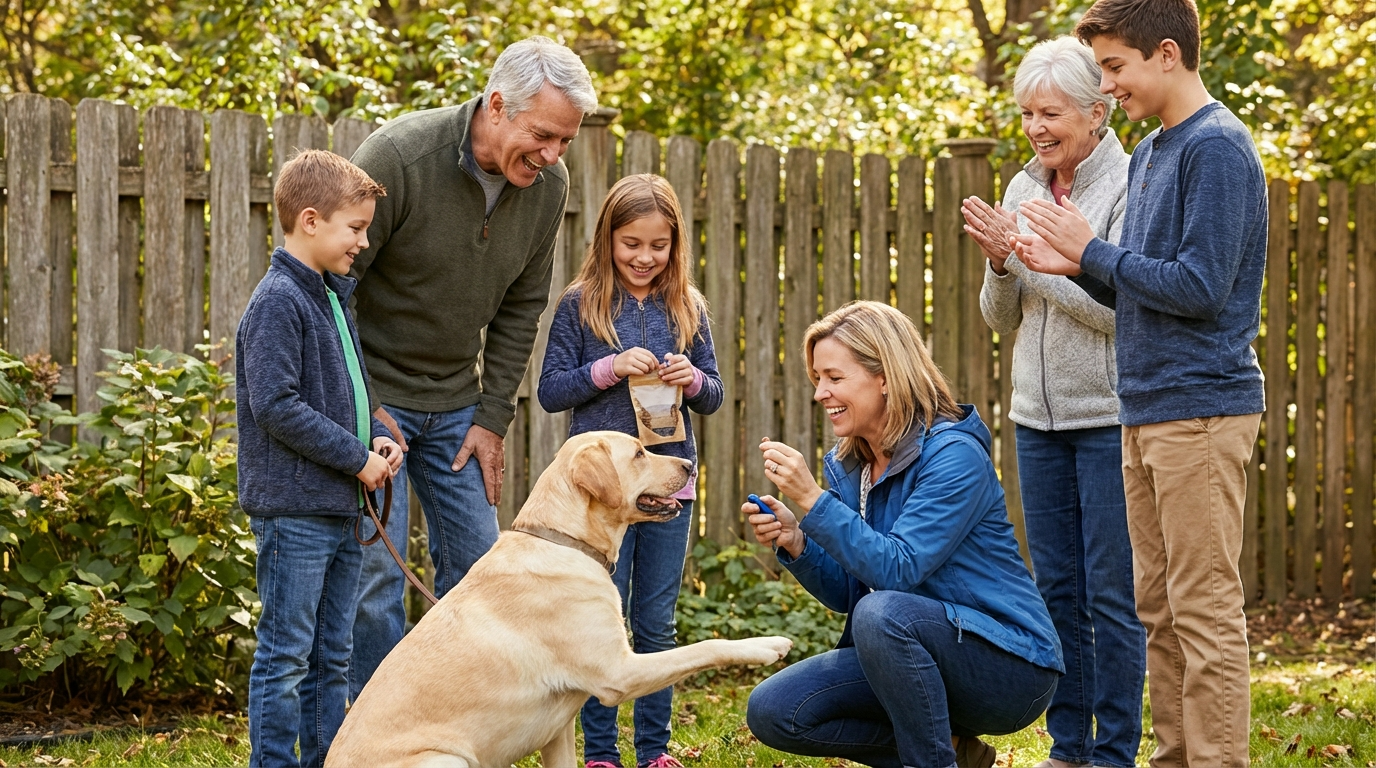
Training a Labrador rarely fails because of the dog. More often, it breaks down because humans are sending mixed signals. One person allows jumping. Another scolds it. A third laughs. From the Labrador’s point of view, this feels like trying to follow traffic laws that change every block.
That’s why family Labrador training matters so much. When everyone is involved, rules become predictable. Communication becomes clear. The dog relaxes because expectations make sense.
Involving the whole family does more than improve behavior. It builds teamwork, responsibility, and emotional connection. Training stops feeling like a chore and starts feeling like a shared language spoken at home.
Why Family Labrador Training Works Better Than Solo Efforts
Labradors are social learners. They observe patterns, routines, and reactions. When training comes from only one person, gaps appear the moment that person leaves the room.
Family Labrador training creates consistency across environments. Commands sound the same. Rewards follow the same rules. Corrections are handled calmly rather than emotionally.
As a result, confusion drops. Confidence rises. The Labrador learns faster because the rules no longer change with the person holding the leash.
Just as important, family members feel included rather than frustrated. Training becomes cooperative instead of isolating.
Setting Shared Training Rules for the Household
Before the first command is given, alignment is essential. Everyone must agree on basic rules.
Is the Labrador allowed on the couch? Are treats given freely or earned? Does jumping get ignored or redirected?
These decisions should be discussed openly. Writing them down helps. Posting them near the feeding area keeps everyone accountable.
When family Labrador training starts with shared rules, disagreements happen less often. Dogs thrive on structure, but families do too.
Consistency is not about being strict. It’s about being clear.
Choosing Simple Commands Everyone Can Use
Complex language creates confusion. Labradors respond best to short, consistent cues.
Sit, stay, down, come, leave it, and place form a solid foundation. Each word should sound the same regardless of who speaks it.
Tone matters as much as wording. Calm confidence works better than volume.
Children may naturally use higher voices. That’s fine when the command stays consistent.
During family Labrador training, practice commands together. This alignment prevents accidental retraining every time a new voice speaks.
Assigning Age-Appropriate Training Roles
Not everyone needs the same responsibility. In fact, assigning roles improves engagement.
Young children can help with feeding routines, name recognition, and simple commands like sit.
Older kids may handle leash walking, recall practice, or reward timing.
Adults usually manage structure, corrections, and consistency enforcement.
This division keeps training safe while making everyone feel involved. The Labrador also learns to respect different roles without confusion.
Family Labrador training becomes smoother when responsibilities match capability.
Making Training Part of Daily Life
Formal sessions are helpful, but everyday moments matter more.
Ask for a sit before meals. Practice stay during door openings. Reinforce calm behavior during TV time.
These small moments add up. They teach Labradors that rules apply everywhere, not just during “training time.”
Family Labrador training works best when woven into routines rather than scheduled like appointments.
Dogs learn through repetition. Daily life offers endless opportunities.
Using Positive Reinforcement as a Family Standard
Reward-based training creates trust. Labradors respond especially well to praise, food, and play.
Decide as a family which rewards are allowed. Too many treats from different people can lead to weight gain.
Verbal praise should be specific. “Good sit” teaches more than “good dog.”
When everyone rewards the same behaviors, learning accelerates.
In family Labrador training, rewards should never compete. They should reinforce shared goals.
Handling Mistakes Without Blame
Mistakes will happen. Someone will forget a rule. A command will be repeated too often.
Blaming creates tension. Tension disrupts training.
Instead, treat mistakes as feedback. Adjust calmly. Reset expectations.
Labradors are forgiving. Families should be too.
Family Labrador training improves when patience replaces frustration.
Teaching Children Respectful Dog Interaction
Training isn’t only about commands. It’s also about boundaries.
Children should learn when not to engage. Sleeping, eating, or overwhelmed Labradors need space.
Teaching respectful interaction prevents stress and potential accidents.
Role-playing helps. Demonstrate calm petting. Explain body language signals.
Family Labrador training includes educating humans as much as guiding dogs.
Creating Consistent Correction Strategies
Corrections should never involve fear or anger. Calm redirection works better.
If jumping occurs, everyone should respond the same way. Turn away. Remove attention. Ask for a sit.
Consistency matters more than intensity.
When corrections differ by person, confusion returns.
Family Labrador training requires agreement not only on rewards, but also on boundaries.
Managing Excitement in Busy Households
Labradors love activity. Busy homes can overwhelm them.
Training calm behaviors becomes essential in these environments.
Teach place commands. Reward relaxation. Encourage quiet time.
Family Labrador training isn’t about suppressing joy. It’s about channeling it.
Calm energy leads to better behavior long term.
Scheduling Family Training Check-Ins
Weekly check-ins keep everyone aligned.
Discuss what’s working. Address challenges. Adjust roles if needed.
These conversations prevent resentment and burnout.
Training becomes a shared project rather than a personal burden.
Family Labrador training thrives on communication among humans first.
Using Games to Reinforce Training
Training doesn’t have to feel serious.
Hide-and-seek builds recall. Tug with rules teaches impulse control. Obstacle courses improve focus.
Games engage children and dogs equally.
Learning happens faster when fun is involved.
Family Labrador training feels lighter when play becomes part of the process.
Respecting Individual Relationships With the Dog
Each family member will bond differently. That’s normal.
The Labrador may listen better to one person initially. Over time, consistency balances this out.
Avoid jealousy. Encourage positive interactions instead.
Dogs form attachments, but rules still apply universally.
Family Labrador training strengthens all bonds when comparison is avoided.
Staying Patient During Regression Phases
Training is not linear. Setbacks happen during growth stages or routine changes.
Responding calmly matters most during regression.
Revisit basics. Reinforce success. Avoid overcorrecting.
Family Labrador training requires patience during imperfect phases.
Progress resumes when pressure decreases.
Building Long-Term Habits Together
Training never truly ends. It evolves.
As the Labrador matures, expectations change. Commands remain useful.
Continuing shared involvement maintains consistency.
Family Labrador training becomes part of household culture over time.
This stability benefits everyone.
Conclusion
Family Labrador training succeeds when clarity, consistency, and cooperation come first. Involving everyone reduces confusion, strengthens bonds, and creates a calmer home environment. When training becomes a shared language rather than a solo task, Labradors respond with confidence and trust. The result is not just better behavior, but a stronger family connection built through patience, structure, and teamwork.
FAQ
1. At what age should family Labrador training begin?
Training can begin as soon as the Labrador arrives home, using age-appropriate expectations.
2. Can children safely participate in Labrador training?
Yes, when tasks are age-appropriate and supervised, children can contribute positively.
3. What if one family member isn’t consistent with rules?
Open discussion and written guidelines help restore alignment without blame.
4. How often should family training sessions happen?
Short daily moments work better than long weekly sessions.
5. Is professional training still helpful for families?
Yes, professional guidance can support consistency and improve results when families train together.