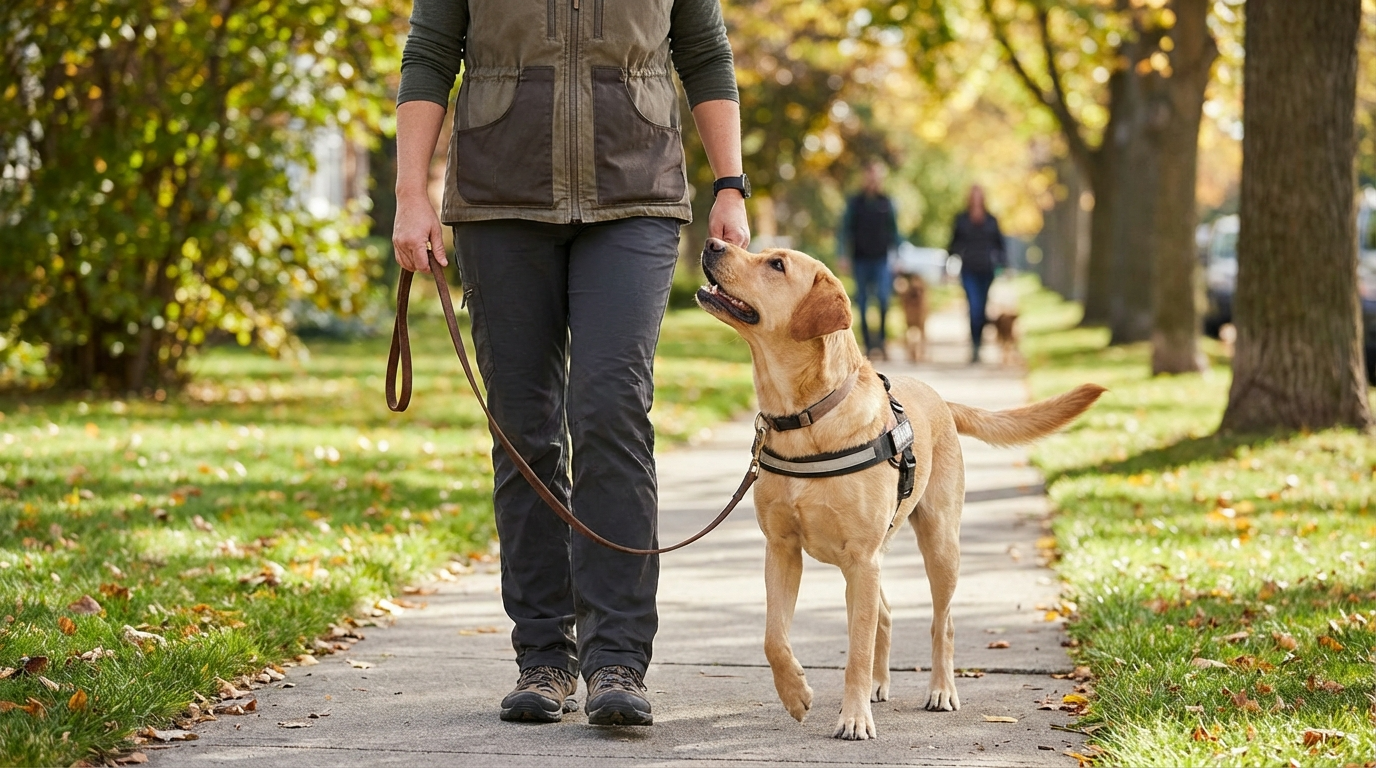
Loose-leash walking Labradors can feel like an impossible dream when your arm is stretched forward and your shoulder aches before the first block ends. Labradors are powerful, enthusiastic, and endlessly curious. They were built to move, explore, and engage with the world nose-first. When that natural drive meets a leash, tension often follows.
Still, pulling is not a personality flaw. It is simply a skill that has not been taught yet. Loose-leash walking Labradors requires patience, clarity, and a gentle approach that works with their instincts rather than against them.
This guide focuses on calm, reward-based techniques that reduce pulling without pain, fear, or force. The goal is not robotic obedience. Instead, it is relaxed partnership. When walks feel peaceful, both you and your Labrador benefit.
Why Loose-Leash Walking Labradors Struggle at First
Loose-leash walking Labradors often fails because expectations are unclear. From the dog’s perspective, pulling works. It gets them closer to smells, people, and movement.
Labradors are also bred to work alongside humans. However, leash pressure can feel confusing when no one has explained what it means.
Many dogs are introduced to leashes during exciting moments. Doors open. Shoes go on. Energy spikes. The leash becomes associated with speed rather than calm.
Understanding these factors removes blame. Pulling is communication, not defiance.
The Gentle Philosophy Behind Loose-Leash Walking Labradors
Gentle training focuses on teaching, not correcting. Instead of stopping behavior through force, it builds new habits through reinforcement.
Loose-leash walking Labradors improves when the dog learns one simple idea. Staying near you makes good things happen.
This method avoids jerks, choke chains, or yelling. Those tools may suppress pulling temporarily, yet they often increase stress and confusion.
Gentle techniques create clarity. Calm replaces chaos. Trust replaces tension.
Setting the Right Expectations Before Training
Progress begins before the leash is clipped. Expectation management matters.
Loose-leash walking Labradors does not happen overnight. Early sessions may last only minutes.
Some walks are training walks. Others are exercise walks. Mixing these goals creates frustration.
Training walks focus on skill-building. Distance and speed become secondary.
When expectations are realistic, patience becomes easier to maintain.
Choosing Equipment That Supports Gentle Walking
Equipment influences behavior more than many realize.
A standard flat collar may increase pulling for some Labradors. Front-clip harnesses often reduce leverage gently.
Avoid tools designed to cause discomfort. Pain does not teach understanding.
A lightweight leash allows smooth feedback. Avoid retractable leashes during training. They reward tension by extending.
The right equipment supports loose-leash walking Labradors without force.
Teaching Calm Before the Walk Begins
Training starts at the door. Calm entry creates calm movement.
If your Labrador explodes with excitement, pause. Wait for stillness before opening the door.
Leash pressure should not move the dog forward. Calm behavior should.
This step teaches that patience unlocks progress.
Loose-leash walking Labradors improves when excitement is managed early.
The Power of Reinforcement Positioning
Position matters. Reward where you want your dog to be.
For loose-leash walking Labradors, that spot is near your side, not ahead.
Treats delivered beside your leg reinforce proximity. Praise follows calm steps.
Rewards should arrive frequently at first. Over time, spacing increases naturally.
Dogs repeat what works. Make calm walking rewarding.
Starting in Low-Distraction Environments
Distractions sabotage early training.
Begin loose-leash walking Labradors practice indoors or in quiet spaces.
Hallways, driveways, or empty sidewalks work well.
Once success is consistent, add mild distractions gradually.
This layering approach prevents overwhelm and builds confidence.
Using Stop-and-Stand Techniques Gently
When pulling happens, stop calmly. Do not jerk or scold.
Stand still. Wait for slack to return to the leash.
The moment slack appears, move forward again.
This teaches cause and effect. Tension pauses progress. Relaxation restores it.
Consistency matters. Gentle repetition shapes behavior over time.
Rewarding Check-Ins During Walks
Check-ins are voluntary glances or attention shifts toward you.
Reward these moments generously. They indicate engagement.
Loose-leash walking Labradors improves when attention becomes habit.
These check-ins build connection rather than control.
Over time, your Labrador chooses to stay close.
Managing Sniffing Without Losing Control
Sniffing is natural. Denying it creates frustration.
Instead, incorporate sniff breaks intentionally.
Ask for loose walking first. Then release with a cue like “go sniff.”
This balance teaches structure and freedom.
Loose-leash walking Labradors thrives when needs are respected.
Handling Sudden Lunges or Pulling Surges
Unexpected triggers happen. Squirrels appear. Dogs bark.
When pulling surges, create distance calmly.
Turn away. Increase space. Regain focus before continuing.
Avoid tightening the leash in panic. That escalates tension.
Calm redirection keeps training intact.
Short Sessions Build Better Habits
Long walks overwhelm learning.
Short, focused sessions build skill faster.
Five-minute training walks repeated daily outperform one long struggle.
Loose-leash walking Labradors benefits from repetition, not endurance.
End sessions on success whenever possible.
Reading Your Labrador’s Body Language
Body language reveals emotional state.
Loose posture signals comfort. Tight muscles signal stress.
Adjust expectations based on what you see.
If stress rises, simplify the environment.
Gentle training adapts rather than pushes through discomfort.
Consistency Across Family Members
Mixed messages slow progress.
Everyone walking the Labrador should follow the same rules.
Rewards, stops, and cues should match.
Loose-leash walking Labradors improves when humans align first.
Consistency creates clarity.
Using Verbal Cues Sparingly
Words lose meaning when overused.
Choose one walking cue if needed. Use it lightly.
Movement and reinforcement teach more than chatter.
Silence often reduces overstimulation.
Let behavior guide learning.
Transitioning From Treats to Real-Life Rewards
Treats jump-start learning. Real-life rewards maintain it.
Gradually replace food with praise, sniff breaks, or movement.
Loose-leash walking Labradors becomes self-reinforcing over time.
Walking itself becomes the reward.
Dealing With Regression Calmly
Progress is not linear.
Regression happens during growth phases or environmental changes.
Return to basics. Increase rewards. Reduce distractions.
Frustration slows recovery. Patience restores momentum.
Adapting Training for Puppies Versus Adults
Puppies learn quickly but tire easily.
Adult Labradors may have ingrained habits.
Both can learn gentle loose-leash walking.
Adults simply require more repetition and clarity.
Age is not a barrier. Approach matters more.
Weather, Energy, and Training Quality
Weather affects behavior.
Cold air increases energy. Heat reduces focus.
Adjust session length accordingly.
Loose-leash walking Labradors improves when conditions are considered.
Work with nature, not against it.
When Progress Feels Slow
Slow progress often hides deeper improvement.
Look for subtle wins. Reduced tension. Faster recovery.
Celebrate these signs.
Training success builds quietly.
Professional Support Without Harsh Methods
Sometimes guidance helps.
Seek trainers who emphasize reward-based techniques.
Avoid anyone promising instant fixes through force.
Loose-leash walking Labradors succeeds with ethical support.
Turning Walks Into Relationship Builders
Walks shape your bond.
Gentle communication builds trust.
Trust reduces pulling more than equipment ever will.
Walking together becomes a shared rhythm rather than a tug-of-war.
Long-Term Benefits of Gentle Loose-Leash Walking
Gentle training protects joints, nerves, and confidence.
Stress decreases for both ends of the leash.
Consistency turns skills into habits.
Loose-leash walking Labradors becomes effortless over time.
Conclusion
Loose-leash walking Labradors the gentle way transforms walks from frustration into connection. By focusing on clarity, calm reinforcement, and patience, you teach your Labrador how to walk with you rather than against you. Gentle methods build trust, reduce stress, and create lasting habits that support both behavior and relationship. With time and consistency, loose-leash walking becomes not just possible, but enjoyable for you and your Labrador alike.
FAQ
1. How long does it take to teach loose-leash walking Labradors?
Most Labradors show improvement within weeks, though consistency determines long-term success.
2. Are harnesses better than collars for leash training?
Front-clip harnesses often reduce pulling gently and support training.
3. Should I stop walking every time my Labrador pulls?
Yes, calmly stopping teaches that pulling does not move the walk forward.
4. Can older Labradors learn loose-leash walking?
Absolutely, adult dogs learn well with patient, reward-based methods.
5. Is gentle training effective for strong Labradors?
Yes, gentle techniques work because they change behavior through understanding, not force.