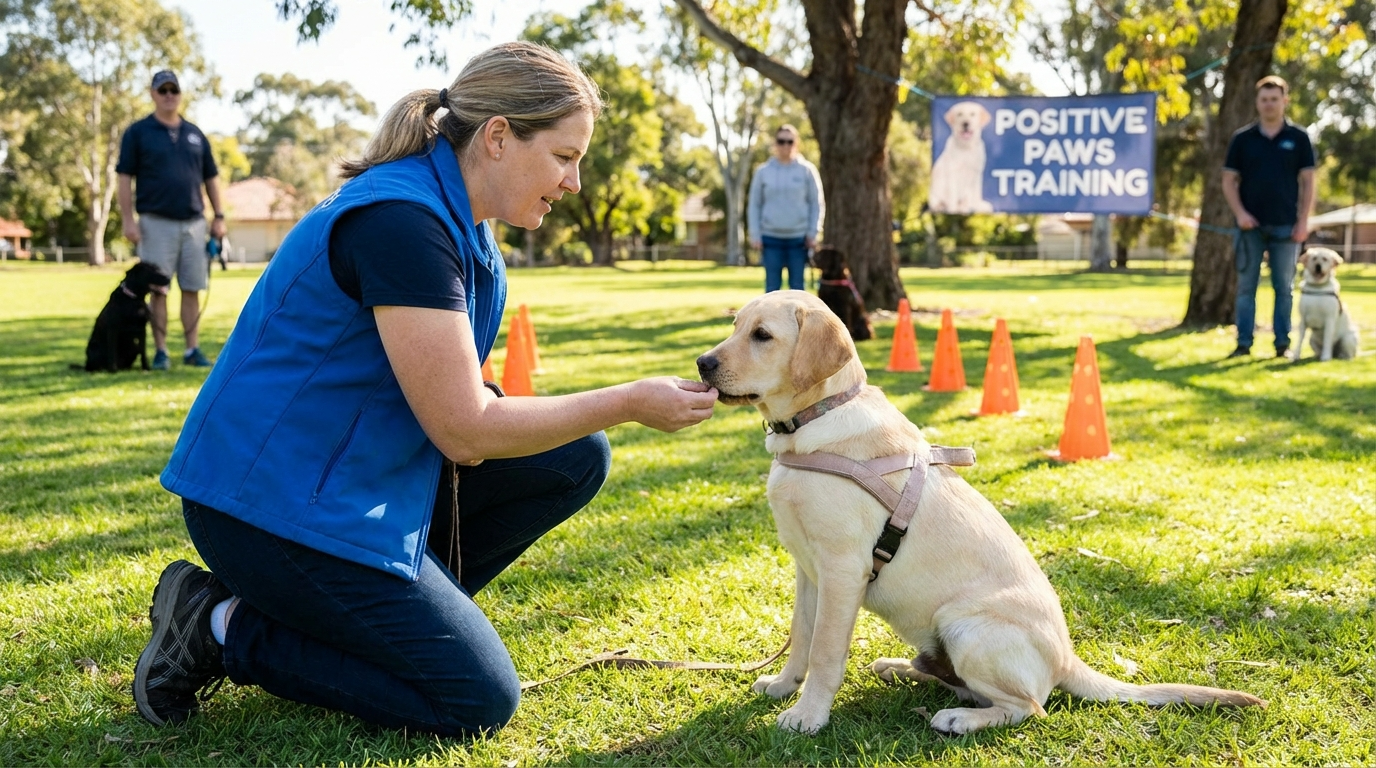
Positive Labrador training creates obedience through encouragement, not fear. Labradors are intelligent, energetic, and deeply people-oriented. When guided with rewards and consistency, they learn quickly and respond with enthusiasm.
Because this breed thrives on approval, training built on praise and structure produces dependable results. Rather than correcting mistakes harshly, you shape behavior by reinforcing what works. Over time, those repeated successes turn into automatic habits.
If you want long-term reliability, the goal is not perfection overnight. The goal is steady progress, clear communication, and trust.
Why Reward-Based Methods Suit Labradors
Labradors are wired to cooperate. They enjoy interaction and crave feedback. Therefore, reward-based training aligns naturally with their temperament.
When a behavior leads to something positive, it is repeated. This simple principle drives learning. A calm sit earns a treat. A prompt recall earns praise. The brain forms a link between action and outcome.
Unlike punishment-focused approaches, encouragement builds confidence. Dogs trained through fear may obey, but they often lack enthusiasm. In contrast, reward-driven learning produces eagerness.
Because Labradors are food-motivated, treats can be powerful tools. However, timing matters more than quantity.
Start With Clear, Consistent Foundations
Clarity reduces confusion. Choose simple cues such as sit, stay, come, and leave it. Use the same word every time.
Tone also plays a role. Calm and confident voices communicate leadership. Inconsistent signals create uncertainty.
Short sessions work best. Five to ten focused minutes keep attention sharp. Long sessions often lead to boredom.
Additionally, every household member must follow the same rules. Mixed signals slow progress. When boundaries remain consistent, habits form faster.
Strong foundations support advanced skills later.
Smart Use of Rewards During Training
Rewards should be delivered immediately after the desired behavior. Even a slight delay weakens association.
At first, reinforce every correct response. Later, begin varying rewards. Intermittent reinforcement strengthens reliability.
Treat size should remain small. Tiny pieces prevent overfeeding while maintaining motivation.
Praise, petting, and play can also serve as rewards. Rotating reinforcement methods keeps engagement high.
The goal is steady progress, not dependence on constant food.
Managing Distractions Effectively
Labradors notice everything. Sights, smells, and sounds compete for attention. Therefore, distraction levels must be introduced gradually.
Begin indoors. Once commands are reliable, practice in the yard. Eventually, transition to parks or busy areas.
If focus breaks, simplify the environment rather than increasing volume or frustration.
Patience improves reliability. Step-by-step exposure strengthens obedience under pressure.
Daily Routines Strengthen Good Behavior
Training should not exist only during formal sessions. Instead, weave commands into daily life.
Ask for sit before meals. Require calm behavior before walks. Practice recall during play.
Repetition in natural settings builds automatic responses.
Consistency matters more than intensity. Small daily reinforcements outperform occasional long sessions.
When expectations remain predictable, understanding grows.
Correcting Mistakes Without Undermining Trust
Errors are part of learning. The key is calm redirection.
If jumping occurs, ask for sit and reward compliance. Avoid yelling or physical corrections.
Removing attention can discourage unwanted actions. Labradors value interaction, so loss of attention has impact.
Trust must remain intact. Without trust, confidence fades.
Gentle guidance encourages progress.
Energy Management and Focus
Excess energy can disrupt learning. Therefore, moderate exercise before training improves concentration.
A short walk or light play session reduces restlessness.
However, avoid exhausting your dog completely. Balanced energy levels support attention.
Mental stimulation also helps. Puzzle toys and scent work sharpen focus.
When physical and mental needs are met, learning becomes smoother.
Socialization Builds Confidence
Exposure to varied environments strengthens behavior reliability.
Introduce new experiences gradually. Reward calm responses in unfamiliar settings.
Confidence reduces reactivity.
When socialization complements structured guidance, obedience remains steady beyond home environments.
Confidence and structure reinforce each other.
Advancing Skills Over Time
Once basics are mastered, build gradually.
Increase duration of stays. Add distance to recall. Practice commands in new environments.
Progression should be layered carefully. Rushing steps often leads to inconsistency.
Patience ensures durability.
Training is cumulative. Each success supports the next.
Maintaining Motivation Long Term
Even well-trained Labradors benefit from refreshers.
Occasional surprise rewards maintain enthusiasm. Rotating challenges prevents boredom.
Keep sessions enjoyable. Engagement drives cooperation.
Training is a lifelong conversation, not a one-time lesson.
The Emotional Bond Behind Effective Training
Connection fuels cooperation.
When your Labrador trusts you, responsiveness improves naturally.
Spend time bonding outside structured work. Walk together. Relax together.
Your energy influences your dog’s reactions. Calm leadership inspires calm behavior.
Encouragement builds a stronger relationship than correction ever could.
Conclusion: Encouragement Creates Lasting Results
Reward-based methods create dependable obedience because they build trust and clarity. By reinforcing desired actions, maintaining consistency, and integrating practice into daily routines, you shape habits that last.
Labradors respond best to patience and structure. When guidance remains steady, distractions decrease and confidence grows.
Training is not about control. It is about communication.
When learning feels positive, your Labrador becomes not only obedient, but also confident and secure.
FAQs
- How long does reward-based training take to show results?
Basic behaviors often improve within weeks, but long-term reliability requires ongoing practice. - Are treats necessary forever?
Treats help early on, but praise and play can gradually replace constant food rewards. - Can older Labradors learn new behaviors?
Yes, dogs of any age can learn with patience and consistent reinforcement. - What if my dog ignores commands outdoors?
Practice gradually in more distracting environments to strengthen focus. - How often should I practice commands?
Short daily sessions of five to ten minutes support consistent improvement.