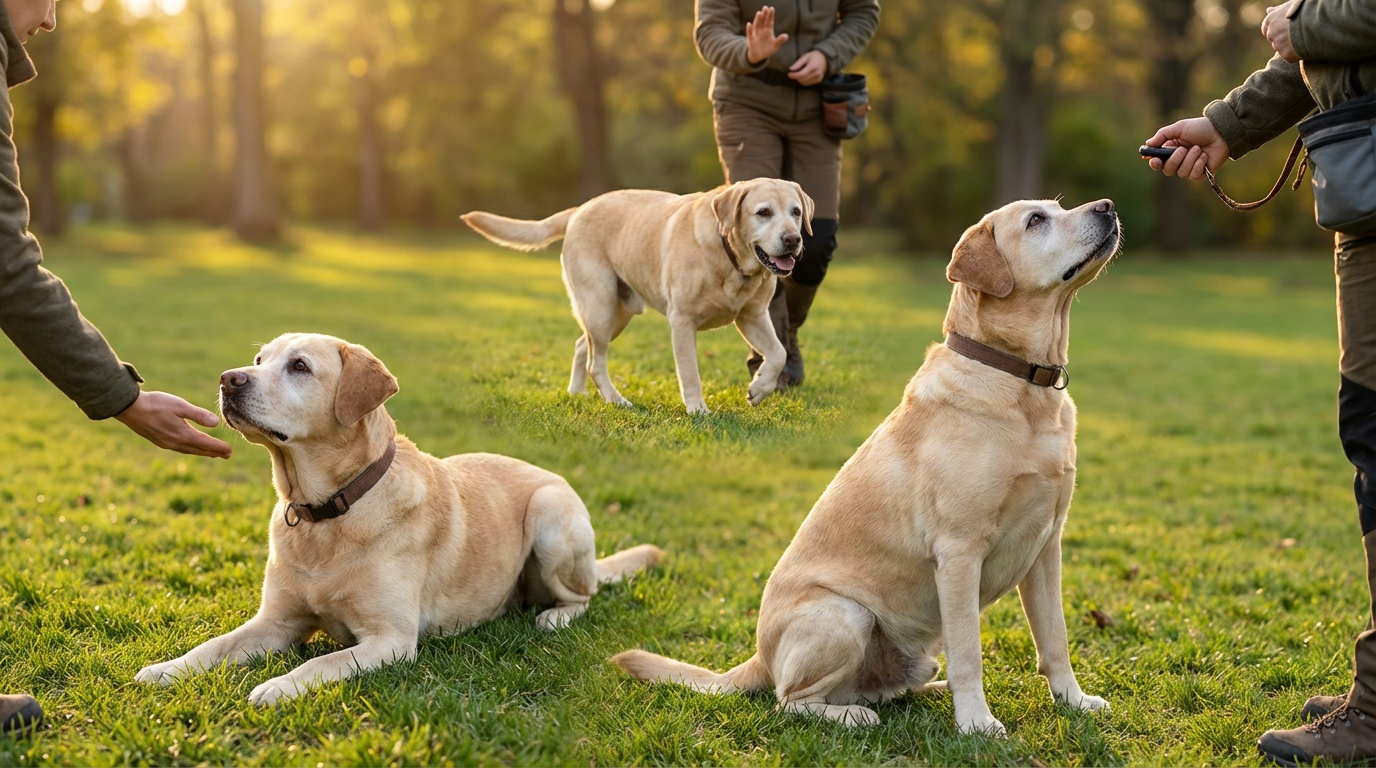
Teaching a Labrador essential skills doesn’t have to feel overwhelming. When you rely on kindness, clarity, and rewards, you help your dog learn faster and enjoy the process. That’s why trainers and behaviorists recommend focusing on positive Labrador training commands instead of harsh corrections or outdated methods. Labradors respond incredibly well to gentle guidance because they’re intelligent, eager to please, and naturally social. When you use positive methods, you build confidence while shaping behavior in a healthy, stress-free way.
Labradors learn best when training feels like a conversation rather than a confrontation. Positive reinforcement rewards good choices, encourages repeat behavior, and strengthens your bond. Instead of relying on punishment, you use treats, praise, toys, and affection to teach commands your Labrador will use for life. These positive Labrador training commands become the foundation for manners, safety, and trust.
Training with positivity also reduces anxiety and frustration. Rather than worrying about making mistakes, your Labrador feels safe experimenting, listening, and trying again. When dogs feel secure, they learn faster and retain skills longer. Positive Labrador training commands support emotional balance while shaping reliable obedience that lasts into adulthood.
Why Positive Labrador Training Commands Work So Well
Positive reinforcement works because it rewards desirable behavior, turning learning into something rewarding and predictable. Labradors love pleasing their owners, so they quickly understand which actions earn praise and treats. Instead of focusing on what not to do, you highlight behaviors you want to see more often.
Because Labradors are food-motivated and playful, rewards accelerate learning. When they succeed, they feel confident. When they feel confident, they learn faster. This creates a cycle of positive association that improves behavior without fear.
Punishment, on the other hand, often confuses dogs. It may temporarily stop behavior, but it doesn’t teach what to do instead. Positive Labrador training commands avoid this confusion. Instead, they offer clarity by showing your dog exactly how to behave in different situations.
Positive methods also reduce stress. Since stress blocks learning, a relaxed Labrador absorbs commands more effectively. The positive environment builds trust, and trust creates cooperation. With consistent practice, you end up with a well-behaved Labrador who listens willingly rather than reluctantly.
Using Rewards in Positive Labrador Training Commands
Rewards are the heart of positive Labrador training commands. But the right reward increases your success even more. Some Labradors prefer small treats, while others work best for toys or praise. Observing your dog helps you choose the reward that sparks motivation.
Use small, soft treats to maintain momentum. Each reward should be quick to chew and easy to deliver. Praise reinforces emotional bonding and can be used anytime. A favorite toy works well for energetic Labradors who love tug or fetch. Rotate rewards to keep training exciting.
In positive Labrador training commands, timing matters greatly. Reward your Labrador immediately after the correct behavior. Quick reinforcement helps your dog understand exactly what action earned the reward. The more consistent your timing, the faster your Labrador learns.
As your dog improves, begin rewarding intermittently. Labradors will continue performing commands because they anticipate the possibility of a reward. This shift strengthens long-term behavior retention.
Teaching ‘Sit’ Using Positive Labrador Training Commands
The “Sit” command is often the first skill Labradors learn. It’s simple, useful, and supports impulse control. Using positive Labrador training commands, you can teach “Sit” without pressure.
Hold a treat close to your Labrador’s nose. Slowly lift your hand upward. Their nose follows, and their bottom naturally lowers. The moment they sit, reward immediately. Praise enthusiastically. Repeat this several times with a calm tone.
After a few repetitions, introduce the word “Sit.” Say it once. Guide the movement. Reward again as soon as your Labrador sits. Practice frequently, but keep sessions short. Positive Labrador training commands work best when learning stays fun.
Later, ask for “Sit” in different locations. This teaches generalization—the ability to follow commands in new environments. Continue using rewards to reinforce the behavior consistently.
Teaching ‘Stay’ With Patience and Positive Methods
“Stay” teaches your Labrador self-control and creates safety in everyday situations. Positive Labrador training commands make this easier by breaking the skill into small, achievable steps.
Begin with your dog sitting in front of you. Hold your hand up like a stop sign and say “Stay.” Take one small step back. Return immediately. Reward your Labrador for holding position.
Gradually increase distance and duration. If your dog stands up or moves, calmly reset without scolding. Positive Labrador training commands rely on repetition and clarity, not punishment.
Always reward generously when your Labrador succeeds. This command takes time, but the payoff is enormous—better manners, safer outings, and a more focused mind.
Teaching ‘Come’ Using Positive Reinforcement
One of the most important positive Labrador training commands is “Come.” It ensures safety in parks, backyards, and open environments. When taught positively, it becomes a reflex your Labrador responds to eagerly.
Start indoors with minimal distractions. Kneel down, open your arms, and say “Come” in a warm, cheerful voice. When your Labrador approaches, reward enthusiastically. Make the experience joyful. Use treats, praise, or a quick game.
Never call your dog to punish them. This weakens trust and damages the command. “Come” should always lead to something positive, encouraging your Labrador to return every time.
Practice in different rooms, then outdoors on a long leash. Increase distractions gradually while keeping rewards exciting. Positive Labrador training commands thrive on consistency and fun.
Teaching ‘Down’ With Gentle Guidance
“Down” promotes calmness. Labradors often have high energy, so teaching them to relax on cue is incredibly valuable. Positive Labrador training commands use gentle movements to guide this behavior.
Begin with your dog sitting. Hold a treat near their nose, then slowly move your hand downward. Their body follows naturally. Once they lie down, reward immediately. Introduce the command “Down” once the movement is consistent.
Avoid pushing their body or forcing the position. Physical pressure creates stress and unnecessary resistance. Labradors learn “Down” quickly when the process feels natural and rewarding.
Teaching ‘Leave It’ Through Positive Labrador Training Commands
“Leave It” is a lifesaving command. It prevents your Labrador from grabbing harmful items or chasing distractions. Positive Labrador training commands use rewarding alternatives to teach impulse control.
Hold a treat in your closed hand. Let your dog sniff or paw. When they back away or lose interest, say “Yes!” and offer a different treat from your other hand. Repeat until your Labrador understands that ignoring the item brings a reward.
As your dog improves, practice with toys, household objects, or food scraps (safe ones). Always reward success generously. Never punish failure—redirect instead. In time, “Leave It” becomes automatic.
Teaching Loose-Leash Walking the Positive Way
Labradors love exploring, which often leads to pulling. Positive Labrador training commands can help you teach loose-leash walking without frustration.
When your Labrador pulls, stop walking. Stand still. The moment the leash slackens, continue forward and reward with praise. This teaches your dog that pulling leads nowhere, but calm walking leads to progress.
You can also reward your Labrador for checking in with you. Every time they look back or slow down, offer praise or a treat. Loose-leash walking becomes a cooperative activity rather than a tug-of-war.
Short, frequent training walks work best. They build consistency and prevent overstimulation. Positive Labrador training commands help transform walks from chaotic to calm.
Using Hand Signals Alongside Positive Labrador Training Commands
Labradors are visual learners. Pairing verbal commands with hand signals boosts clarity. Hand signals also help older dogs who develop hearing loss. Positive Labrador training commands work even more effectively when communication is clear and consistent.
Use simple gestures such as:
- Open palm for “Stay”
- Finger point for “Come”
- Hand sweeping down for “Down”
Repetition creates strong associations. With time, your Labrador responds to silent cues with confidence.
How to Keep Positive Labrador Training Commands Engaging
Training should feel enjoyable—not repetitive. Rotate activities to keep sessions fun. Add toys, games, or short bursts of play to maintain motivation. Labradors learn quickly when sessions feel like playtime rather than drills.
Work in different environments as well. Teach commands indoors, in the yard, at parks, and in pet-friendly stores. New settings challenge your Labrador and strengthen reliability. Positive Labrador training commands become useful everywhere when practiced under varied conditions.
Keep sessions short—five to ten minutes works best. This prevents overloading your Labrador while supporting consistent progress.
Troubleshooting Common Training Challenges
Every Labrador learns at their own pace. Some dogs grasp commands quickly, while others need more repetition. Positive Labrador training commands give you flexibility to adapt without pressure.
If your Labrador becomes distracted, reduce the level of difficulty. Move to a quieter place or decrease the duration of the command. Build success step by step.
If your Labrador becomes frustrated or hesitant, increase rewards temporarily. Confidence grows when the effort feels worthwhile.
If your Labrador seems confused, simplify the behavior. Break it into smaller parts and reward each step. Clear communication prevents misunderstanding and keeps training uplifting.
Patience is essential. Positive Labrador training commands rely on consistency rather than speed.
Why Positive Labrador Training Commands Improve Behavior Long-Term
Positive reinforcement teaches Labradors to make good choices because they want to—not because they fear consequences. This mindset leads to reliable obedience even in distracting environments.
Confidence grows with each success. Labradors who feel safe making mistakes learn faster and develop stronger emotional balance. Positive Labrador training commands create a cooperative attitude, reducing unwanted behaviors such as jumping, barking, or pulling.
When training deepens trust, your Labrador becomes more attentive. They listen eagerly, respond quickly, and enjoy learning new skills. The long-term results include stronger communication, better manners, and a happier relationship.
Conclusion
Positive Labrador training commands build obedience through patience, rewards, and trust. When you teach with kindness, your Labrador learns with enthusiasm rather than fear. Each command becomes an opportunity to bond, communicate, and grow together. By choosing positive reinforcement, you shape not only a well-behaved dog but also a confident, joyful companion. A Labrador trained the positive way becomes a lifelong partner who listens willingly and thrives emotionally and physically.
FAQ
- Why is positive reinforcement better for Labradors?
It encourages confidence, reduces stress, and improves learning without fear-based corrections. - What treats work best for training Labradors?
Small, soft, bite-sized treats help maintain focus and allow quick rewarding. - How long should training sessions last?
Five to ten minutes per session works best for maintaining attention and motivation. - Can older Labradors learn positive commands?
Absolutely. Positive Labrador training commands work at any age and often help seniors regain confidence. - How do I stop my Labrador from pulling on walks?
Use loose-leash walking techniques, reward calm behavior, and stop moving the moment your dog pulls.