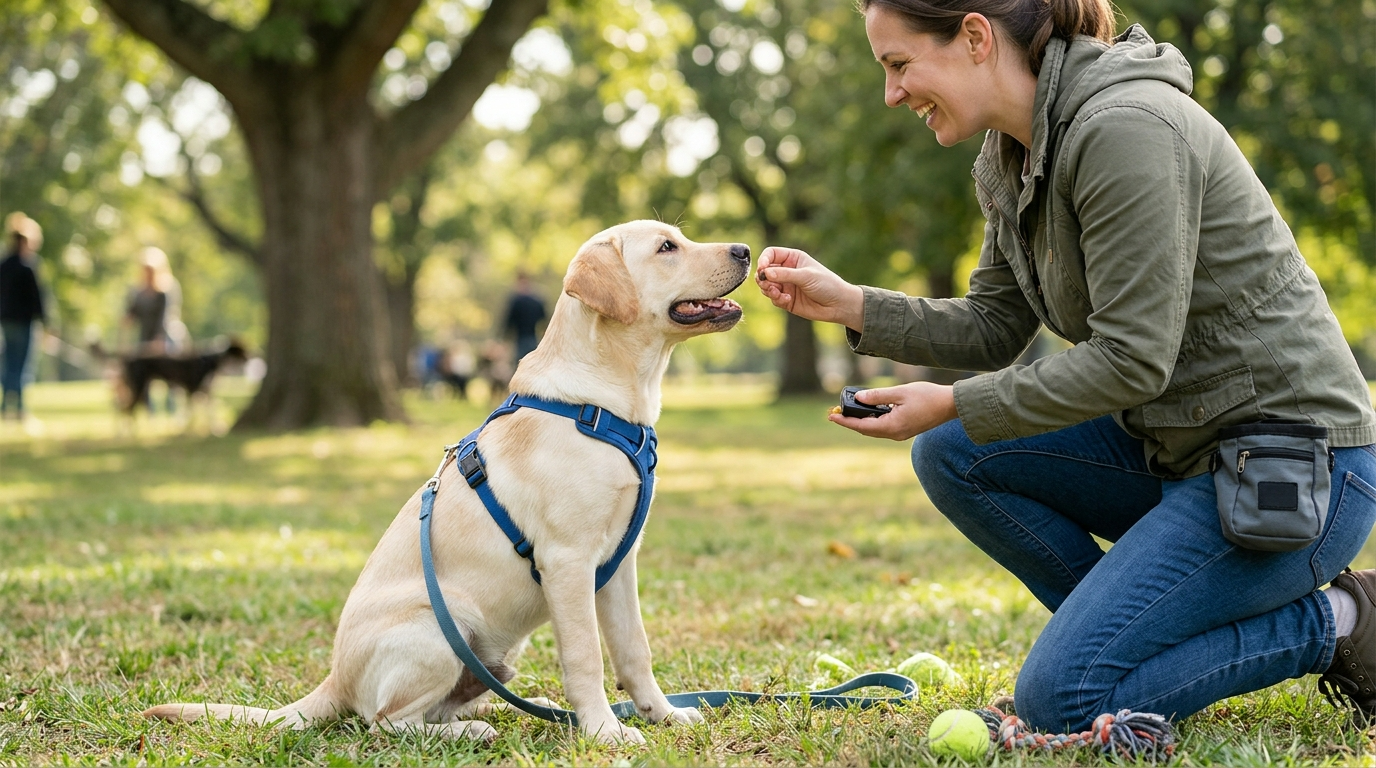
Labradors are intelligent, eager to please, and highly food motivated. Because of these traits, reward-based training for Labradors produces excellent results when applied consistently. This positive method strengthens trust while teaching clear behavioral expectations.
Unlike punishment-based approaches, positive reinforcement focuses on rewarding desirable actions. As a result, your dog learns what to repeat instead of what to fear. When done correctly, reward-based training for Labradors builds confidence, emotional stability, and long-term obedience.
A happy Lab thrives on encouragement. Therefore, using praise, treats, and play creates a strong bond that supports lifelong good behavior.
Why Positive Reinforcement Works So Well
Labradors respond quickly to feedback. Since they crave interaction, they naturally repeat actions that earn rewards. This simple principle forms the foundation of reward-based training for Labradors.
When a dog sits and receives praise or a treat, the brain releases dopamine. Consequently, that behavior becomes more likely to occur again. In contrast, punishment can create confusion or anxiety.
Positive reinforcement also reduces stress. Because Labs are sensitive and social, harsh corrections may damage trust. Instead, encouragement keeps learning enjoyable.
Additionally, reward-based training for Labradors allows you to shape behavior gradually. Small improvements receive recognition, which builds momentum.
Consistency matters most. Clear cues paired with timely rewards create predictable patterns. Predictability builds security, and security encourages cooperation.
Understanding Labrador Temperament
Labradors combine energy with loyalty. They often act impulsively, especially as puppies. However, their intelligence makes them highly trainable.
Reward-based training for Labradors works well because it channels natural enthusiasm into structured learning. Rather than suppress energy, you redirect it productively.
Young Labs may jump, chew, or pull on the leash. Instead of scolding, teach alternative behaviors. For example, reward calm sitting instead of reacting to jumping.
Because Labs mature slowly, patience remains essential. Short sessions prevent frustration. Moreover, frequent practice strengthens memory retention.
As your dog gains skills, confidence grows. A confident Labrador behaves more reliably in new environments.
Building Trust Through Early Training
Early experiences shape lifelong habits. Therefore, begin reward-based training for Labradors as soon as your puppy arrives home.
Start with simple commands like sit, stay, and come. Use small, high-value treats during initial sessions. Immediate rewards help puppies connect actions to outcomes.
Keep lessons under ten minutes. Although Labs love interaction, attention spans remain short during early months. Short sessions improve focus.
Furthermore, reward calm behavior inside the home. When your puppy relaxes quietly, offer praise. Reinforcing peaceful moments prevents future hyperactivity.
Trust develops when your dog understands expectations. Because positive methods eliminate fear, learning becomes enjoyable.
Choosing Effective Rewards
Not all rewards carry equal value. Some Labradors respond best to food, while others prefer toys or verbal praise.
Reward-based training for Labradors works most efficiently when the reward matches motivation. For example, use soft treats for new commands. Once behavior stabilizes, switch to praise or play.
Rotate rewards to maintain interest. Although repetition builds skill, variety prevents boredom.
Timing also plays a critical role. Deliver rewards within seconds of the desired behavior. Immediate reinforcement strengthens associations.
Gradually reduce treat frequency over time. However, continue offering praise consistently. Emotional encouragement sustains long-term reliability.
Teaching Basic Commands with Positive Methods
Clear communication forms the backbone of reward-based training for Labradors. Use short verbal cues paired with hand signals.
For example, hold a treat above your dog’s nose and move it backward to encourage sitting. Once the dog sits, say “sit” and reward immediately.
Practice recall in low-distraction areas first. Call your dog’s name followed by “come.” When your Lab responds, offer enthusiastic praise and a treat.
Leash training requires patience. Reward loose-leash walking frequently. If pulling begins, stop moving forward. Resume only when tension disappears.
Positive repetition reinforces understanding. Over time, commands become automatic responses.
Managing Problem Behaviors Humanely
Even well-trained Labs test boundaries. However, reward-based training for Labradors helps address issues without creating fear.
If your dog jumps on guests, teach an incompatible behavior. Ask for a sit when visitors arrive. Then reward calm posture.
For chewing problems, redirect attention to appropriate toys. Praise your Lab when it chooses correct items.
Excessive barking often signals boredom. Therefore, increase mental stimulation through puzzle toys and structured play.
Instead of punishment, focus on prevention. Reward desired alternatives consistently. Over time, unwanted behaviors fade naturally.
Socialization and Positive Exposure
Proper socialization strengthens emotional stability. Introduce your Labrador to new environments gradually. Reward calm reactions during exposure.
Reward-based training for Labradors supports confidence in unfamiliar settings. Bring treats during walks to reinforce polite behavior.
Encourage positive interactions with other dogs. Monitor body language carefully. If tension appears, redirect attention gently.
Because Labs enjoy social contact, structured exposure builds resilience. Controlled experiences prevent anxiety later.
Positive reinforcement during early encounters reduces fear-based reactions as your dog matures.
Advanced Skills and Mental Stimulation
Once basics are mastered, expand your training goals. Labradors excel in advanced obedience, agility, and scent work.
Reward-based training for Labradors makes complex tasks manageable. Break advanced commands into smaller steps. Reward each stage of progress.
Mental stimulation prevents destructive boredom. Teach tricks like spin, shake, or fetch by name.
Additionally, introduce impulse-control exercises. Practice waiting before meals or door openings. Reward patience immediately.
Challenging activities strengthen focus. As skills develop, your Labrador gains confidence and emotional balance.
Maintaining Consistency Across the Household
Consistency determines long-term success. Everyone in the home must use the same cues and reward timing.
Reward-based training for Labradors fails when messages conflict. For instance, allowing couch access sometimes but not always creates confusion.
Establish clear rules and routines. Reinforce expectations daily. Even brief practice sessions maintain skill sharpness.
Furthermore, avoid mixed signals. If you want calm greetings, never reward jumping with attention.
Consistency creates predictability. Predictability supports stable behavior.
Transitioning from Treats to Reliability
Some owners worry about treat dependence. However, proper reinforcement schedules prevent reliance.
Reward-based training for Labradors gradually shifts from constant treats to intermittent rewards. This technique strengthens persistence.
Once behaviors become reliable, reward unpredictably. Occasionally surprise your dog with praise or play.
Although treats decrease, positive feedback remains essential. Emotional connection motivates continued obedience.
Long-term reliability grows when rewards vary yet remain meaningful.
Avoiding Common Training Mistakes
Many owners rush progress. However, moving too quickly creates confusion. Slow, steady steps improve retention.
Reward-based training for Labradors requires patience and repetition. Skipping foundational skills often leads to setbacks.
Avoid punishing mistakes. Instead, reset calmly and try again. Negative reactions may weaken trust.
Training sessions should remain upbeat. End on a positive note whenever possible.
Additionally, train in different locations to strengthen generalization. Dogs do not automatically transfer learning across settings.
Long-Term Benefits of Positive Training
A Labrador trained with encouragement develops emotional stability. Because fear remains absent, learning continues throughout life.
Reward-based training for Labradors strengthens the human-dog bond. Trust deepens through consistent communication.
Moreover, positive methods reduce aggression risk. Dogs who feel secure rarely respond defensively.
Obedient behavior also enhances safety. Reliable recall prevents dangerous situations outdoors.
Ultimately, a well-trained Lab enjoys greater freedom. Freedom increases happiness for both dog and owner.
Conclusion
Raising a happy, well-behaved Labrador begins with trust and consistency. Reward-based training for Labradors transforms natural enthusiasm into focused obedience. By using praise, treats, and structured guidance, you build confidence rather than fear.
Positive reinforcement creates clarity. Because Labradors thrive on encouragement, they respond quickly to supportive instruction. Over time, steady practice produces lasting results. When you commit to humane, consistent training, your Labrador grows into a calm, joyful companion who listens reliably and lives confidently by your side.
FAQ
- At what age should I start positive training with my Lab?
Begin as early as eight weeks old. Early lessons build trust and healthy habits. - Can older Labradors learn new behaviors?
Yes, adult dogs respond well to reinforcement methods when training remains consistent. - How long should each session last?
Keep sessions between five and fifteen minutes. Short lessons maintain focus and enthusiasm. - What if my dog ignores treats during training?
Try higher-value rewards like cooked chicken or interactive play to increase motivation. - Does positive reinforcement prevent aggressive behavior?
Encouragement-based methods reduce fear and stress, which lowers the risk of reactive responses.