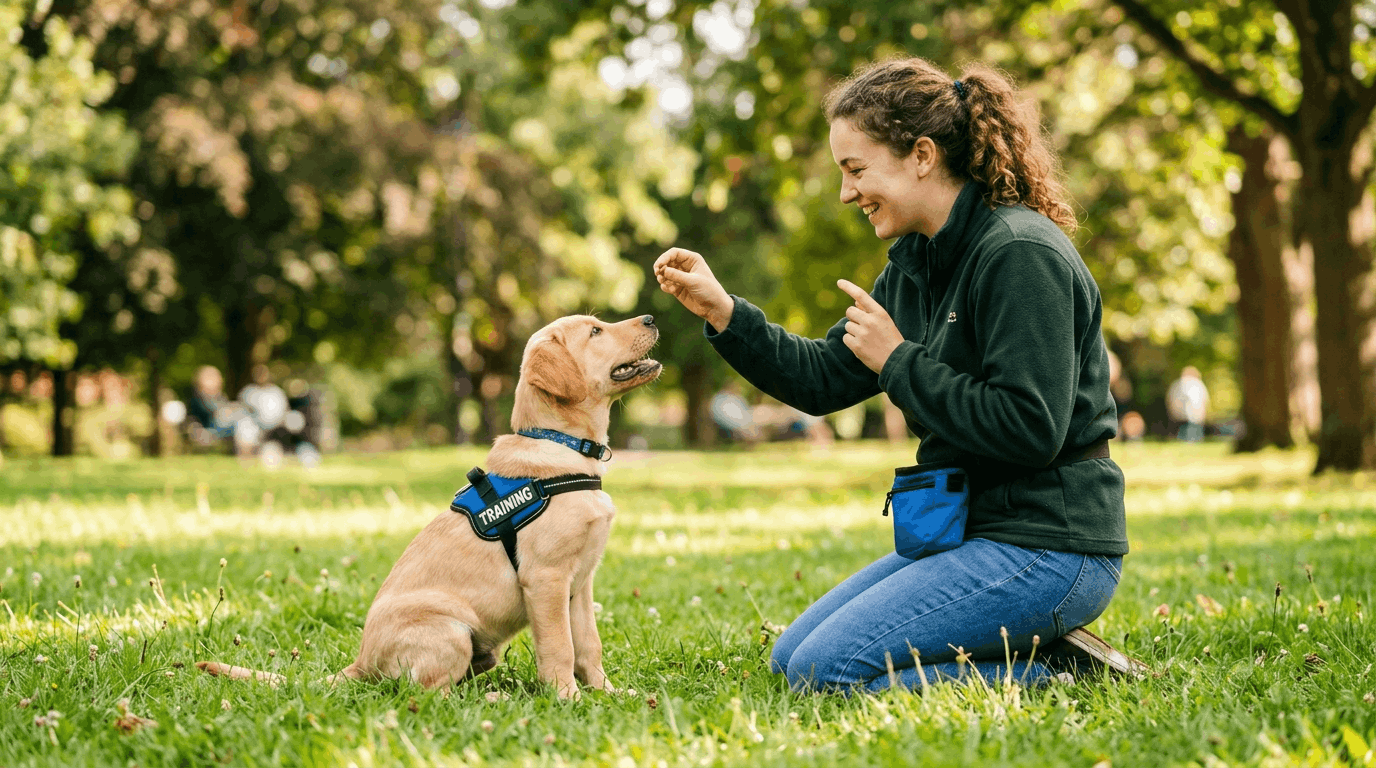
Bringing home a Labrador puppy is exciting, rewarding, and sometimes overwhelming. These dogs are affectionate, energetic, playful, and incredibly curious. While their personalities make them wonderful companions, their enthusiasm can quickly become difficult to manage without proper guidance. That is why learning how to train your Labrador puppy calmly and confidently is one of the most important parts of raising a happy and well-behaved dog.
Labrador puppies learn quickly, yet they also become distracted easily. They chew furniture, jump on people, pull on leashes, and explore everything with their mouths. Although these behaviors are normal during puppyhood, early training helps prevent long-term problems from developing later.
Many owners mistakenly believe training requires strict discipline or complicated techniques. In reality, Labradors respond best to calm consistency, patience, and positive reinforcement. Because they naturally want to please people, they usually learn faster when training feels encouraging rather than stressful.
Confidence also matters greatly during training. Puppies look to their owners for direction and emotional stability. If training feels confusing or inconsistent, the puppy may become anxious or overly excited. However, calm leadership helps build trust while teaching better behavior gradually.
Every interaction with your puppy becomes part of the learning process. Therefore, building healthy habits from the beginning creates a much smoother experience for both the dog and the owner.
Understanding Labrador Puppy Behavior
Before owners can effectively train your Labrador puppy, they need to understand why puppies behave the way they do. Labradors are naturally social dogs with high energy levels and strong curiosity. Consequently, puppies often explore their environment through chewing, jumping, barking, and playful behavior.
Most Labrador puppies become excited easily because everything around them feels new. Sounds, people, toys, and smells constantly stimulate their developing brains. While this excitement is completely normal, it can create impulsive behavior if not guided properly.
Puppies also have short attention spans. Young Labradors usually focus for only a few minutes before becoming distracted. Therefore, short training sessions often work much better than long lessons.
Teething creates another challenge during early development. Puppies chew furniture, shoes, and hands because chewing relieves discomfort while helping them explore textures. Redirecting this behavior toward safe chew toys teaches appropriate habits without punishment.
Social development also happens quickly during puppyhood. Labradors learn constantly from their surroundings, which means positive experiences matter greatly during the first months of life. Calm exposure to people, sounds, and environments helps create more confident adult dogs.
Owners should remember that puppies do not understand household rules automatically. Instead, they learn through repetition, structure, and positive guidance. Patience becomes essential because learning takes time and consistency.
Understanding normal puppy behavior reduces frustration while helping owners respond more effectively during training.
Building Trust Through Positive Reinforcement
Positive reinforcement is one of the most effective ways to train your Labrador puppy because it encourages desired behavior instead of focusing on punishment. Labradors naturally seek approval, so they respond extremely well to rewards, praise, and encouragement.
Rewarding good behavior immediately helps puppies understand what actions are correct. For example, if a puppy sits calmly instead of jumping, offering praise or a treat reinforces that calm behavior clearly. Consequently, the puppy becomes more likely to repeat it.
Timing matters greatly during reward-based training. Puppies connect rewards with actions only when feedback happens quickly. Delayed rewards may confuse the learning process.
Treats work especially well with Labradors because the breed is highly food motivated. Small, soft treats help maintain focus during short sessions. However, praise and affection should accompany rewards whenever possible. Over time, many puppies begin responding to verbal encouragement alone.
Positive reinforcement also builds emotional confidence. Puppies trained with calm encouragement often feel safer exploring new situations and learning unfamiliar commands. In contrast, harsh corrections may create fear or confusion.
Consistency remains extremely important. Family members should use the same commands and reactions whenever possible. Mixed signals often slow progress because puppies struggle to understand changing expectations.
Training should feel enjoyable for both the puppy and the owner. Since Labradors thrive on interaction and attention, positive sessions strengthen the bond while improving obedience naturally.
Creating Calm Daily Routines
Routine plays a major role when owners train your Labrador puppy successfully. Puppies feel more secure when daily activities happen consistently because predictable structure reduces anxiety and overstimulation.
Feeding schedules help regulate digestion, energy, and bathroom habits. Puppies that eat at consistent times usually develop more reliable potty routines. Consequently, house training becomes easier and less stressful.
Sleep routines matter as well. Labrador puppies need significant rest during development, even if they seem endlessly energetic. Overtired puppies often become more hyperactive, mouthy, and difficult to manage.
Exercise should remain balanced. While Labradors require activity, excessive stimulation may increase excitement instead of promoting calm behavior. Short walks, gentle play, and structured games usually work better than nonstop activity.
Training sessions fit naturally into daily routines. Brief lessons before meals or walks help puppies stay mentally engaged without becoming overwhelmed. Additionally, practicing commands regularly improves long-term consistency.
Calm greetings are also important. Excited reactions when returning home may encourage jumping and overexcitement. Instead, rewarding calm behavior teaches better emotional control.
Routine creates predictability, which helps Labrador puppies understand expectations more clearly. As a result, calmer behavior often develops naturally over time.
Teaching Basic Commands Successfully
Simple obedience commands create the foundation for lifelong behavior. When owners train your Labrador puppy early, daily life becomes much easier and safer.
Sit is usually one of the first commands Labradors learn because it redirects excitement into calmer behavior. Puppies often learn quickly when owners use treats to guide movement naturally.
Stay helps build patience and impulse control. Although young puppies struggle with long durations initially, short successful repetitions create steady improvement.
Come is one of the most important safety commands. Labradors love exploring, so reliable recall helps protect them outdoors. Rewarding enthusiastic responses makes returning to the owner feel rewarding and fun.
Down encourages relaxation while reducing hyperactive behavior. Many owners use this command during quiet time or when guests visit.
Leash training should begin early as well. Puppies naturally pull because they want to explore everything around them. However, rewarding loose-leash walking teaches better habits before pulling becomes stronger.
Short training sessions remain most effective. Five to ten minutes often provides enough practice without exhausting the puppy mentally. Several brief sessions throughout the day usually produce better results than one long lesson.
Owners should celebrate small progress instead of expecting perfection immediately. Labrador puppies learn gradually through repetition and encouragement.
Handling Common Puppy Challenges Calmly
Every puppy owner experiences difficult moments during training. Chewing, biting, barking, accidents, and jumping are all normal parts of development. However, calm responses help puppies learn much faster than frustration or punishment.
Puppy biting often happens during play or teething. Instead of yelling, owners should redirect chewing toward appropriate toys immediately. Consistent redirection teaches acceptable behavior without creating fear.
House training accidents require patience as well. Puppies have limited bladder control during early development. Therefore, consistent bathroom schedules and positive praise for outdoor success usually work best.
Jumping becomes common because Labradors naturally seek attention. Ignoring jumping while rewarding calm greetings helps teach better manners gradually.
Crate training can also support calm behavior when introduced properly. A crate should feel safe and comfortable rather than punishing. Many puppies eventually use their crate as a relaxing resting space.
Excessive barking sometimes develops from boredom or overstimulation. Mental enrichment and structured routines often reduce barking naturally.
Owners should avoid reacting emotionally during difficult moments. Puppies learn more effectively when guidance remains calm, predictable, and consistent.
Socialization Builds Confidence
Socialization is one of the most important parts of raising a balanced Labrador. Puppies exposed positively to new experiences often grow into calmer and more confident adult dogs.
Introducing your puppy to different people, sounds, surfaces, and environments helps reduce fear later in life. However, these experiences should remain controlled and positive rather than overwhelming.
Short car rides, visits to quiet parks, and supervised meetings with friendly dogs all help build social confidence gradually. Positive exposure teaches puppies that unfamiliar situations are safe.
When owners train your Labrador puppy through social experiences, they also improve focus around distractions. Puppies learn to remain calm even in stimulating environments.
Treats and praise help create positive associations during socialization. Consequently, puppies begin connecting new experiences with safety and reward.
Avoid forcing nervous puppies into stressful situations. Gentle encouragement works far better than pressure. Confidence develops gradually through repeated positive experiences.
Vaccination schedules should always guide public exposure decisions. Veterinarians can help owners balance safe socialization with health protection during early puppyhood.
Well-socialized Labradors often become more adaptable, relaxed, and easier to manage throughout adulthood.
Using Mental Stimulation to Improve Behavior
Physical exercise alone will not fully satisfy a Labrador puppy. Mental stimulation is equally important because these dogs are highly intelligent and curious. Without enough mental activity, puppies may become destructive or overly energetic indoors.
Puzzle toys provide excellent enrichment by encouraging puppies to solve simple challenges. Food-dispensing toys also slow eating while keeping the puppy engaged mentally.
Training itself becomes an important form of enrichment. Every command, game, and structured interaction encourages mental focus and problem-solving skills.
Scent games work especially well for Labradors because they naturally enjoy using their noses. Hiding treats around the house creates fun opportunities for exploration and concentration.
Rotating toys also helps prevent boredom. Puppies often remain more interested when toys feel fresh and exciting instead of constantly available.
Mental stimulation encourages calmer behavior because it tires the brain without overstimulating the body excessively. Consequently, puppies often relax more easily after structured enrichment activities.
When owners train your Labrador puppy using mentally engaging exercises, they often notice improved focus and reduced unwanted behavior at home.
Staying Confident as a Puppy Owner
Many owners worry they are making mistakes during training. However, confidence and consistency matter more than perfection. Labrador puppies learn gradually, and setbacks are completely normal during development.
Comparing your puppy to others often creates unnecessary stress. Every Labrador matures differently, so progress may happen faster in some areas than others.
Remaining calm during challenges helps puppies feel secure. Dogs respond strongly to emotional energy, which means anxious or frustrated reactions may increase confusion.
Small victories deserve recognition. A successful recall, calm greeting, or short stay command all represent meaningful progress. Celebrating these moments helps owners stay motivated during training.
Seeking guidance from professional trainers can also improve confidence. Puppy classes often provide valuable structure, socialization, and support for new owners.
Most importantly, training should strengthen the relationship between owner and puppy. Labradors thrive when they feel connected, understood, and encouraged consistently.
Raising a Calm and Confident Labrador
Learning how to train your Labrador puppy calmly and confidently creates benefits that last far beyond puppyhood. Early habits shape future behavior, emotional stability, and trust between dog and owner. Therefore, patient guidance during the first months becomes extremely valuable.
Labradors naturally want to please people, which makes them highly responsive to positive reinforcement and consistent structure. Calm leadership helps puppies feel secure while encouraging healthier behavior patterns gradually.
Training is not about controlling every movement perfectly. Instead, it focuses on building communication, trust, and understanding through daily interaction. Small moments of guidance throughout the day often create the strongest long-term results.
Puppyhood can feel challenging at times, especially during teething, house training, and energetic phases. Nevertheless, patience and consistency usually produce steady improvement over time. Labradors mature into loyal, intelligent companions when owners invest in calm and positive training early.
Every puppy learns differently, yet all Labradors benefit from encouragement, routine, and clear expectations. By creating a supportive environment filled with structure and trust, owners can raise dogs that feel both emotionally balanced and confidently obedient for years to come.
FAQ
1. What is the best age to start puppy training?
Most Labrador puppies can begin simple training and socialization around eight weeks old using short, positive sessions.
**2. How long should puppy eight weeks old using short, positive sessions.
2. How long should puppy training sessions last?
Young Labradors usually focus best during sessions lasting five to ten minutes several times each day.
3. Why does my Labrador puppy bite so much?
Puppies bite during teething and play. Redirecting chewing toward safe toys helps teach better habits calmly.
4. Should I use treats during obedience practice?
Yes. Small treats help motivate Labradors and reinforce good behavior during early learning stages.
5. How can I stop my puppy from jumping on people?
Ignore jumping behavior and reward calm greetings consistently to encourage better manners over time.