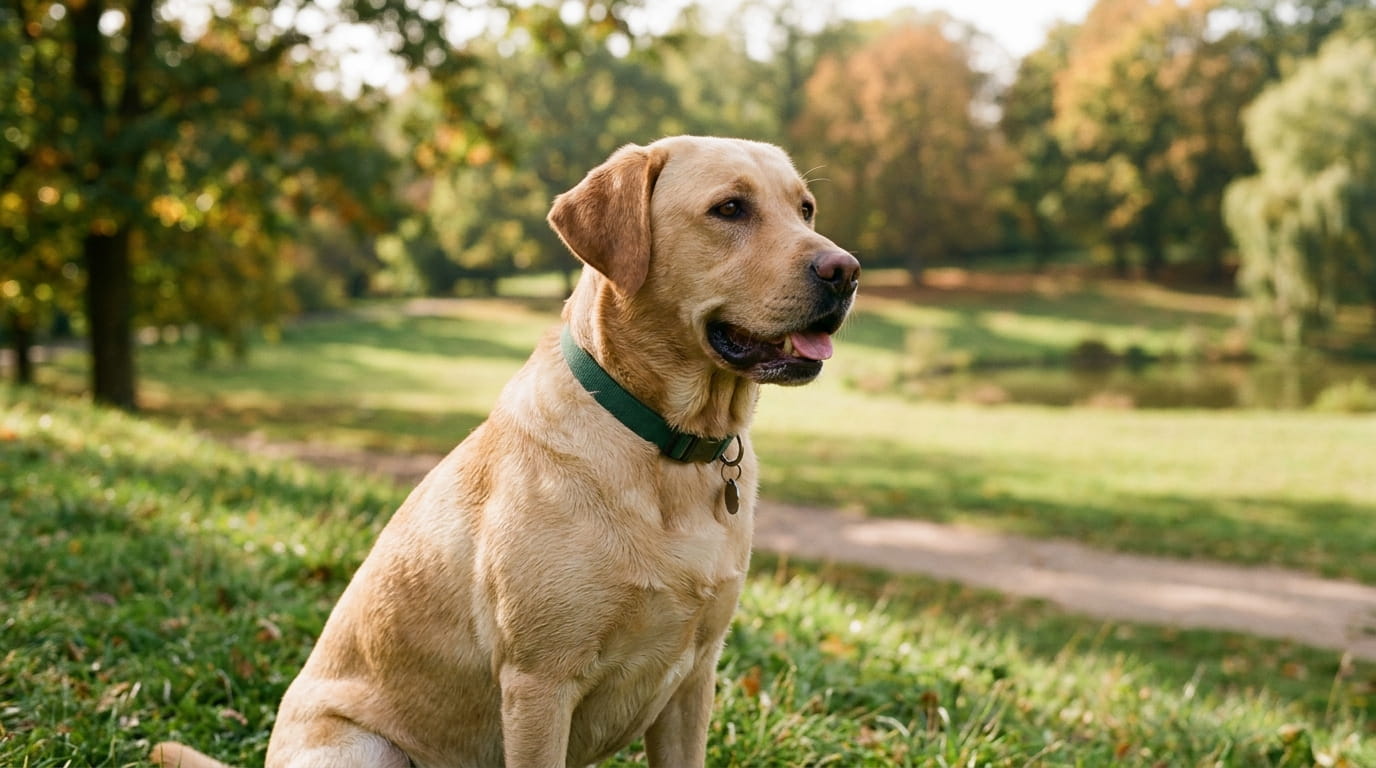
Labrador Retrievers have been the most popular dog breed in the United States for over three consecutive decades. That popularity has a health cost: decades of high-demand breeding have concentrated specific genetic vulnerabilities across joints, eyes, muscles, heart, and metabolism. The Orthopedic Foundation for Animals (OFA) has documented these breed-specific predispositions across its open health database.
The good news is that most conditions are manageable when caught early. This guide covers every major health condition your Labrador may face, what signs to watch for, and what you can do today to support a longer, healthier life.
Labrador Retriever Lifespan: What the Data Shows
The average Labrador Retriever lifespan is 10 to 12 years, placing them in the middle range for large-breed dogs — with individual Labs regularly reaching 14 years under proactive care.
Coat colour & lifespan: A 2018 study published in Canine Genetics and Epidemiology found that chocolate Labradors have a median lifespan approximately 10% shorter than yellow and black Labs — 10.7 years versus 12.1 years. Researchers linked this to the narrower gene pool required to consistently produce the chocolate phenotype.
Weight & lifespan: A landmark long-term Purina study found that Labs maintained at an ideal body weight lived an average of 1.8 years longer than their overweight littermates. Weight management is the single highest-impact intervention available to Lab owners. Learning how to support whole food Labrador nutrition is one of the most direct ways to protect your dog's longevity.
The 12 Health Conditions Labrador Owners Must Know
Hip Dysplasia
An inherited developmental condition where the femoral head does not fit properly into the hip socket, causing progressive cartilage damage and osteoarthritis. The OFA reports that approximately 12.6% of evaluated Labradors have hip dysplasia.
Signs
- Bunny-hopping gait when running
- Reluctance to climb stairs or jump into the car
- Stiffness after rest, especially in the morning
- Hind-end muscle atrophy
Management: Weight control is critical. Natural Labrador meals built around lean protein and anti-inflammatory ingredients support healthy body condition. Low-impact exercise (swimming is ideal), omega-3 supplementation, and in severe cases surgical intervention are the primary tools, per the Merck Veterinary Manual.
Elbow Dysplasia
A collective term for several developmental joint abnormalities — including fragmented medial coronoid process (FMCP) and osteochondritis dissecans (OCD). Like hip dysplasia, it leads to chronic arthritis and pain that worsens with age.
Signs
- Front-leg lameness after exercise
- Swelling around one or both elbows
- Outward "abducted" stance when standing
Screening: OFA Elbow Evaluation. Reputable breeders test both parents before any planned litter.
Obesity & the POMC Gene
Labs don't just "love food" as a personality quirk — many have a documented genetic reason. A 2016 study in Cell Metabolism identified that approximately 1 in 4 Labradors carries at least one variant of the POMC (pro-opiomelanocortin) gene. This mutation disrupts the signal that tells the brain when the dog is full, resulting in dogs that feel perpetually hungry. Dogs carrying this variant weigh an average of 4.4 lbs more than unaffected dogs.
Excess weight accelerates joint disease, increases cancer risk, and shortens lifespan by up to 1.8 years. Explore organic dog food for Labradors formulated for lean body condition, and adapt positive reinforcement training to use low-calorie rewards such as carrot slices.
Exercise-Induced Collapse (EIC)
A genetic condition caused by a mutation in the DNM1 gene. Affected dogs appear completely healthy at rest but experience sudden loss of muscle coordination and collapse after 5–20 minutes of intense exercise. Estimated to affect 3–10% of Labradors, with higher rates in field-trial lines.
Signs
- Progressive weakness in the back legs moving to full collapse
- Dog remains conscious and alert — not a seizure
- Self-recovery within 5–25 minutes of rest
Genetic test: A cheek-swab DNA test from Embark or Wisdom Panel identifies Normal / Carrier / Affected status. Affected dogs should not be bred, per the University of Minnesota Canine Genetics Laboratory.
Progressive Retinal Atrophy (PRA)
A group of inherited degenerative eye diseases that progressively destroy the photoreceptor cells, ultimately leading to complete blindness. The condition is painless, and most Labs adapt remarkably well when the home environment is kept consistent, according to VCA Animal Hospitals.
Signs
- Night blindness first — reluctance to move in low light, bumping into objects
- Gradual progression to daytime vision loss
- Pupils that appear larger than normal
Screening: OFA CAER (Companion Animal Eye Registry) exam and DNA testing. The late-onset form typically appears between ages 3 and 9.
Labrador Cancer Risk
Labs have an elevated lifetime cancer risk compared to many breeds. The three most clinically significant types are:
Hemangiosarcoma
Aggressive blood-vessel cancer; often asymptomatic until a tumour ruptures. Primarily affects spleen, liver, heart. The AKC CHF actively funds early-detection research.
Mast Cell Tumours
Most common skin tumour in dogs. Any new lump requires veterinary evaluation — only cytology or biopsy can confirm malignancy.
Lymphoma
Labs have a higher rate than the general dog population. Signs include swollen lymph nodes, weight loss, and decreased appetite.
Sudden extreme lethargy, pale gums, and a distended abdomen can indicate internal bleeding from a ruptured tumour. Seek emergency veterinary care immediately.
Stay current with expert resources from our Labrador health blog to help spot physical and behavioural changes early.
Bloat / Gastric Dilatation-Volvulus (GDV)
Bloat occurs when the stomach fills with gas and twists on its axis, cutting off blood supply. Without emergency surgery, GDV is fatal — typically within hours. Labs' deep-chested build places them at elevated risk, documented in the Journal of the American Veterinary Medical Association.
Signs: unproductive retching, visibly hard and distended abdomen, extreme restlessness, hypersalivation, pale gums. Go to an emergency vet immediately.
Prevention: Feed two smaller meals per day, use a slow-feeder bowl, and restrict vigorous exercise for 1–2 hours after meals. Our guide to safe Labrador feeding accessories helps you choose bowls and feeders that reduce gulping risk.
Ear Infections
The most common presenting complaint in Labradors at veterinary visits. Labs' floppy, pendulous ears trap moisture and restrict airflow, creating a warm environment where bacteria and yeast thrive — especially in dogs that swim frequently, as noted by the Merck Veterinary Manual.
Signs
- Head shaking or scratching at the ears
- Redness or brown/yellow discharge in the ear canal
- Unpleasant odour; pain when ear is touched
Prevention: Dry ears thoroughly after every swim or bath. Inspect weekly — healthy canals are pale pink with minimal odour. Use a vet-approved cleaning solution monthly. Never insert cotton swabs into the ear canal.
Skin Allergies
Labradors are prone to both environmental allergies (atopic dermatitis) and food allergies. Common environmental allergens include pollen, mould, dust mites, and grass. Frequent dietary allergens include chicken, beef, dairy, and wheat.
Signs
- Itching at paws, groin, armpits, and ears
- Hot spots; recurrent ear infections; skin redness
Choosing clean nutrition for Labradors with limited ingredients can help isolate dietary triggers. Using a safe Labrador shampoo formulated for sensitive skin reduces topical irritation.
Hypothyroidism
Underactivity of the thyroid gland — one of the more common endocrine disorders in middle-aged to older Labs. According to the Merck Veterinary Manual, over 95% of canine hypothyroidism cases result from destruction of the thyroid gland itself; the two leading causes are lymphocytic thyroiditis and idiopathic thyroid gland atrophy.
Signs
- Weight gain without increased food intake; lethargy; cold intolerance
- Excessive shedding; recurrent skin and ear infections; slower heart rate
Treatment: Daily oral levothyroxine for life. Most dogs return to normal energy and weight within 2–3 months of starting treatment, per the Merck Veterinary Manual.
Tricuspid Valve Dysplasia (TVD)
A congenital heart defect where the tricuspid valve forms abnormally, causing blood to flow backward and straining the right side of the heart. It is one of the more prevalent congenital cardiac conditions seen specifically in Labradors.
Signs — severe cases
- Exercise intolerance; abdominal distension from fluid accumulation
- Weakness; difficulty breathing
Screening: OFA Cardiac Evaluation by a board-certified cardiologist. Reputable breeders have breeding stock evaluated annually.
Centronuclear Myopathy (CNM)
A rare inherited muscle disease in which Type 2 muscle fibres break down and weaken. Research published in Human Genetics identified the causative locus on canine chromosome 2, enabling accurate genetic testing. Affected puppies typically show signs between 2–5 months of age: muscle weakness, difficulty holding the head up, exercise intolerance, abnormal gait.
Genetic test: Available through Embark and Wisdom Panel. Responsible breeders do not pair two carriers. Most affected dogs stabilise around 12 months and can live comfortable lives with managed exercise demands.
Labrador Genetic Health Testing at a Glance
If you are buying a puppy, ask your breeder for documentation of these tests on both parents. If you already own a Lab, testing is still valuable for understanding their risk profile.
| Test | Screens For | Recommended Provider |
|---|---|---|
| OFA Hip Evaluation | Hip dysplasia | OFA.org, any AVMA-board vet |
| OFA Elbow Evaluation | Elbow dysplasia | OFA.org |
| OFA CAER Eye Exam | PRA, cataracts, other eye conditions | OFA.org, ACVO diplomate |
| OFA Cardiac Evaluation | TVD and other heart defects | OFA.org, board-certified cardiologist |
| EIC DNA Test | Exercise-Induced Collapse | Embark, Wisdom Panel |
| PRA DNA Test | Progressive Retinal Atrophy | Embark, Wisdom Panel |
| CNM DNA Test | Centronuclear Myopathy | Embark, Wisdom Panel |
Labrador Health Screening Schedule by Age
Data compiled from OFA.org and the AKC Canine Health Foundation. Consult your veterinarian for an individualised schedule.
| Life Stage | Age | Recommended Actions | Source |
|---|---|---|---|
| Puppy | 8–16 wks | Core vaccinations (distemper, parvovirus, adenovirus), first deworming, microchipping, flea/tick/heartworm prevention | AVMA |
| Adolescent | 6–12 mos | Rabies vaccination; spay/neuter discussion — research supports waiting until 12–24 months for Labs due to joint development | Merck Vet Manual |
| Young Adult | 12–24 mos | OFA Hip & Elbow Evaluation (best at 24 months for OFA certification); CAER eye exam; OFA Cardiac Evaluation; EIC, PRA & CNM DNA tests | OFA.org |
| Adult | Annually | Full physical, heartworm test, fecal exam, dental assessment, weight/BCS check, booster vaccines per schedule | AVMA |
| Mature Adult | 5+ yrs | Begin semi-annual visits; discuss cancer screening; full bloodwork panel; thyroid (T4) testing if signs present | Merck Vet Manual |
| Senior | 8+ yrs | Semi-annual exams; abdominal ultrasound for hemangiosarcoma screening; senior bloodwork panel; dental cleaning under anaesthesia as needed | AKC CHF |
Data last verified June 2026. Check OFA.org and your vet for updated protocols.
8 Actions Every Lab Owner Should Take Now
- Maintain ideal body weight — measure food portions, monitor body condition score monthly. Explore homemade Labrador food options if managing weight is a challenge.
- Schedule annual vet exams — bi-annual after age 5, per AVMA preventive care guidelines.
- Complete OFA screenings by age 24 months — hips, elbows, eyes, and heart.
- DNA test for EIC, PRA, and CNM — know your Lab's genetic risk before symptoms appear.
- Dry ears after every swim — the simplest prevention for the most common vet complaint.
- Start omega-3 supplementation early — EPA/DHA from fish oil has strong evidence for joint and coat support. Browse our Labrador health products shop for vet-reviewed options.
- Feed two meals per day — reduces GDV risk and supports weight management. Consider fresh dog food brands if transitioning away from once-daily kibble.
- Train with calm, consistent methods — trust-based Labrador training reduces stress-related behaviours that can mask early health symptoms.
Frequently Asked Questions
Obesity is the most common and most preventable condition. Hip and elbow dysplasia are the most common inherited orthopedic issues, affecting roughly 12.6% of evaluated Labs. Ear infections are the most common presenting complaint at vet visits.
Research published in Canine Genetics and Epidemiology found that chocolate Labs have a statistically shorter median lifespan and higher rates of ear and skin conditions — linked to reduced genetic diversity in lines selectively bred for coat colour.
Joint issues can appear as early as 6–18 months in severe dysplasia cases. PRA symptoms typically begin between ages 3 and 9. Cancer risk rises significantly after age 6. Senior health decline usually begins around ages 8–10.
Diet directly influences several conditions. Weight management through portion control is the most evidence-backed intervention — shown to add up to 1.8 years to a Lab's life. Omega-3 fatty acids (EPA/DHA) have strong evidence for joint support. Reviewing natural diets for Labradors that vets recommend is a practical starting point.
Disclosure: This page contains affiliate links. As an Amazon Associate, LabradorHealthcare.com earns from qualifying purchases. Our editorial recommendations are not influenced by affiliate relationships. See our full affiliate disclosure.